
Signs of Mold After Rain: What LA Homeowners Find in January
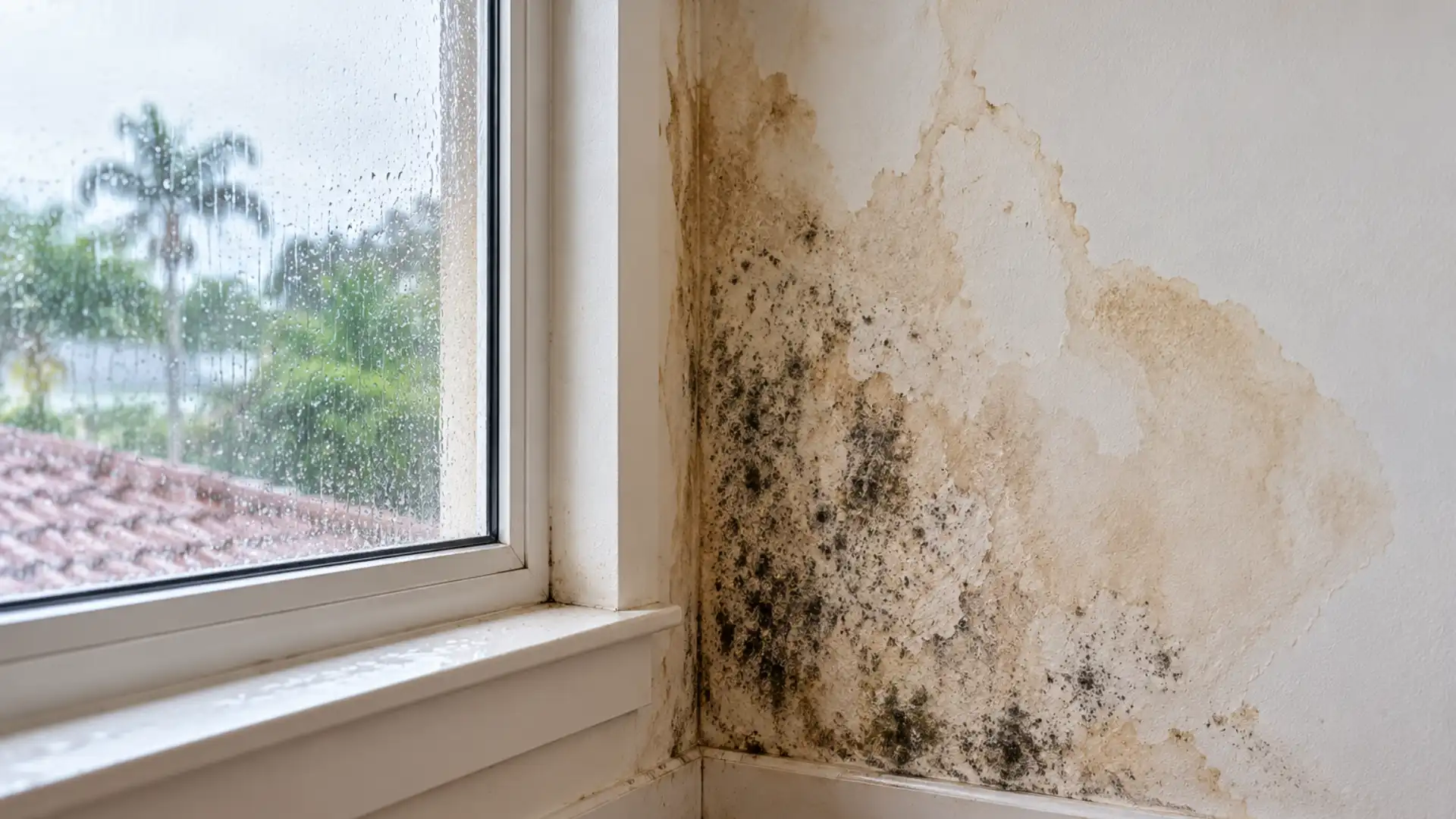


You noticed something after the last storm. Maybe a stain on the ceiling that wasn’t there before, a musty smell coming from a closet, or a damp patch on the wall that dried out a few days later. You wiped it down, made a mental note, and moved on. Then the next storm came, and it showed up again.
That pattern is worth paying attention to. LA homeowners often deal with water problems that only surface during the rainy season, because the dry months give no indication that something is wrong. A small crack in the stucco, deteriorated window flashing, or a slow roof leak can sit undetected for most of the year. January rain is often what makes the problem visible.
What you’re seeing may not be mold yet. But the moisture that produces a stain, a smell, or peeling paint is the same moisture that creates conditions for mold to develop.
Why Does Mold Appear After Rain in Los Angeles?
Mold needs moisture and an organic material to grow. Rain does not automatically cause mold, but it can introduce enough water into a building assembly to create the conditions mold needs.
Los Angeles homes can be particularly vulnerable when water gets past exterior materials that are supposed to keep it out.
Cracks in stucco, deteriorated sealants, failed window flashing, roof leaks, and drainage problems can allow rainwater into areas that normally stay dry.
That is why the visible mold is rarely the whole problem. In most rain-related cases, the mold is a symptom, and the real problem is the water that produced it.
What Are the First Signs of Mold After Rain?
Mold does not always appear as an obvious black or green patch. After a storm, homeowners should pay attention to changes in smell, surfaces, and areas that have previously experienced water problems.
A Musty Smell That Appears After Rain
A musty or earthy odor can be one of the earliest clues that moisture has entered an area where it should not be.
You may notice the smell in a bedroom, closet, hallway, or other room near an exterior wall. If the odor becomes stronger after rain and then fades as the weather dries, that pattern can be an important clue that water is entering the structure.
A musty odor that gets stronger during rain or humid weather is one of the clearer reasons to schedule a mold inspection before any growth becomes visible.
New Water Stains on Walls or Ceilings
A brown, yellow, or discolored patch that appears after a storm should not automatically be treated as a cosmetic issue.
The location of the stain can provide clues about where water entered. A ceiling stain may point toward a roof or upper-level source, while a stain on an exterior-facing wall may indicate water entering through stucco, windows, doors, or another part of the building envelope.
If a stain appears only after rain and disappears when the weather dries, the timing itself is useful information.
Peeling, Bubbling, or Cracking Paint
Paint can change when moisture becomes trapped behind it. You may notice bubbling, peeling, cracking, or areas that feel different from the surrounding surface.
These changes do not prove that mold is present, but they indicate that moisture may be affecting the material underneath. If the same area changes after every significant rain event, it deserves closer attention.
Mold Spots Around Windows and Exterior Walls
Visible mold around a window, baseboard, closet, or exterior-facing wall can indicate that rainwater is getting into the surrounding assembly.
The mold itself may not be located directly at the point where water entered. Water can travel through wall materials before appearing somewhere else, which is why simply cleaning the visible area may not solve the underlying problem.
Damp or Warped Flooring
Water that enters through an exterior wall or around a door can eventually affect flooring and baseboards.
Look for warped flooring, swollen baseboards, discoloration, or areas that feel different underfoot after heavy rain. These signs can indicate that moisture has moved farther than the original visible leak suggests.
Where Does Mold Hide After a Rainstorm?
The most concerning moisture problems are often the ones homeowners cannot see.
Water can enter through one location and travel through a wall assembly before collecting somewhere else. By the time mold becomes visible indoors, moisture may already be affecting drywall, insulation, framing, or other materials behind the finished surface.
Behind Exterior Walls
Cracked stucco or failures around windows and doors can allow rainwater into the wall cavity. The exterior may look relatively normal while moisture is accumulating behind the finish.
This is one reason water intrusion investigation is important when mold repeatedly appears along an exterior-facing wall. The goal is to identify how water is entering rather than treating the mold as an isolated surface problem.
Around Windows and Doors
Window and door openings are common areas for water intrusion because they involve several materials and connections that have to work together.
Failed sealants, damaged flashing, gaps, or other installation problems can allow rainwater to enter around the opening. When stains or mold show up beside a window or sliding door after a storm, the opening itself is often where the water got in, even if the exterior looks intact.
Inside Ceilings and Roof Areas
A roof leak may not produce a visible ceiling stain immediately. Water can travel along framing or other materials before reaching the interior surface.
That means the location of a ceiling stain is not necessarily the exact location of the roof problem. If the same area becomes wet after multiple storms, the source needs to be investigated rather than repeatedly covering the stain.
Behind Drywall
Drywall can absorb moisture and hide what is happening inside a wall. By the time bubbling, discoloration, or mold becomes visible, the surrounding assembly may already have experienced prolonged moisture exposure.
Thermal imaging and moisture mapping can help identify areas that warrant further investigation without immediately opening every wall. We use both as part of our mold inspection process.
Why January Rain Can Reveal Problems That Started Months Earlier
The first major rains of the season do not necessarily create every water problem they reveal.
Los Angeles homes spend long periods exposed to sun, heat, and dry conditions. During that time, sealants can deteriorate, small cracks can develop, and exterior materials can age without being tested by significant rainfall.
When rain finally arrives, those weaknesses can become apparent.
A small opening that seemed harmless during dry weather can allow water into a wall assembly during a storm. If that moisture remains trapped, it creates an environment where mold can develop.
This is one reason we emphasize finding the moisture source, not simply identifying visible mold. Our inspection process is designed to determine where the mold is, how far it has spread, and why it is growing.
How Can You Tell If Rain Is Causing the Mold Problem?
Because these weaknesses only show themselves when it rains, timing can provide an important clue.
If a stain, odor, damp spot, or other issue consistently appears during or shortly after rain, an exterior water source should be considered.
The signs themselves are covered above. What points to exterior water intrusion is the pattern of when they show up:
- A stain or damp spot that appears during a storm or within a day after it
- Musty odors that become stronger during wet weather
- Damage that disappears as the weather dries but returns during the next storm
- Water at a window or sliding door during wind-driven rain, but not during light rain
- Problems that show up on one side of the house when storms come from that direction
- Repeated leaks in the same location after previous repairs
We use these patterns as part of our investigation when determining whether a leak may be coming from outside the property.
A recurring rain-related leak may also indicate a problem with the building envelope. A building envelope inspection can be appropriate when water stains, mold, peeling paint, or other moisture signs appear after rain.
Why You Should Not Ignore Mold That Appears After Rain
A mold spot that appears after one storm may seem minor, especially if it dries out afterward. The problem is that drying on the surface does not necessarily mean the materials behind it are completely dry.
If water repeatedly enters the same area during multiple storms, moisture can accumulate over time.
Continued moisture exposure can expand the affected area and increase the amount of material that eventually needs to be addressed.
The same applies to recurring water stains and musty odors. These are signals that deserve investigation before they turn into a larger mold or water-damage problem.
What Should You Do If You Find Mold After Rain?
Finding mold after a storm does not necessarily mean the entire property needs remediation. The first priority is determining how much moisture is present and where it came from.
Start by documenting what you see. Take photographs of the affected area and note when the odor, stain, or visible mold appeared. If possible, photograph the exterior area above or near the interior damage as well.
Do not simply paint over a stain or clean visible mold without considering the moisture source. If water continues to enter the property, the same problem can return.
If the issue involves exterior water intrusion, Absolute Maintenance & Consulting recommends investigating the source before deciding on the repair. Its team can evaluate areas such as stucco, windows, doors, roofs, and other building-envelope components.
When Should You Schedule a Mold Inspection?
You do not have to wait until mold becomes widespread before getting an inspection.
Consider scheduling a professional mold inspection if you notice recurring mold, a persistent musty odor, new water stains, peeling or bubbling paint, warped flooring, or moisture that appears after rain. An inspection can help determine whether the issue is limited to a visible surface or connected to a larger moisture problem.
It is particularly important to investigate recurring problems. If the same wall becomes damp after every storm, for example, the repetition itself tells you water is getting in from somewhere each time.
A professional inspection can use moisture readings and thermal imaging to look for conditions that are not obvious from the surface.
What Happens During a Mold Inspection?
A professional mold inspection should look at more than visible mold.
Our inspection includes a visual assessment, thermal imaging of walls, ceilings, and floors, moisture meter readings, a documented moisture map, photo documentation, and moisture source identification. We walk you through what we found with photos and moisture readings, and tell you what needs to be addressed.
A Basic Inspection takes about 15 to 20 minutes. A Detailed Inspection covers up to about an hour for a single home or unit.
This approach is especially useful after rain because the inspection can connect visible symptoms with moisture conditions that may be hidden behind finished surfaces.
What If the Mold Is Coming From a Building Envelope Problem?
If the inspection indicates that rain is entering through the exterior of the property, mold remediation alone may not solve the problem.
The moisture source may need to be addressed through a building envelope inspection, water intrusion investigation, or appropriate waterproofing and repair work.
For example, a mold problem around an exterior wall could be connected to cracked stucco or a failed window assembly. A ceiling stain could be related to roofing or flashing. The correct repair depends on where the water is entering and how it is moving through the structure.
We specialize in investigating these exterior sources rather than treating every moisture problem as an interior mold issue.
Is It Mold or Just Water Damage?
Not every mark that appears after rain is mold.
Water stains, efflorescence, peeling paint, and other forms of water damage can look similar to early mold growth. Determining the difference requires looking at the condition of the material and, more importantly, understanding why moisture is present.
Absolute Maintenance & Consulting’s inspection process combines visual assessment with moisture readings and thermal imaging to help determine what is happening rather than assuming every discoloration is mold.
If mold is confirmed and remediation is needed, the inspection findings can help establish the scope of the work.
What Should LA Homeowners Watch for After the Next Rain?
Knowing the signs is only half of it. Checking for them at the right times makes it much easier to connect a problem to the rain that caused it. A simple routine over the two days after a significant storm is enough.
Immediately After the Rain
Walk the rooms along exterior-facing walls while the storm is still fresh. Check window sills, sliding door tracks, and ceilings below roof areas for active water. Photograph anything wet, and note which direction the wind and rain were coming from.
Within 24 Hours
Go back to the same spots. Open closets and cabinets on exterior walls, since odors build up in closed spaces first. Touch baseboards and the lower edge of drywall near doors. Then step outside and look at the wall or roofline above any damp interior area for cracked stucco, gaps around windows, or gutters and downspouts that overflowed.
Within 48 Hours
Check whether the damp areas have dried. If an area is still damp after two days, water is likely trapped in the materials behind the surface, and it is time to schedule an inspection rather than keep watching.
Found Mold After the Rain? Find the Moisture Source First
Mold that appears after rain is often a sign that water has found a way into an area that should remain dry. The visible growth may be the part you can see, but the more important question is what is happening behind it.
At Absolute Maintenance & Consulting, we provide mold inspections, water intrusion investigation, building envelope inspections, and related moisture services in West Los Angeles, Culver City, and nearby Westside communities. Our inspection process uses thermal imaging, moisture meters, moisture mapping, and visual assessment to identify the source and extent of moisture problems.
If you have noticed mold, a musty smell, or new water damage after a January storm, contact us or call (310) 678-4345 to have the area investigated before the next rainfall gives the problem another opportunity to spread.
Frequently Asked Questions
Can rain cause mold in a Los Angeles home?
Rain can create the moisture conditions mold needs when water enters the home through leaks, cracks, failed flashing, stucco problems, roofs, windows, or other areas of the building envelope. Mold becomes a concern when affected materials remain damp.
How soon can mold appear after rain?
Mold can begin developing on damp materials within 24 to 48 hours when moisture levels are sustained and temperatures are moderate. In LA’s moderate climate, this timeline is a realistic concern after water intrusion. The exact timeline depends on moisture levels, temperature, material, and how quickly the affected area dries. We recommend addressing water intrusion promptly rather than waiting for visible mold.
Why does my house smell musty after it rains?
A musty smell after rain can indicate that moisture is entering or becoming trapped somewhere in the property. It may come from visible mold, hidden moisture inside a wall or ceiling, damp flooring, or another moisture source.
Why does mold keep coming back after I clean it?
Recurring mold can indicate that the underlying moisture source has not been corrected. Cleaning the visible growth may address the symptom, but water entering through a roof, stucco wall, window, or another exterior component can allow the problem to return. Our post on recurring mold goes into more detail.
Can mold grow behind walls without being visible?
Yes. Mold can develop on damp materials inside wall and ceiling assemblies before it becomes visible on the interior surface. Thermal imaging and moisture mapping can help identify areas where hidden moisture may be present.
Should I get a mold inspection after a roof leak?
A mold inspection can be useful after a roof leak, particularly if water entered ceilings or walls and the extent of the moisture is unclear. Early investigation can help determine whether materials remain damp and whether mold has developed.
What if the mold only appears when it rains?
The timing is an important clue. Mold or water damage that repeatedly appears during or shortly after rain may indicate an exterior water intrusion problem. In that situation, investigating the source of the leak is just as important as addressing the visible mold.
How much does a mold inspection cost in Los Angeles?
A Basic Inspection costs $375 to $575, and a Detailed Inspection costs $575 to $775. When we do the work, the inspection fee is credited toward the cost of the work. Multi-unit and larger property inspections are priced separately.