
Why Does Mold Keep Coming Back After You Clean It?
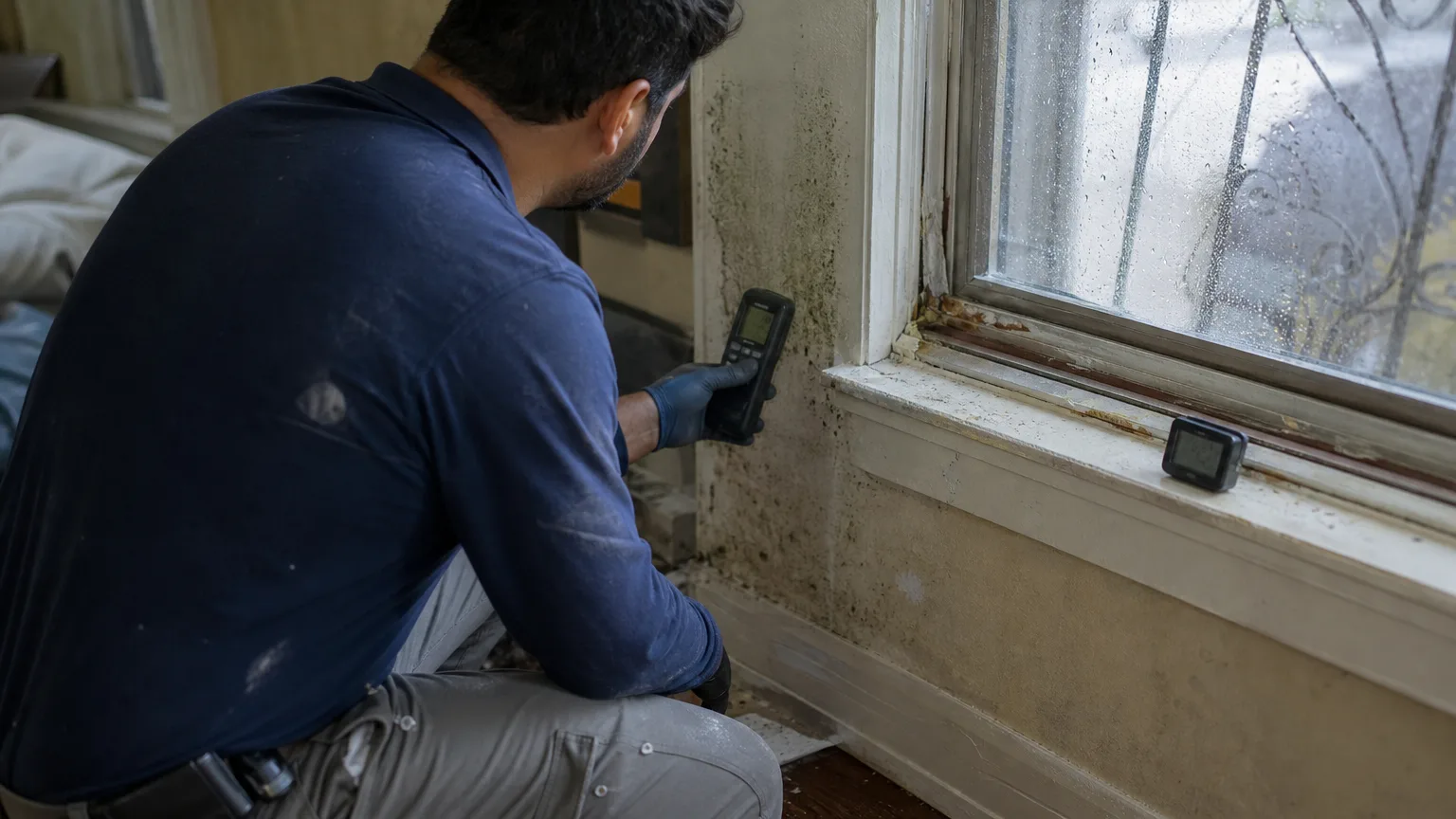

Mold keeps coming back on windows and walls because cleaning removes visible spores but leaves the underlying moisture source, whether that’s condensation, poor ventilation, or a hidden leak, completely untouched. I’ve walked into hundreds of homes across Los Angeles where the homeowner scrubbed a window sill with bleach three times in one month, and every time the black spots returned within a week. That’s not bad luck. That’s physics. Mold needs moisture to survive, and if you don’t remove the moisture through mold remediation, you haven’t solved anything.
The Real Reason Mold Regrows After Cleaning
Cleaning mold off a surface is like mopping up a puddle without turning off the faucet. It looks fine for a day or two, then the puddle’s back. Mold spores are everywhere in the air, indoors and outdoors. They only become a visible problem when they land on a damp surface and start feeding.
A few things I want property owners to understand:
- Mold requires a consistent moisture source to establish and spread. Cut off the water, and it can’t sustain itself.
- Surface cleaning kills what you can see, but spores often remain active in the air and on nearby materials.
- Without correcting the moisture problem, you’re re-treating the same spot every few weeks, which wastes money and time.
- Once mold is spotted, remediation should start within 24-48 hours. Wait longer and it spreads into wall cavities, flooring, and HVAC ductwork, which turns a simple cleanup into a much bigger job.
I’ve seen this timeline play out on real jobs. A client waits three weeks to call after “just cleaning it themselves,” and by the time we open the wall, mold has traveled two feet beyond the original stain because the drywall paper kept feeding it.
Why Los Angeles Homes Are Prone to Recurring Mold
People assume mold is a rainy-climate problem. Los Angeles isn’t rainy, but it’s humid in ways homeowners don’t expect. Cooking, showering, and even breathing add moisture to indoor air every day. When that humid air has nowhere to go, it settles on the coolest surface in the room, usually a window or an exterior wall.
Two building trends make this worse locally:
- Many older LA homes have exhaust fans that vent into the attic instead of outside, so all that humid bathroom air just relocates and condenses somewhere else.
- Newer, energy-efficient homes are built tight to save on utility bills, but that same sealing traps humidity inside with nowhere to escape.
Condensation vs. Hidden Leaks: How to Tell the Difference
Condensation and a hidden leak look almost identical on a wall, but they need completely different fixes. Condensation forms when warm, humid air touches a cold surface like a window pane. A hidden leak is actual water intrusion from a roof, pipe, or window frame, and it shows up regardless of humidity or weather.
| Clue | Condensation | Hidden Leak |
|---|---|---|
| Location | Windows, exterior walls, cold corners | Anywhere, including interior walls |
| Timing | Worse in cold weather or after showers | Present even in dry weather |
| Relative humidity reading | Usually above 60% | Can be normal |
| Pattern | Even sheen or droplets | Staining, warping, or a persistent damp smell |
A hygrometer is the cheapest way to start narrowing this down. If the room reads above 60% relative humidity and mold sits on the window glass itself, condensation is the likely cause. If humidity looks normal but mold keeps showing up on the same wall, I start looking for a hidden leak using thermal imaging and a moisture meter to check behind the surface without cutting into it.
Oversealed Construction and Poor Ventilation
I get called to newer homes more than people expect. Oversealed construction is great for energy bills but terrible for moisture control if there’s no mechanical ventilation to compensate. Older homes have the opposite problem: drafty windows let in humid outdoor air, and there’s often no exhaust fan at all in the bathroom. Bathrooms get their own walkthrough in how to get rid of bathroom mold.
Fixes I recommend on almost every job:
- Confirm exhaust fans vent directly outside, not into the attic or crawlspace.
- Match exhaust fan CFM to the room size. A tiny 50 CFM fan does nothing in a large bathroom with a soaking tub.
- Open windows for about 30 minutes a day when outdoor air is dry. It’s a free fix that a surprising number of homeowners skip.
The Humidity Threshold: What Level Triggers Mold Growth
Mold growth becomes likely once indoor relative humidity stays above 60% for extended periods. The safe target range for preventing mold is 30 to 50 percent relative humidity. Below that range, mold struggles to establish itself, even if spores are present on a surface.
Relative humidity isn’t constant throughout the year. Winter heating dries out some rooms while trapping moisture in others. Summer air conditioning can create cold surfaces that invite condensation even in a naturally dry climate like ours. That’s why I tell clients to check humidity seasonally, not just once. Wet El Niño winters are the extreme version, covered in El Niño, super humidity and super mold.
How to Monitor Indoor Humidity With a Hygrometer
A hygrometer is a small device that measures relative humidity, and a basic one costs under $15. It’s one of the best investments a property owner can make before calling anyone out for an inspection.
- Place it near the problem area, like a window sill or bathroom wall, away from direct heat or drafts.
- Check the reading daily for about a week to see the pattern, not just a single moment.
- If it consistently reads above 60%, address it with a dehumidifier or better ventilation.
- After making changes, keep checking to confirm the room holds steady in the 30-50% range.
Why Bleach and Vinegar Don’t Stop Regrowth
I understand the instinct. Bleach is cheap and it’s what most people have under the sink. But bleach mostly stays on the surface. On porous materials like drywall, wood, or caulk, it doesn’t penetrate deep enough to kill mold growing inside the material, and it can actually add moisture that feeds new growth.
Vinegar works a little better on hard, non-porous surfaces, but it still doesn’t reach spores embedded in porous materials. Neither product does anything about the moisture source, which is the actual problem. Professional antimicrobial treatment is formulated to kill mold at the surface and inhibit regrowth, and it performs far better on porous materials than anything from a grocery store shelf.
What Actually Stops Mold From Returning
Permanent mold prevention comes down to one principle: find and fix the moisture source before you touch the mold itself. Everything else is maintenance.
- Fix ventilation. Upgrade exhaust fans, confirm proper CFM, and make sure HVAC drip pans stay clean and draining.
- Control humidity with a dehumidifier to hold rooms at 30-50% relative humidity, especially basements and bathrooms.
- Seal and waterproof. Re-caulk windows, clean gutters, repair roof leaks, and close up air gaps that let humid air infiltrate.
- Replace severely affected porous materials. Once mold has traveled deep into drywall or carpet padding, cleaning it is a waste of time. It has to come out.
Locating the Moisture Source
This is where an actual mold inspection earns its value over a guess-and-check approach. A mold inspection is a visual and instrument-based assessment, using thermal imaging and moisture meters to locate both the mold and the water feeding it. It’s different from mold testing, which analyzes spore samples in a lab. Most of my clients don’t need a lab test. They need to know where the water is coming from.
On the job, I check the usual suspects first: under sinks, around window frames, behind appliances, in attics and crawlspaces, and along rooflines where flashing tends to fail. If mold reappears within 24-48 hours of a cleaning, that’s a strong signal the moisture source is still active and needs professional detection, not another round of scrubbing.
Ventilation, Dehumidification, and Sealing Fixes
Once the source is identified, the fix usually falls into one of three categories:
- Ventilation: install exhaust fans rated for the room’s size, and make sure they vent outside, not into an attic.
- Dehumidification: run a dehumidifier in consistently damp spaces like basements or rooms with poor airflow.
- Sealing: re-caulk window frames, clear gutters and downspouts, and seal gaps around doors and outlets that let humid outdoor air in.
When to Call a Professional vs. DIY
DIY works fine for small mold patches on non-porous surfaces like tile or glass, but only after you’ve actually fixed the moisture problem. If you clean the same spot repeatedly and it keeps coming back, that’s your sign to bring in a professional.
Call for professional mold remediation when:
- Mold covers more than 10 square feet.
- You suspect a hidden leak but can’t locate it.
- The mold resulted from flooding, sewage backup, or HVAC contamination.
- Regrowth keeps happening despite your cleaning attempts.
Professionals bring thermal imaging, moisture meters, HEPA vacuums, and antimicrobial treatment that homeowners simply don’t have access to. Delaying that call lets mold work its way into walls, subfloors, and ductwork, which raises both the health risk and the eventual repair bill. If you’re dealing with recurring mold and you’re not sure whether it’s condensation or a leak, get a professional inspection and let someone look at it properly before it spreads further.
Frequently Asked Questions
Why does mold come back even after I clean it?
Cleaning removes the mold you can see, but it does nothing about the moisture keeping the surface damp. If a hidden leak, condensation, or poor ventilation is still present, spores in the air will settle and regrow on that same damp surface within days.
Is mold on windows harmful?
Yes. Mold on windows can spread spores into surrounding walls and HVAC systems, which increases health risks for occupants and raises repair costs the longer it’s ignored. It should be treated as a signal to check for a broader moisture problem, not just wiped away.
How do I know if it’s condensation or a leak?
Condensation forms on cold surfaces, like window panes, when warm humid air meets them, and it tracks closely with weather and relative humidity. A hidden leak causes persistent dampness regardless of humidity levels. A hygrometer and a moisture meter together can confirm which one you’re dealing with.
Can I use bleach or vinegar to clean mold?
They can remove small patches of mold from non-porous surfaces, but neither penetrates porous materials like drywall or wood, and neither fixes the moisture source. For lasting results, professional antimicrobial treatment works far better, especially on materials bleach and vinegar can’t fully reach.
How long does it take for mold to grow back after water exposure?
Mold can begin growing again within 24-48 hours if moisture is present. This is why remediation timing matters so much. The faster the moisture source is corrected and the area treated, the less chance mold has to spread into surrounding materials.
What humidity level prevents mold growth?
Keep indoor relative humidity between 30% and 50%. Mold growth becomes likely once RH consistently climbs above 60%. A basic hygrometer, which costs under $15, is the easiest way to keep track of humidity in problem rooms over time.
About the Author
 Cameron Figgins
Cameron Figgins is the founder of Absolute Maintenance & Consulting. With over 30 years of hands-on industry experience, he specializes in identifying complex water intrusion issues in Southern California homes and is dedicated to helping homeowners protect their property with the latest in detection technology.”