
How to Get Rid of Bathroom Mold and Stop It Coming Back?

Fix the humidity first, then worry about what’s growing on the tile. Run the exhaust fan long enough to actually clear the shower condensation, and clean or replace grout and caulk once mold’s taken hold there. But if it’s spread behind tile or into the drywall, wiping the surface does nothing. At that point you need mold remediation, not a spray bottle.
Most bathroom mold complaints start the same way. Someone scrubs the grout lines, it looks clean for a month, then it’s back. The bleach was never the problem. The moisture that kept feeding the mold the whole time was.
Surface Mold vs. Mold Behind Tile: How to Identify What You Have
Mold growing on glazed tile, glass, metal fixtures, or plastic shower curtains sits on top of a non-porous surface. It never rooted into anything, so it wipes off and stays gone once you get the moisture under control.
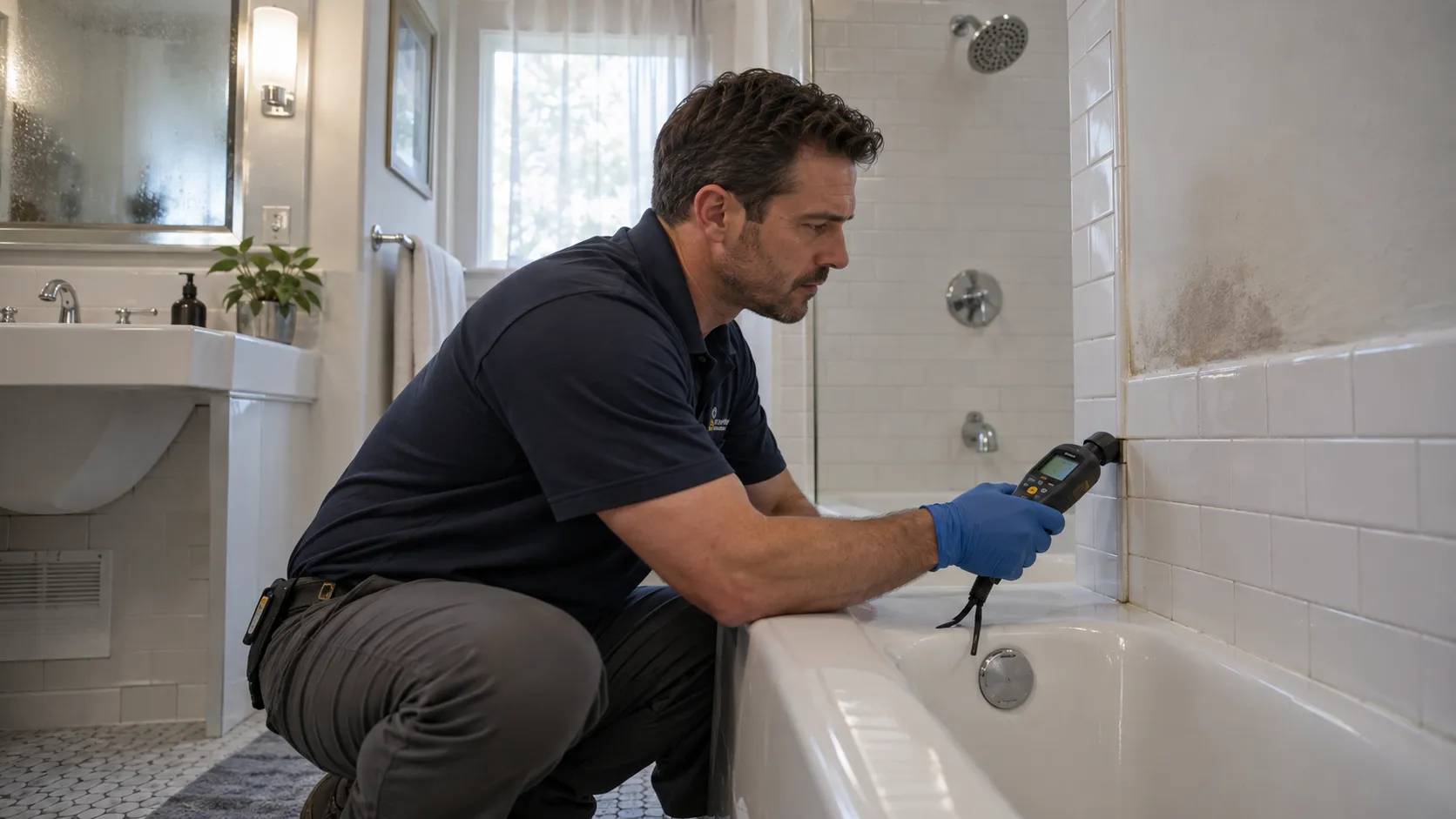
Mold on or near drywall, unsealed grout, wood trim, or ceiling material is a different animal. Those are porous substrates, and the mold can send hyphae below the surface where a wipe-down just can’t reach it. If a bathroom ceiling shows a stain that keeps getting darker, or grout near the tub looks discolored way past the visible spots, don’t guess at it. Get a professional mold inspection done with moisture meters and thermal imaging. That’s the only way to know if the contamination stops at the surface or has already worked its way behind the wall.
How Do You Remove Surface Mold from Grout and Caulk?
Surface mold on grout lines and glazed tile comes off fine with damp wiping, an antimicrobial cleaner made for bathroom surfaces, or just scrubbing. None of that matters if the humidity that grew it in the first place is still hanging around. Clean it, then fix the ventilation. Skip that second step and the mold’s coming back no matter what cleaner you used.
Painting over a moldy spot is one of the biggest mistakes I see people make. Paint traps moisture and organic material in, it doesn’t remove either one. Give it a few weeks and the mold pushes right through the paint or spreads around the edges of the patch. If you can’t get a surface fully clean, it needs to come out. Covering it up isn’t a fix.
Cleaning Mold Off Grout and Glazed Tile
Grout and glazed tile bounce back easiest out of anything in a bathroom. Grout’s more porous than the tile, so light staining usually clears up with a stiff brush and an antimicrobial cleaner. But if the grout lines have gone dark and stayed dark no matter how much you scrub, that’s a sign the contamination’s worked into the material itself. At that point, raking it out and replacing it beats scrubbing forever and getting nowhere.
Removing and Replacing Mold-Infested Caulk
Silicone caulk is the one bathroom material I’d almost never tell someone to just clean. Mold works its way into the flexible surface of the sealant, and that staining rarely comes all the way out no matter how hard you scrub. The right order is: cut out the old, contaminated caulk completely, clean and fully dry the joint underneath, make sure the humidity and ventilation problem that caused it is actually fixed, then lay new caulk. Reseal a joint before you’ve fixed the moisture source and you’ve just trapped the same problem under a fresh bead.
And humidity doesn’t stop at the caulk line. It gets into wall cavities and behind tile, where porous drywall can grow mold nobody sees until a remodel opens the wall up. A moisture meter reading on the drywall around a shower, or a moisture map of the wall assembly, will tell you if that’s happening. If drywall moisture is elevated behind tile or inside a cavity, that’s not a cleaning job anymore, that calls for a professional mold inspection. Where remediation is actually needed, expect containment, HEPA filtration, controlled removal of material that can’t be saved, and structural drying, not a wipe-down. That’s the real difference between mold remediation and removal work and ordinary bathroom cleaning: one deals with what’s inside the wall, the other only touches what you can see.
What Causes Mold Behind Bathroom Drywall and Tile?
Get relative humidity above roughly 50% and mold’s got what it needs to move in. Any bathroom without decent ventilation crosses that line every single time someone showers. The exhaust fan’s whole job is pulling that humid air out before it settles into grout lines, caulk, and drywall. Size the fan right for the room, matched by exhaust fan CFM to the bathroom’s volume, and shower condensation clears out in a reasonable window. Undersize it or hang it in the wrong spot, and moisture just sits on cold tile and mirrors long after the water’s off.
Past running the fan, keeping a bathroom dry comes down to a few habits: wipe down wet tile and shower glass, crack the door or window when the fan’s not on, squeegee the shower floor before you walk out. If the bathroom still stays damp after all that, a dehumidifier or portable air mover in the room can hold things over until the ventilation itself gets fixed.
When moisture’s already worked into the structural material, an open window won’t cut it anymore. Structural drying means commercial dehumidifiers and air movers, checked along the way with moisture meters and thermal imaging, until the material actually reads back at an acceptable level. Nothing gets cleaned or rebuilt before that. Skip that verification and close up a wall or repaint too early, and you’ve just locked the moisture back in. The mold follows right behind it.
Coastal bathrooms in Santa Monica and Venice deal with this all the time. The marine layer keeps ambient humidity high even on days nobody’s showered, which pushes RH past that threshold faster than it would in a drier bathroom further inland. And older housing stock in Culver City and West Los Angeles still has plenty of bathroom exhaust fans original to a 1930s or 1940s remodel, way undersized for the CFM a modern shower actually puts out.
Structural Ventilation Steps to Keep Bathroom Mold from Coming Back
Keeping mold from coming back means watching relative humidity every day, and making sure the exhaust fan can actually handle the room it’s in. A fan that’s too small, vented into the attic instead of outside, or one you just don’t bother turning on, will let humidity creep right back up to mold-friendly levels. Doesn’t matter how clean those grout lines looked the day the work got finished.
Frequently Asked Questions
Is black mold in the shower dangerous?
Dark mold in grout or caulk needs to go. Just don’t assume the color tells you what species it is or how bad the problem is, because it doesn’t. If you or anyone in the house has respiratory sensitivities or keeps getting symptoms near a moldy bathroom, don’t wait around. Get the area inspected and cleaned.
Does chlorine bleach kill bathroom mold permanently?
Bleach doesn’t work on porous material, and that’s the mistake most people make. It can lighten staining on non-porous surfaces like glazed tile. But grout, silicone caulk, or drywall are a different story. Bleach can’t reach mold hyphae rooted below the surface. And here’s the real problem: whatever moisture grew that mold in the first place is still sitting there once the bleach dries.
How long should you run a bathroom exhaust fan after showering?
Run the fan long enough to clear the condensation off the mirror and tile. How long that takes depends on the fan’s exhaust fan CFM rating versus the size of the bathroom. A properly sized fan clears shower condensation fast. If your bathroom stays foggy well after the shower’s off, the fan’s probably too small for the room, or it’s vented wrong.
Can white vinegar remove mold from bathroom surfaces?
It’ll help with light surface staining on non-porous materials, but it doesn’t get into porous grout or caulk any better than whatever else you’ve got under the sink, and it does nothing about the humidity that caused the problem in the first place. Use it as a mild cleaning aid, not a fix for mold that keeps coming back.
Wiping mold off a bathroom without fixing the humidity behind it just resets the clock. If the discoloration keeps showing up on the same grout line, the same corner of caulk, or a ceiling patch that won’t lighten no matter how much you scrub it, that’s the tell. The moisture source hasn’t been dealt with, and most people miss it because they’re not the ones checking moisture readings. For a look at where else in a home this shows up, see where mold hides in Southern California homes, or read how mold keeps returning after cleaning on windows and walls, same logic, different part of the house.
If your bathroom’s mold keeps coming back even with the fan running and fresh caulk in place, or you think it’s already behind the tile, contact us and get the moisture source found before it spreads further into the wall.
About the Author
 Cameron Figgins
Cameron Figgins is the founder of Absolute Maintenance & Consulting. With over 30 years of hands-on industry experience, he specializes in identifying complex water intrusion issues in Southern California homes and is dedicated to helping homeowners protect their property with the latest in detection technology.”