
What Does Water Damage Look Like? A Visual Guide for LA Homeowners
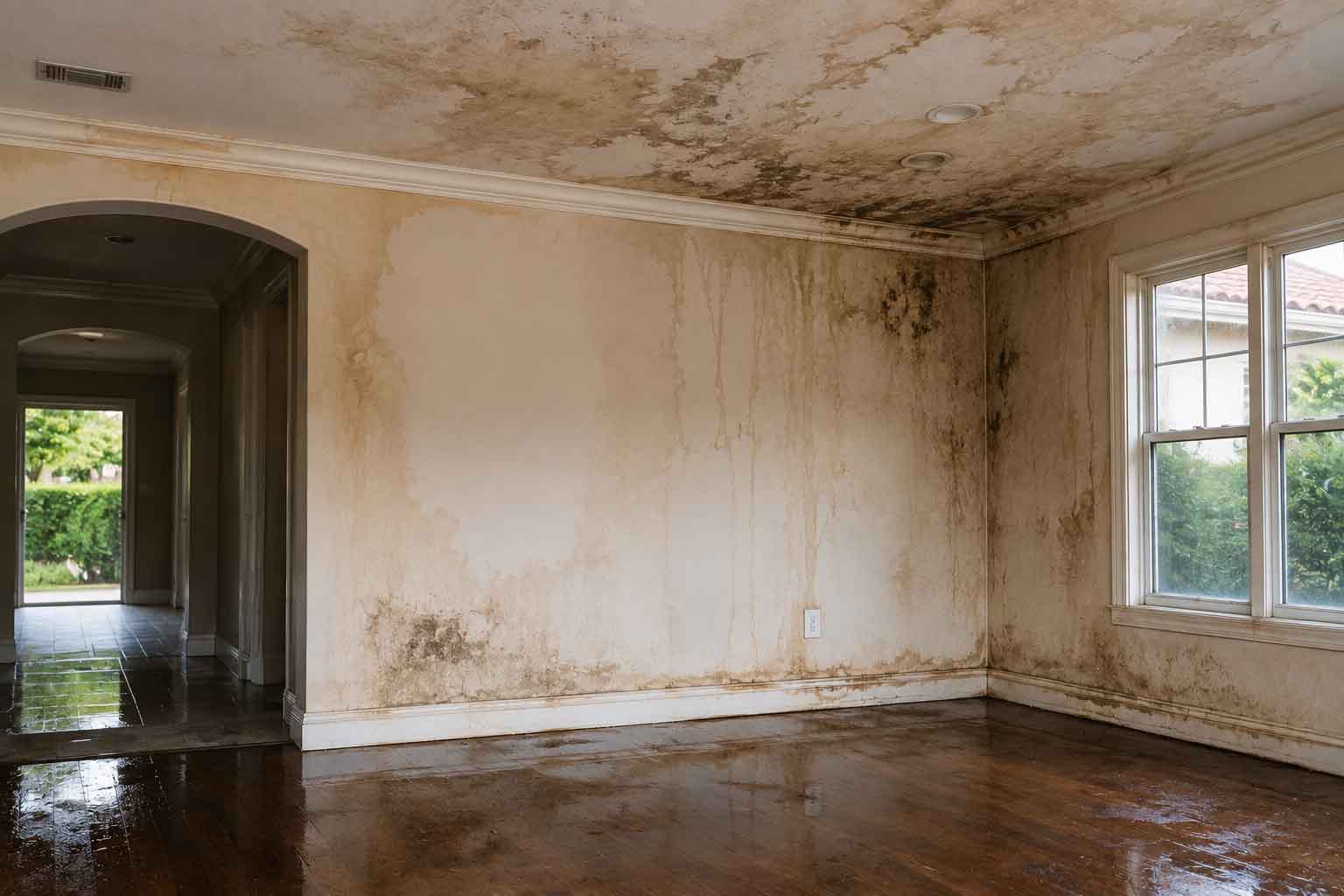

Water damage isn’t always obvious when it first begins. A small roof leak, failed window seal, cracked stucco, or plumbing issue can allow moisture to enter your home long before visible stains appear. By the time you notice discoloration or peeling paint, water may have already spread behind walls, ceilings, or flooring.
Knowing what to look for can help you address the problem before it leads to structural damage, mold growth, or expensive repairs. Sometimes the first visible stain appears long after the leak begins, which is why professional water leak detection can help uncover hidden moisture before the damage spreads.
What Does Water Damage Look Like on a Ceiling?
Ceilings are often the first place homeowners notice signs of water intrusion. Since water naturally travels downward, leaks from the roof, upper-story plumbing, or HVAC systems frequently leave visible marks overhead. Our guide to what water stains on a ceiling mean covers how to read them.
Common signs of ceiling water damage include:
- Brown, yellow, or rust-colored rings
- Water stains that appear after heavy rain and become less noticeable as the ceiling dries
- Bubbling or peeling paint
- Sagging drywall
- Soft spots that feel damp when touched
- Ceiling texture separating or flaking away
A stain may seem small at first, but repeated exposure to moisture usually causes it to expand over time. Even if the ceiling dries between storms, the source of the leak often remains active. Ignoring these warning signs allows moisture to continue damaging framing, insulation, and drywall behind the surface.
What Are the Signs of Water Damage on Interior Walls?
Wall damage can develop gradually, making it easy to overlook during routine cleaning or painting. In many Los Angeles homes, water enters through the exterior before becoming visible inside.
Watch for these warning signs:
- Dark staining near baseboards
- Bubbling or peeling paint
- Soft or crumbling drywall
- Discoloration around windows and doors
- Warped wall surfaces
- Musty odors that linger indoors
Walls adjacent to stucco exteriors deserve special attention because moisture can penetrate small cracks around windows, doors, or wall penetrations before reaching the interior. If paint continues to peel after being repainted, moisture may still be trapped behind the wall.
A persistent musty smell without an obvious source can also indicate hidden moisture inside wall cavities, even if visible damage appears minimal.
How Can You Tell if Water Has Damaged Your Floors?
Floor damage often develops slowly because moisture becomes trapped beneath flooring materials. By the time visible changes appear, water may have been present for weeks or even months.
Depending on your flooring type, you may notice:
- Hardwood planks that cup or warp
- Soft or spongy spots beneath carpet
- Tile grout that becomes darker near exterior walls
- Loose or shifting flooring
- Buckled laminate
- Damp or stained carpeting
Floors located near exterior walls, windows, or sliding doors are especially vulnerable after heavy rain. Water that enters through exterior openings can migrate underneath flooring materials before any obvious surface damage appears.
If flooring feels uneven or soft underfoot, avoid assuming it’s simply due to age. Moisture beneath the surface often continues spreading until the source is repaired.
What Exterior Signs Could Mean Water Is Getting Into Your Home?
Exterior warning signs often appear long before interior damage becomes visible. Regularly inspecting the outside of your home can help identify problems early.
Look for:
- White mineral deposits (efflorescence) on stucco or masonry
- Dark streaks below windows
- Cracked or deteriorated caulk around window frames
- Visible stucco cracks
- Bulging exterior finishes
- Damaged flashing around windows or roof penetrations
Efflorescence forms when moisture moves through masonry or stucco and leaves mineral deposits behind as it evaporates. Although the white residue itself isn’t harmful, it often indicates ongoing moisture movement within the wall system.
Identifying these warning signs early can help homeowners schedule stucco water intrusion repair before moisture reaches the framing and interior drywall.
Why Doesn’t the Water Stain Match the Leak Location?
One of the biggest misconceptions about water damage is assuming the stain marks the location of the leak. In reality, water often travels a surprising distance before becoming visible.
Water commonly follows:
- Roof framing
- Ceiling joists
- Wall studs
- Insulation
- Pipes and utility penetrations
It’s not unusual for water to travel 10 to 20 feet through framing before finally appearing on a ceiling or wall. A roof leak near one end of the home may produce stains several rooms away. Likewise, moisture entering around a second-story window can eventually appear near the baseboard on the first floor.
Understanding how to identify the source of water intrusion requires tracing the path moisture follows through the building rather than focusing only on the visible stain. Our inspections evaluate both the symptoms and the underlying cause to prevent recurring damage.
How Does Water Damage Look on Stucco, Plaster, and Drywall?
Los Angeles homes feature a variety of construction materials, each responding differently when exposed to moisture. Knowing these differences can help homeowners better recognize developing problems.
Plaster
Many older Los Angeles homes still have traditional plaster walls.
Signs of water damage include:
- Hairline cracking
- Bulging surfaces
- Brown staining
- Hollow sounds when tapped
- Sections pulling away from the wall
Unlike drywall, plaster may remain intact even after prolonged moisture exposure, making hidden damage more difficult to recognize.
Stucco
Stucco is the dominant exterior finish on Los Angeles homes, but it requires intact sealant and caulking to stay watertight during rain. However, prolonged moisture exposure can still cause significant damage.
Signs include:
- Efflorescence
- Surface cracking
- Dark staining
- Bulging or uneven finishes
- Deteriorated sealant around windows
Moisture entering through damaged stucco can remain hidden behind the exterior finish for extended periods before becoming visible indoors.
Drywall
Drywall is highly absorbent, making water damage easier to spot once moisture reaches interior living spaces.
Common signs include:
- Bubbling paint
- Soft or crumbling surfaces
- Sagging
- Peeling tape at seams
- Mold spots
- Water stains
Because drywall absorbs moisture quickly, prolonged exposure often leads to deterioration that requires replacement rather than simple cosmetic repairs.
Also Read: Signs of Water Damage in Walls: What to Look For Before It Gets Worse
When Should You Call a Water Damage Professional?
Some homeowners wait until stains become larger or mold appears before seeking help. Unfortunately, water damage rarely improves on its own.
Schedule a professional inspection if you notice:
- A ceiling or wall stain after rain
- Musty odors that persist
- Bubbling or peeling paint
- Soft drywall
- Warped flooring
- Exterior staining that continues to spread
- Visible mold growth
- Water returning after previous repairs
Early intervention helps us identify the cause before moisture reaches additional building materials. Prompt inspections determine whether water damage restoration is necessary to protect your home’s structural integrity
Protect Your Home Before Water Damage Gets Worse
Visible stains are often just the beginning of a much larger problem hidden behind walls, ceilings, or flooring. Acting quickly can reduce repair costs, prevent mold growth, and stop moisture from spreading throughout your home.
If you’ve noticed new stains, musty odors, bubbling paint, or signs of water intrusion after recent rain, don’t wait for the damage to worsen. Contact Absolute Maintenance & Consulting today to schedule a professional inspection and identify the source before costly repairs become necessary.
Frequently Asked Questions
How can I tell if a water stain is new or old?
A new water stain usually feels damp, appears darker in color, and may continue to grow after rain or a plumbing leak. Older stains are often dry and lighter in color, but they should still be inspected since the original source may not have been fully repaired.
Can water damage dry on its own?
While wet materials may eventually dry, the underlying cause of the water intrusion won’t resolve on its own. Moisture trapped behind walls, ceilings, or flooring can continue causing structural damage or create conditions for mold growth if left untreated.
Why do water stains get bigger after it rains?
Rain can reopen small leaks around roofs, windows, chimneys, or exterior walls, allowing additional moisture to enter your home. Each rainfall may add more water to the same area, causing stains to spread over time.
Does every water stain mean there’s an active leak?
Not always. Some stains are left behind after a previous leak has been repaired. However, if the stain changes in size, becomes darker, or returns after rainfall, it could indicate that water is still entering the home and should be inspected.
Can water damage be hidden behind walls?
Yes. Water often travels behind drywall, insulation, or framing before becoming visible. By the time you notice peeling paint, staining, or a musty odor, moisture may have already spread well beyond the visible damage.
Is discoloration on stucco always a sign of water damage?
Not necessarily. Dirt and normal weathering can also discolor stucco. However, dark streaks, white mineral deposits, or staining beneath windows may indicate moisture intrusion and should be evaluated, especially if accompanied by interior water damage.
Should I repaint over a water stain?
It’s best to identify and repair the source of the moisture before repainting. Simply covering a stain without fixing the underlying issue can allow water damage to continue spreading behind the surface.
How soon should I have water damage inspected?
As soon as you notice new stains, musty odors, peeling paint, warped flooring, or other signs of moisture. Early inspections can help identify the source before the damage becomes more extensive and costly to repair.
About the Author
 Cameron Figgins
Cameron Figgins is the founder of Absolute Maintenance & Consulting. With over 30 years of hands-on industry experience, he specializes in identifying complex water intrusion issues in Southern California homes and is dedicated to helping homeowners protect their property with the latest in detection technology.”