
Signs of Water Damage in Walls: What to Look For Before It Gets Worse
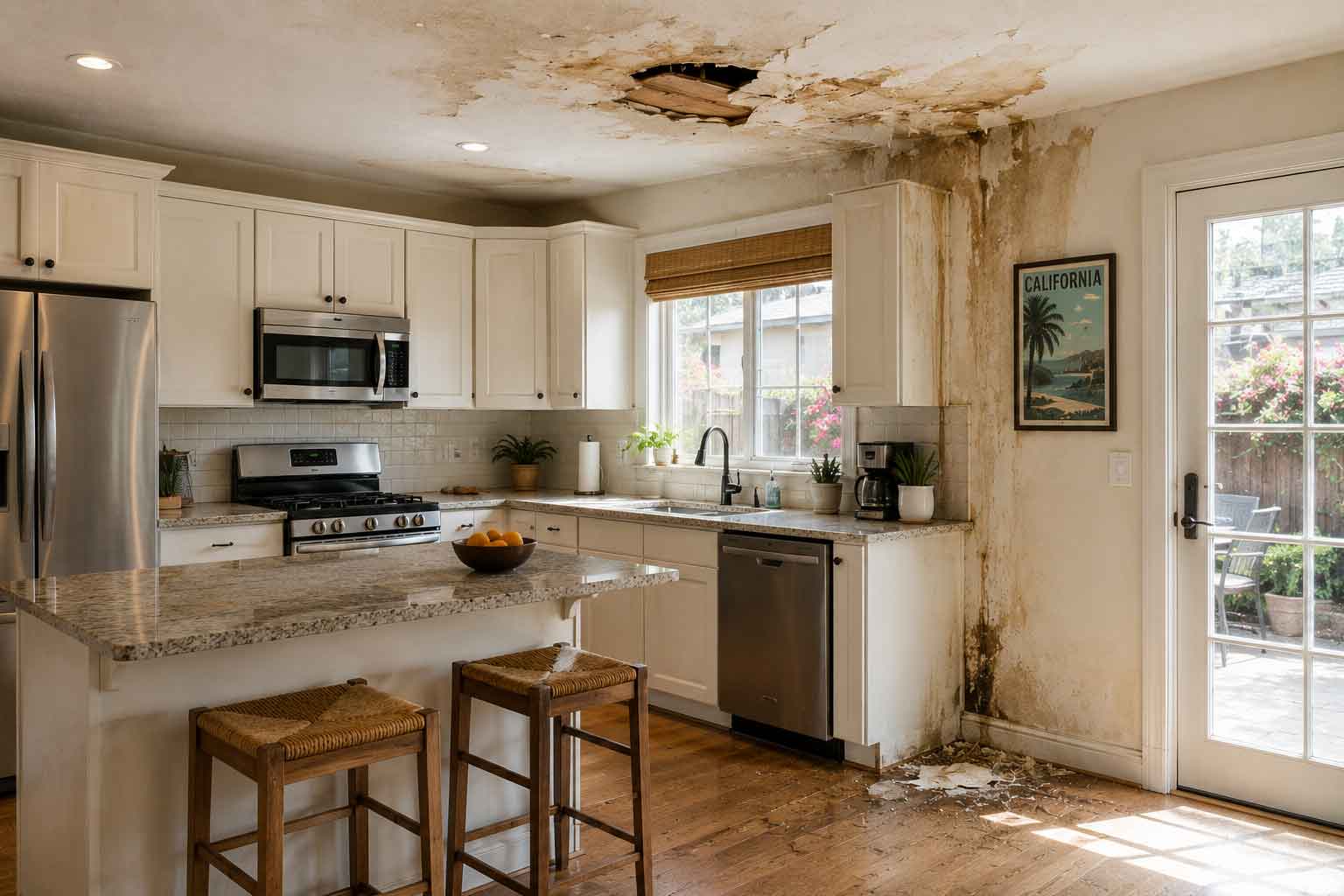

The sign most homeowners miss is not a stain. It is a smell. A faint musty odor that shows up after rain and disappears a few days later is one of the earliest indicators that moisture is moving through a wall assembly. By the time stains, peeling paint, or soft drywall become visible, the damage has usually been building for weeks or months. Knowing what to look for before things get that far is what keeps a manageable moisture problem from becoming a full water damage restoration project.
What Causes Water Damage Inside Walls?
Water gets into walls from more places than most people expect. Leaking pipes, roof penetrations, failed window seals, and rising groundwater are common sources. In Los Angeles, two causes stand out above the rest.
The first is stucco water intrusion. Stucco is the dominant exterior finish on LA homes, and when it cracks or separates at windows, corners, or penetrations, water enters the wall cavity and has no way out. It sits against the framing and drywall until the damage becomes visible from the inside. The second is aging plumbing. Older homes in Los Angeles often have original supply lines running through wall cavities that have never been accessed or inspected. Small, slow leaks from these pipes can go undetected for years.
Both of these entry points share one thing in common. By the time a homeowner notices them, the damage is already established inside the wall.
How Can You Tell If a Wall Has Water Damage?
Some signs are visible. Others require a closer look. In Los Angeles homes, the material the wall is made of matters too. Older plaster walls absorb and release moisture differently than drywall, which means the signs present differently depending on the age of the home. Unlike drywall, plaster can hide moisture for much longer before obvious damage appears. By the time homeowners notice staining, hairline cracks, or hollow sections, moisture has often been present inside the wall for an extended period.
Brown, Yellow, or Rust-Colored Rings on Walls or Ceilings
These staining patterns are caused by minerals and debris carried by water as it moves through building materials. A ring that has dried and hardened usually means the leak is intermittent. A stain that looks fresh or feels damp to the touch means water is still active. In plaster walls, staining tends to spread more slowly because plaster is denser. In drywall, a stain can grow noticeably within 24 to 48 hours of active moisture.
On plaster walls, stains often spread more slowly because the material is denser and absorbs moisture differently. Homeowners may also notice fine cracking, chalky white deposits (efflorescence), or areas that sound hollow when lightly tapped before staining becomes obvious. In drywall, stains usually spread faster and can grow noticeably within 24 to 48 hours of active moisture.
Peeling or Bubbling Paint
Paint separates from the surface when moisture gets behind it and breaks down the bond between the paint and the substrate. Bubbles indicate that water is actively present or was recently present. Peeling along the bottom of a wall or near a baseboard often points to water wicking up from the floor. Peeling along an exterior-facing wall in a stucco home is a specific pattern that almost always indicates water is entering through the stucco envelope.
Soft or Spongy Drywall
Press gently on any area that looks stained or discolored. If the surface gives, sinks slightly, or feels soft compared to the surrounding wall, the drywall has absorbed moisture and its structural integrity is compromised. This is one of the clearest tactile signs of water damage. Plaster walls rarely feel spongy, but they may crack or crumble in areas with sustained moisture exposure. Either condition means the wall assembly needs to be evaluated, not just patched.
Warped or Separated Baseboards and Crown Molding
Wood trim absorbs moisture and expands when water is present at floor level or behind the wall. Baseboards that are pulling away from the wall, buckling, or showing visible gaps along the top edge are often the first sign of moisture at the base of a wall. Crown molding separating from the wall near a ceiling can indicate moisture coming from above, either from a roof leak or from a bathroom on an upper floor.
Small gaps in crown molding can also occur from normal seasonal movement or settling. However, separation accompanied by staining, soft drywall, peeling paint, or musty odors is much more likely to point to water damage rather than normal building movement.
A Persistent Musty Smell After Rain
This is the sign most homeowners explain away. A musty odor that surfaces during or after rain and fades a few days later is not a ventilation issue. It is an active moisture event. Water is entering a wall cavity, and the smell is the byproduct of organic material reacting to that moisture. Rain reintroduces moisture into damp wall cavities, temporarily increasing microbial activity and releasing musty odors. Even if the smell disappears once conditions dry out, the underlying moisture source often remains. In Los Angeles, this pattern is especially common in homes with stucco exteriors, where rain drives water through cracks and into the wall assembly with each storm.
Visible Mold Growth at Baseboards or Wall Seams
Dark green, black, or white patches along baseboards, in corners, or at the seams where walls meet ceilings are signs that mold has already established itself. Mold can begin growing within 24 to 48 hours of sustained moisture exposure. What is visible on the surface is rarely the full picture. If mold is present on the face of the wall, there is almost always more growth on the back side of the drywall and within the wall cavity itself.
Staining Along Exterior-Facing Walls
Interior staining that runs along a wall shared with the exterior of the home is a specific pattern worth paying close attention to in Los Angeles. When stucco cracks at windows, corners, or penetrations, water follows the path of least resistance into the wall cavity and reappears as staining on the interior face of that same wall. This is not a cosmetic issue. It is a building envelope failure that requires tracing the entry point, not painting over the stain.
An Unexplained Spike in the Water Bill
A sudden increase in water use without any change in household habits is worth investigating. A slow leak inside a wall cavity can waste significant amounts of water over days and weeks without producing any visible signs at the surface. If the bill goes up and nothing obvious explains it, the possibility of a hidden leak inside a wall should be on the list of things to check.
How Do You Find Water Damage That Is Not Visible?
Not all water damage presents on the surface. Some of the most destructive moisture conditions develop behind walls for months before any visible sign appears. There are a few ways to check for what cannot be seen. The basics of moisture detection in your home start with the checks below.
Press against wall surfaces in areas near plumbing, below windows, or along exterior-facing walls. A surface that feels cooler than the surrounding area may indicate moisture behind it. Look for paint that has lost its sheen or texture in a specific area. Check baseboards for softness or separation. In older Los Angeles homes with plaster walls, look for hairline cracks that are growing or changing, which can indicate movement caused by moisture in the underlying lath.
Professional exterior water leak detection uses thermal imaging and moisture mapping to identify conditions inside wall assemblies without opening the wall. This approach is particularly useful in Los Angeles homes where stucco exteriors make it difficult to visually trace where water is entering.
How Quickly Does Water Damage Become a Serious Problem?
Faster than most people expect. Mold can begin growing within 24 to 48 hours of sustained moisture exposure. Drywall that stays wet begins to lose structural integrity within days. Framing that stays wet begins to soften and deteriorate over weeks. The materials most commonly found in Los Angeles homes follow a predictable pattern.
Drywall is the most vulnerable. It absorbs moisture quickly and provides an ideal surface for mold growth. Plaster is more resistant but will crack, delaminate, and eventually crumble under sustained exposure. Stucco on the exterior can hold water against the wall assembly for extended periods because it is not a breathable material. When stucco fails at a seam or penetration, water enters and has no clear path to exit, which accelerates damage to everything behind it.
The 48-hour window matters because it means that by the time a stain or odor becomes noticeable, mold is likely already present somewhere in the wall cavity. The visible sign is not the beginning of the problem. It is a marker of how long the problem has been developing.
What Should Homeowners Do When They Spot Water Damage in Walls?
The most important thing is not to cover it. Painting over a stain, patching soft drywall, or recaulking around a window before identifying the source of moisture does not fix the problem. It hides it. The moisture source remains active, damage continues behind the new surface, and the next time the sign appears it is usually more advanced.
When water damage signs are present, the right sequence is to identify the source first, stop the moisture entry, allow the wall assembly to dry properly, and then repair the surface. Skipping the first two steps means the repair will fail and the damage will return.
For small areas with no odor and no visible mold, monitoring over a dry period of several weeks is a reasonable starting point. Document what the stain or damage looks like, check whether it grows or changes, and revisit after the next rain event to see if the condition worsens.
When Is It Time to Call a Professional?
Some situations do not benefit from a wait-and-see approach. Call a professional when any of the following are present.
Visible mold growth at any location. A musty odor that persists after a dry period. Soft or spongy drywall covering more than a small isolated area. Staining along an exterior-facing wall that correlates with rain events. Baseboards or trim that are warping, separating, or showing signs of rot. Any sign of water damage near an electrical panel, outlet, or junction box.
Absolute Maintenance & Consulting provides professional water damage assessment and exterior water leak detection services for Los Angeles homeowners. Using thermal imaging and moisture mapping, the team traces entry points inside wall assemblies without unnecessary demolition, so the actual source of the problem is identified before any repair work begins. Get in touch to schedule an evaluation at (310) 678-4345.
FAQs
What are the most common signs of water damage in walls?
The most common signs are brown or yellow staining, peeling or bubbling paint, soft drywall, warped baseboards, and a persistent musty smell after rain. In Los Angeles homes, interior staining along exterior-facing walls is also a frequent indicator of stucco water intrusion.
How do I know if water damage is behind my walls?
Press gently on areas that look stained or discolored. If the surface feels soft or spongy, moisture has already affected the drywall. A persistent musty odor, peeling paint near baseboards, or trim pulling away from the wall are also signs that moisture is present inside the wall cavity.
How quickly does water damage lead to mold?
Mold can begin growing within 24 to 48 hours of sustained moisture exposure. By the time a stain or odor becomes noticeable, mold is likely already present somewhere inside the wall.
Can I paint over a water stain on my wall?
Painting or patching over a water stain without identifying and fixing the moisture source will not solve the problem. The stain will return, and the damage behind the wall will continue to develop. The source of moisture needs to be addressed first.
Are water damage signs different in older Los Angeles homes?
Yes. Older LA homes with plaster walls show different signs than homes with drywall. Plaster tends to crack and crumble rather than sag or feel spongy. Stucco exteriors also create a specific pattern where interior staining along an exterior-facing wall points to water entering through the stucco envelope.
When should I call a professional for water damage in walls?
Call a professional if you see visible mold, notice a musty smell that persists after dry weather, find soft or spongy drywall covering more than a small area, or spot staining that returns after each rain event. Water damage near electrical components should always be handled by a professional immediately.
How do professionals find hidden water damage inside walls?
Professionals use thermal imaging and moisture mapping to detect moisture inside wall assemblies without opening the wall. This allows them to trace the entry point and identify the full extent of the damage before any repair work begins.
About the Author
 Cameron Figgins
Cameron Figgins is the founder of Absolute Maintenance & Consulting. With over 30 years of hands-on industry experience, he specializes in identifying complex water intrusion issues in Southern California homes and is dedicated to helping homeowners protect their property with the latest in detection technology.”