
Why Do Stucco Sealants Keep Failing on Los Angeles Homes?
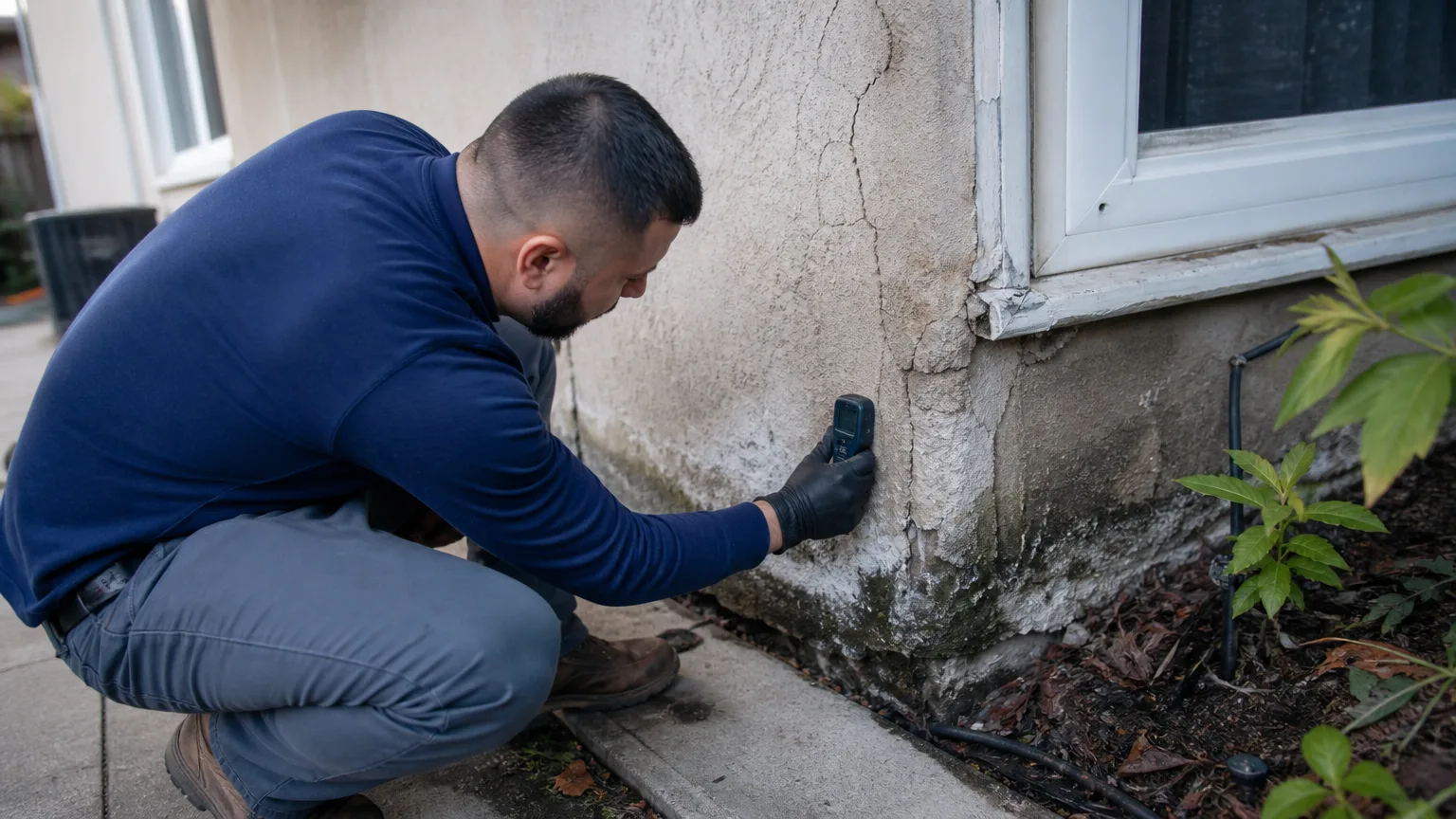

Stucco sealants fail on Los Angeles homes because they’re applied to a wall system that lacks proper waterproofing solutions and moisture management. No air gap. No bond break. Inadequate flashing. Instead of shedding water like it’s supposed to, the stucco becomes a moisture trap that holds water against the sheathing, and the sealant just delays the inevitable rot underneath.
I’ve pulled off enough stucco over the past three decades to know the pattern by heart. The sealant looks fine on the surface, the homeowner thinks they’re protected, and then we cut an inspection hole and find soaked OSB and framing that’s been quietly failing for years.
Why Stucco Sealants Fail: The Core Problem
Stucco sealant failure almost never starts with the sealant itself. It starts with the wall assembly behind it.
A properly built stucco wall needs a drainage plane, a bond break, and flashing that actually directs water where it should go. When those pieces are missing or installed wrong, no coating on the market will save the wall. Sealants and elastomeric coatings also degrade with age. UV exposure breaks down their flexibility, they crack at the same hairline fractures the stucco develops, and their effectiveness drops every year they’re baked in Southern California sun.
The root cause is architectural, not cosmetic. Surface coatings cannot compensate for missing drainage. That’s the piece most homeowners, and honestly a lot of contractors, miss.
Is Stucco Waterproof? Understanding How the System Is Supposed to Work
No, stucco is not waterproof. Rain penetrates through the cladding and any sealant on it. Stucco was never designed to be a barrier; it’s designed to work with a drainage system behind it that manages the water that gets through.
That drainage system includes:
- A weather-resistive barrier (WRB), the building paper or membrane installed against the sheathing
- Flashing at every penetration and transition
- A weep screed at the base of the wall to let water exit
Sealants only add temporary surface protection. They buy time. They don’t fix a wall that was never given a way to drain.
The Perfect Storm Behind Modern LA Stucco Failures
I see more stucco failures on homes built in the last 25 years than on homes built in the 1960s and 70s, and it’s not a coincidence. Three things changed at once, and they compound each other.
OSB Sheathing vs. Plywood
Plywood used to be the standard sheathing behind stucco. It’s more forgiving when it gets wet; it can dry out and often survives moderate exposure. OSB sheathing, which replaced plywood in most modern construction, absorbs and holds moisture far more readily. Once it’s wet, it swells, delaminates internally, and loses structural strength.
| Sheathing | Moisture tolerance | Failure behavior |
|---|---|---|
| Plywood | More forgiving | Dries out, resists rot longer |
| OSB | Poor | Swells, delaminates, retains water |
This shift alone has made moisture management far more critical than it was a generation ago.
Interior Vapor Barriers and Trapped Moisture
A lot of LA homes, especially those retrofitted for energy efficiency, have interior plastic vapor barriers. Combined with OSB sheathing and higher insulation values, that barrier traps moisture inside the wall cavity with nowhere to go. The moisture doesn’t leave through the interior, and it can’t dry through the exterior either.
The better approach is a vapor retarder, or no interior barrier at all, with insulating sheathing placed on the exterior side of the framing instead. I’ve opened up walls where the OSB was black and crumbling, and the vapor barrier was the reason it never had a chance to dry.
Poor Original Flashing and Drainage Details
This is the one I see most often on job sites: inadequate step flashing, missing kick-out diverters, and weep screeds that got buried under a patio or clogged with paint and debris during the original stucco job.
Window and door penetrations cause more leaks than the stucco field itself. Step flashing needs to overlap the roof plane and wall by at least 4 inches in each direction. Anything shorter simply doesn’t redirect runoff the way it should, and I’ve measured plenty of flashing pieces at half that.
Signs Your Stucco Sealant Has Already Failed
Catching stucco sealant failure early saves thousands of dollars in hidden repair costs. Once moisture gets behind the cladding, the damage happens where you can’t see it.
Cracking, Efflorescence, and Delamination
- Hairline cracking or a spiderweb pattern on the surface signals the sealant is no longer keeping water out
- Efflorescence, white powdery deposits, means water is moving through the wall and evaporating minerals at the surface
- Bulging, blistering, or a hollow sound when you tap the stucco indicates delamination, where the stucco has separated from the substrate
I always tell homeowners: efflorescence is not mold. It’s mineral residue from moving water. But it’s a reliable flag that moisture intrusion is happening somewhere nearby.
When a Crack Signals Structural Movement
Any crack wider than a hairline, or one with visible displacement between the two sides, points to structural movement rather than simple surface failure. Re-sealing won’t fix this. It needs a professional evaluation before any cosmetic repair happens.
Common causes include foundation settlement, seismic activity, and missing control joints at material transitions. I’ve seen homeowners caulk over a quarter-inch crack three years in a row before finally calling someone, and by then water had already reached the framing. They are part of a wider set of stucco problems unique to Los Angeles construction.
What Actually Works: Retrofitting for Moisture Management
Re-sealing an already-failed system is a band-aid. The real fix is retrofitting the wall for proper drainage. That retrofit is what proper stucco repair involves.
Ventilated Air Gap Systems
Creating a ventilated air gap between the stucco and the WRB lets trapped moisture escape instead of sitting against the sheathing. This usually involves adding a bond break, an extra layer of building paper between the stucco and the WRB, so the stucco doesn’t bond directly to the moisture barrier.
This is the most effective retrofit for bonding and moisture trapping problems, and it doesn’t require tearing off the entire wall.
EIFS (Exterior Insulation Finish System) Retrofits
An EIFS retrofit adds a foam insulation layer between the drainage plane and the finish coat. It’s a different system from traditional three-coat stucco, and it handles both thermal performance and moisture management better than a standard coating job.
This isn’t a DIY upgrade. Getting the flashing and drainage integration right on an EIFS retrofit takes experience, and a poorly installed EIFS system can trap moisture just as badly as bad stucco.
Flashing, Weep Screeds, and Kick-Out Diverters Done Right
- Step flashing should overlap at least 4 inches in each direction at roof-wall intersections
- Kick-out diverters need to redirect roof runoff into the gutter, not behind the stucco
- Weep screeds at the wall base must stay clear and uncracked so water has somewhere to exit
I’ve found weep screeds painted shut, stuccoed over, or buried under mulch more times than I can count. Any one of those defeats the entire drainage design.
How Often Should You Inspect Stucco for Moisture Damage?
Inspect stucco at least once a year, and check again after any heavy rain event or seismic activity in Los Angeles. Look for cracking, efflorescence, mold, interior water stains, and hollow sounds when tapping the wall.
Annual inspection is the baseline. On older homes or homes near the coast where marine moisture adds another layer of exposure, I recommend a closer look every six months.
When Stucco Failure Becomes a Water Damage or Mold Problem
Once a sealant fails and drainage details aren’t working, moisture gets into the wall and starts rotting OSB sheathing and framing. That chronic moisture creates ideal conditions for mold growth, which can affect indoor air quality and lead to health complaints inside the home. The wall stays dry only when the stucco outside and the drywall inside work as one assembly, explained in how drywall and stucco work together.
Watch for these interior warning signs:
- Water rings or staining on ceilings near exterior walls
- Peeling or bubbling paint
- Musty odors in specific rooms
- Visible mold at baseboards or window trim
Once you see any of these, re-sealing the exterior won’t touch the underlying problem. At that point you need a proper mold inspection to confirm the extent of the damage, followed by mold remediation and repair of the wall assembly itself, not another coat of sealant.
If you’re seeing any of these signs on your property, get a free quote before the damage spreads further into the framing.
Frequently Asked Questions
Why does my stucco crack and stain even after sealing?
Cracking usually comes from structural movement, missing control joints, or thermal expansion the sealant can’t stretch to cover. Staining, particularly efflorescence, means water is already moving through the wall and evaporating at the surface, which sealant applied after the fact cannot reverse.
Can I just seal cracks with paint or caulk to stop water intrusion?
No. Paint and caulk age, crack, and lose flexibility over time, and they only address the surface. They can’t create the drainage plane, bond break, or flashing a wall needs to manage water long-term, so the underlying moisture intrusion continues.
Is stucco actually waterproof?
No. Stucco is a cladding, not a waterproof barrier. Water gets through it and any sealant on it. The system depends on a weather-resistive barrier, flashing, and a weep screed behind the stucco to manage that water and let it drain out safely.
What are the earliest signs of stucco failure?
The earliest signs are hairline cracking, small white efflorescence deposits, and slight discoloration near windows or roof transitions. These often show up months before you’d notice bulging, blistering, or the hollow sound of delamination when tapping the surface.
How do you actually fix failed stucco instead of re-sealing it?
You retrofit the wall assembly. That means adding a ventilated air gap or bond break behind the stucco, correcting flashing and weep screed details, or in some cases installing an EIFS retrofit. Re-sealing alone never addresses the missing drainage causing the failure.
How often should stucco be inspected in Los Angeles?
At least once a year, with additional checks after heavy rain or seismic events. Los Angeles homes face both winter rain intrusion and seismic movement, so an annual visual inspection plus a post-storm check catches most problems before they reach the framing.
About the Author
 Cameron Figgins
Cameron Figgins is the founder of Absolute Maintenance & Consulting. With over 30 years of hands-on industry experience, he specializes in identifying complex water intrusion issues in Southern California homes and is dedicated to helping homeowners protect their property with the latest in detection technology.”