
Stucco Water Damage: How Water Gets Behind Stucco and What to Do About It
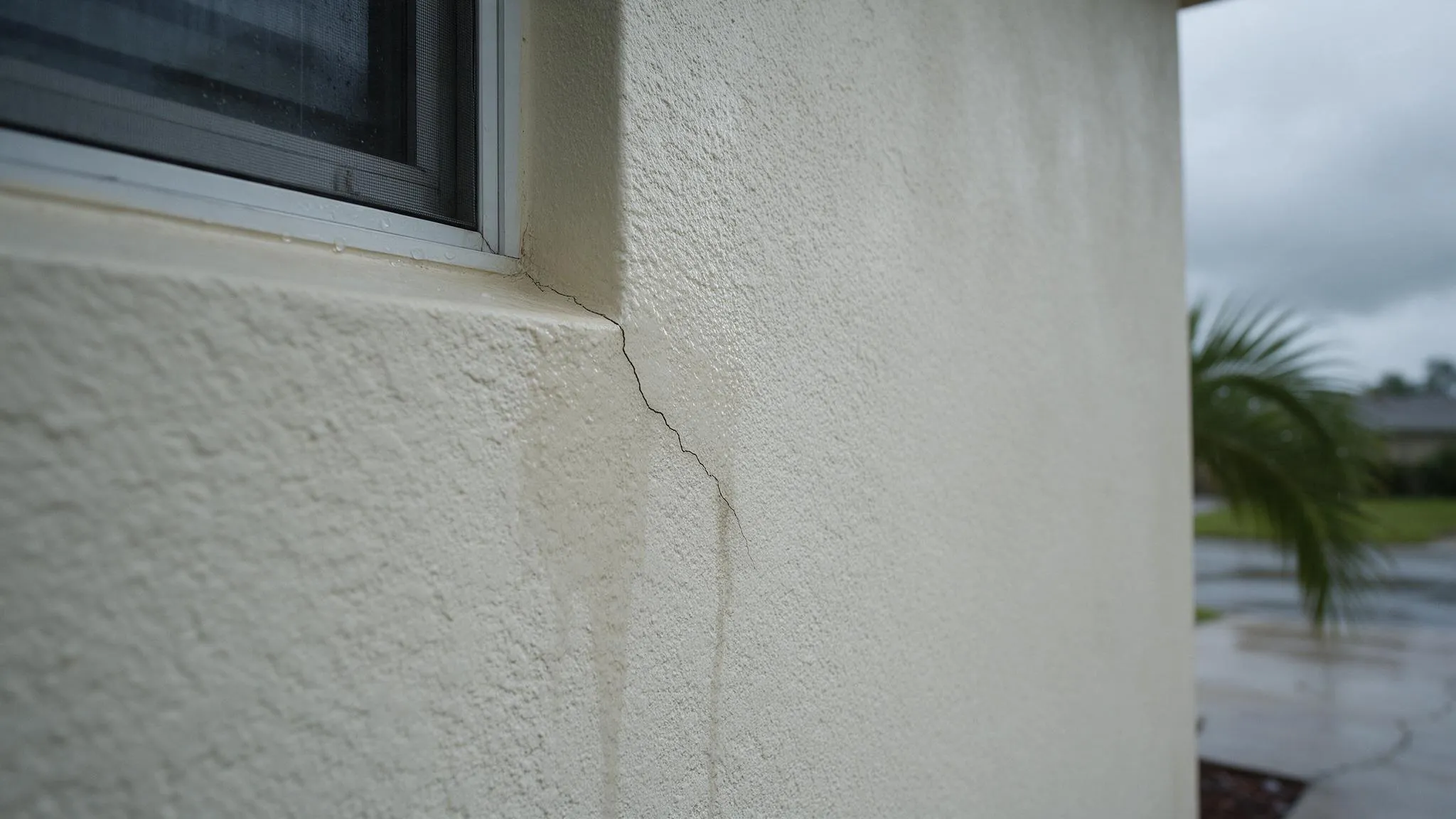


Stucco takes in water. Every rain, and cracks, failed flashing and other openings let more of it behind the wall, where it can damage the barrier, the framing and the interior. On Los Angeles and Westside homes, repair what lets the water in, then protect the wall, and have it checked before the next heavy rain. The wall can look fine while the damage spreads behind it. Once the wall is repaired, stucco waterproofing adds a coating or clear water repellent that helps the wall shed rain.
Does Stucco Absorb Water?
Yes, stucco takes in some water at the surface in every rain: it is a porous cement plaster, water-resistant but not waterproof. In Walls & Ceilings, Mark Fowler, then executive director of the Stucco Manufacturers Association, wrote that wet cement stucco “clearly and obviously absorbs the water quickly,” yet “properly mixed and applied, cement plaster is highly water-resistant.” Fowler also notes that water vapor passes through the plaster. Fowler cites Northwest Wall and Ceiling Bureau tests, run with Federal Testing Labs in 1996, that found properly mixed and applied cement plaster does not let liquid moisture through. Fowler’s article argues against requiring waterproof coatings on stucco, so read it as an industry view, not a promise about any particular wall.
Water-resistant stucco still depends on the barrier behind it. The weather-resistive barrier, either building paper or house wrap, is what keeps water out of the wall once the surface has taken some in. If a sealer has already failed on the wall, our article on why stucco sealants keep failing on Los Angeles homes looks at the reasons.
How Water Gets Behind Stucco
Water gets behind stucco through cracks and openings in the surface, then runs down the weather-resistive barrier toward the weep screed at the base of the wall. According to Dryvit, a stucco manufacturer, in its Commercial Cement Plaster brochure: “Some cracking is inevitable with any stucco, and moisture will penetrate through the cracks.” A stucco wall is designed so that, when properly installed, that moisture settles on the code-required barrier and drains down and out through the weep screed.
Near the coast, in places like Santa Monica, Venice and Pacific Palisades, marine-layer moisture and wind-driven rain keep stucco damp longer.
Cracks in the Stucco
Any crack in stucco can let water in, especially near a window, door or other opening, and that water then reaches the barrier. Movement, settling, curing shrinkage and earthquakes all crack stucco. Hairline cracks are common, often cosmetic and worth watching. Cracks that grow longer or wider, particularly at window and door corners, are the ones to act on.
Stucco repair fixes cracks that grow, including cracks at window and door corners, before any coating goes over them.
Failed Flashing and Gaps Around Windows, Roof Lines and Penetrations
Failed flashing and cracked sealant let water behind stucco at the points where stucco meets a window, door, roof or other material. The usual places on a stucco home are:
- window and door edges, where flashing or sealant has failed
- roof-to-wall joints
- balcony and deck connections
- holes cut for lights, vents and cables
- joints where stucco meets wood trim, stone or another material
Water that enters at one of these points rarely shows there. It runs down the barrier and around window frames before it stains an interior wall.
A Blocked Weep Screed and Worn Paint
A weep screed is the drain at the base of a stucco wall. A weep screed covered by soil or paving is where water gets behind stucco, because it cannot drain the wall. Peeling or chalky exterior paint is a sign the finish is wearing, so check it alongside the other signs; it is not a leak by itself.
What Happens If Water Gets Behind Stucco?
Water behind stucco soaks the barrier, sheathing and framing, and over time it leads to rot, mold inside the wall and stains or peeling paint inside the house. The stucco can look fine through all of it.
The U.S. Environmental Protection Agency (EPA) says none of the many types of mold will grow without water or moisture, and that if wet areas are dried within 24 to 48 hours of a leak, mold in most cases will not grow. Because water behind stucco rarely shows where it got in, the framing can stay wet past that window.
The EPA also says molds gradually destroy the things they grow on, that mold can be hidden inside walls, and that cleaning up mold without fixing the water problem will most likely bring it back. When water has reached the interior wall, wall leak repair finds the entry point, repairs it, then dries and rebuilds the wall.
Signs That Water Is Getting Behind Stucco
The clearest sign of water behind stucco is a stain or bubbling paint below a window or at the base of an interior wall, especially after rain. Check the outside of the wall for:
- dark patches that stay damp after the rest of the wall dries
- stucco that bulges, sounds hollow or feels soft
- cracks that grow longer or wider, especially at window and door corners
- cracked sealant where stucco meets windows, doors, trim or the roof
- white deposits on the surface (efflorescence)
Check the inside of the house for:
- a stain or bubbling paint below a window or at the base of a wall, especially after rain
- damp or swollen baseboards
- a musty smell along one wall
Water behind stucco rarely shows where it got in, so do not wait for an interior stain. When you spot a new crack, photograph it with a coin or ruler beside it for scale and note when stains show up. Do not fill cracks with household caulk, which rarely holds on stucco and can trap water behind it, and do not pressure wash the wall, because the spray can force water through. Stucco leak detection finds where water gets behind the wall, usually without opening it up.
What Protects Stucco From Water: Repair, Paint or Coating?
Repair comes first and protection second, because a coating or paint over damaged stucco seals the problem in. Any finish that goes on afterward has to shed rain and still let the wall release moisture. Deborah Slaton and David S. Patterson of Wiss, Janney, Elstner Associates write in The Construction Specifier that coatings used with brick masonry should be breathable, meaning they let moisture entering the wall escape. The article’s repair-first example is also brick masonry, not stucco.
Standard Exterior Paint
Standard exterior paint is a surface finish, and it does not repair the cracks underneath. Paint is not automatically the wrong choice, though. Slaton and Patterson describe a material rated above 1 perm as breathable, and they note a pigmented 100 percent acrylic latex coating rated at 19 perms (ASTM E96) at 3 mils dry film thickness. That is one example from the article, not a rating for all paint. They also say permeance varies with a product’s composition and thickness, and that multiple coating layers can reduce breathability.
Elastomeric Coating
An elastomeric coating, sometimes sold as elastomeric paint, is a thick, flexible finish that stretches over hairline cracks and moves with the wall. It suits walls with a lot of fine cracking. Slaton and Patterson, writing about coatings in general, classify any coating rated at 1 perm or less as a vapor retarder, so the product is matched to the wall.
Clear Water Repellent
A clear water repellent soaks into the stucco and cuts how much water the wall absorbs, with little change to its color. A repellent does not bridge cracks, so cracks need repair first. Which option suits a particular wall belongs on the stucco waterproofing page, where the coatings and repellents are described in full.
When to Have Stucco Inspected
Have stucco inspected before the next heavy rain if the wall shows any of the signs below, and do not wait for an interior stain or visible mold. Water behind stucco rarely shows where it got in, so the wall can look sound while the damage spreads.
- cracks that grow longer or wider
- stains or dark patches that return after rain
- stucco that bulges, sounds hollow or feels soft
- cracked sealant around windows, doors, trim or the roof
- a stain, damp baseboard or musty smell on an interior wall
Absolute Maintenance & Consulting specializes in finding and repairing leaks from exterior sources, and it serves Los Angeles and the whole Westside, from the city west to the ocean, including West Los Angeles and Culver City. Our inspection uses thermal imaging and moisture mapping to find wet areas behind stucco, usually without opening the wall. When we do the work, the fee for a Basic or Detailed Inspection is credited toward the cost of the work.
Or call (310) 678-4345.