
What Causes Mold in a House? Why Los Angeles Homes Are Especially Vulnerable
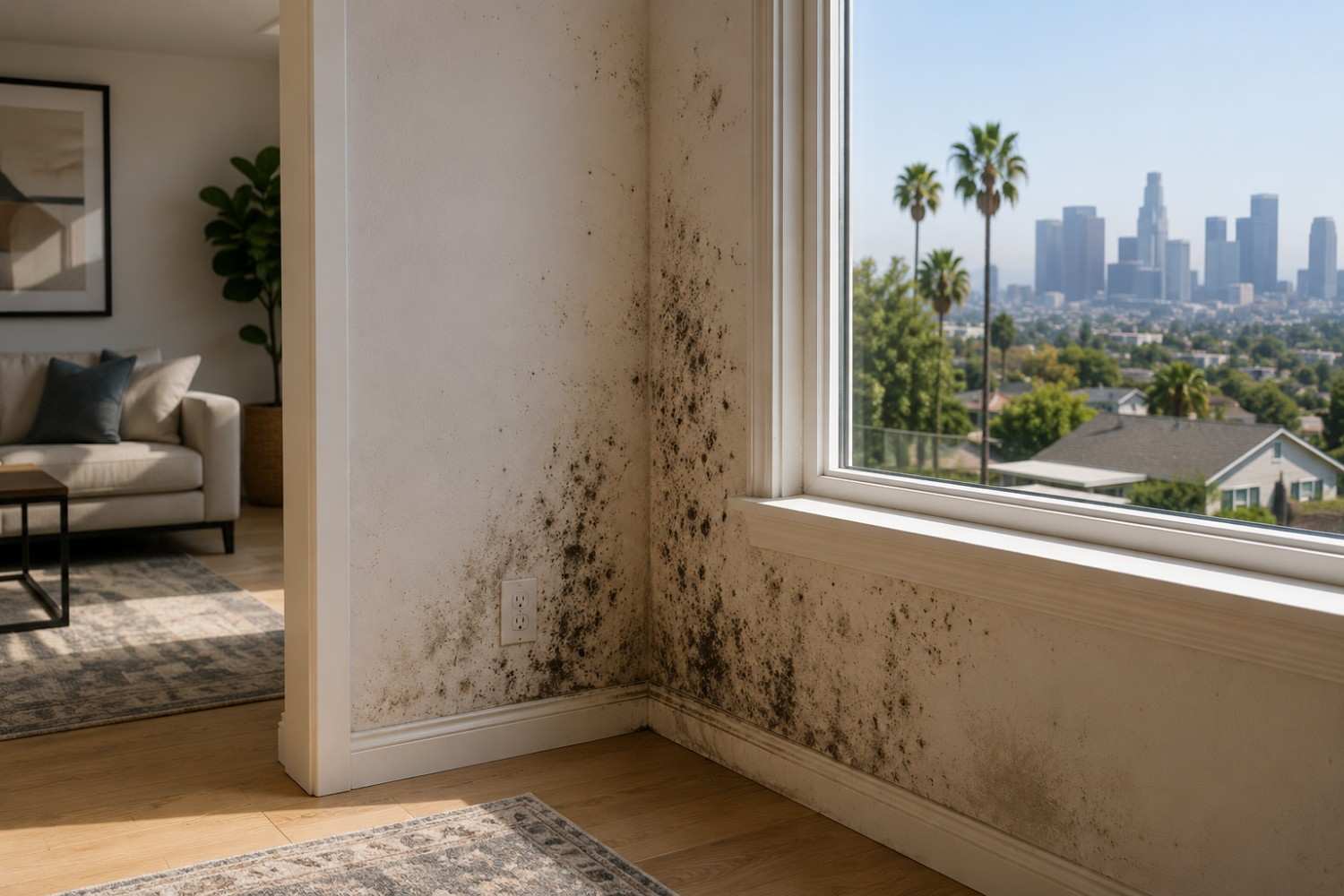

Mold needs exactly two things to grow in your home: a moisture source and an organic material to feed on. Drywall paper, wood framing, attic insulation, and even dust on a concrete wall all qualify as organic material, meaning virtually every surface in your house is fair game. The only variable is water.
In Los Angeles, that water shows up more often than most homeowners expect, and it often does so invisibly, making LA homes especially vulnerable and in frequent need of mold remediation despite the city’s reputation as a sunny, dry place.
Why Do Los Angeles Homeowners Overlook Mold Risk?
Los Angeles has a reputation as a sun-drenched, arid city, and that reputation works against homeowners. Because people don’t associate LA with moisture problems, early warning signs go unnoticed until mold is already visible, and by then, it’s almost certainly been growing for weeks or months inside wall cavities, under flooring, or in attic insulation where no one can see it.
The reality is that LA’s Mediterranean climate creates a specific and recurring pattern of moisture exposure that the region’s housing stock was never fully designed to handle.
What Are the Moisture Sources That Cause Mold in LA Homes?
In our inspections across Los Angeles, six sources account for nearly every hidden mold case we find: the marine layer, atmospheric rivers, flat roofs, stucco envelope failures, window and door flashing failures, and poor attic ventilation.
1. The Marine Layer
From May through August, a low marine layer rolls in from the Pacific most mornings, blanketing coastal and inland communities with humidity that regularly sits above 80% until mid-morning. This isn’t rain. There’s no water pooling anywhere. But that sustained surface humidity is enough to feed mold on any organic material that’s already been slightly compromised, a scuffed paint surface, a drafty window frame, a bathroom ceiling that doesn’t quite dry between showers.
2. Atmospheric Rivers
California’s atmospheric river events have become more intense and more frequent. When these storms hit, they can drop several inches of rain in 24 to 72 hours far beyond what older drainage systems, flat roofs, and stucco envelopes were built to manage. The water intrusion that follows these events is one of the leading triggers for hidden mold in LA homes, and the damage often doesn’t show up for weeks after the storm has passed.
3. Flat Roofs
Flat roofs are common on mid-century modern homes, older bungalows, and commercial-to-residential conversions across LA. They’re inherently vulnerable: water ponds rather than drains, membrane seams fail over time, and penetrations around HVAC equipment and vents are common leak points. A slow flat roof leak can saturate roof decking and ceiling insulation for months before a single stain appears on the ceiling below.
4. Stucco Envelope Failures
Stucco is the dominant exterior finish in Los Angeles, and it looks solid. It isn’t. Traditional three-coat stucco is a permeable material, and when the building paper behind it degrades, which it does after 20 to 30 years water penetrates the wall assembly and has nowhere to go. The framing, sheathing, and interior drywall absorb it slowly. This is one of the most common sources of hidden mold in LA’s older housing stock, and it’s rarely obvious from the outside.
5. Window and Door Flashing Failures
Improper or deteriorated flashing around windows and doors allows rainwater to migrate into the wall cavity every time it rains. In LA’s older neighborhoods, original single-pane windows with wood frames are still common, and the flashing, if it was installed correctly at all has often failed. Water follows gravity and capillary action deep into the wall before it finds a surface to evaporate from. It usually doesn’t evaporate. It feeds mold.
6. Poor Attic Ventilation
Many older LA homes have inadequate attic ventilation. During summer, heat buildup in the attic creates a thermal gradient that draws humid air in from outside and condenses it on cooler surfaces, roof sheathing, joists, insulation batts. Add a leaking roof or a poorly sealed attic hatch, and you have a consistently damp environment that most homeowners never inspect until there’s a visible problem.
How Quickly Can Mold Grow After a Water Event?
Here’s the number that matters most for damage control: mold can begin colonizing a wet surface within 24 to 48 hours of moisture exposure. This isn’t a slow process. After a pipe leak, a roof intrusion during a storm, or even a flooded shower pan, the clock starts immediately. By the time most homeowners notice a musty smell or a visible patch, the colony has been established for days, and the network of hyphae is already extending further into the material.
Speed of response after any water event is the single biggest factor in whether a moisture problem becomes a mold problem. Drying out affected materials within that first 24 to 48 hour window can prevent colonization altogether, which is why professional water extraction and dehumidification matter more than any cleanup done after the fact. Waiting even a few extra days to call for help can be the difference between a straightforward drying job and a full remediation project.
Read More: Moisture Meter Testing on Concrete and Block: Understanding Accurate Readings vs. False Positives
What Is the Difference Between Surface Mold and Hidden Mold?
Not all mold is the same kind of problem.
Surface mold is the dark spots on bathroom grout, the pink film around a shower drain, and the discoloration on a windowsill, which typically grows on a consistently humid surface. It’s visible, it’s accessible, and in most cases, it hasn’t penetrated the substrate.
Hidden mold is a fundamentally different situation. When moisture gets into a wall cavity, under the subfloor, or into attic insulation, mold grows on the interior of the building envelope where it can’t be seen and isn’t drying out. It can grow for months or years without ever producing a visible stain on the finished surface. By the time smell or discoloration appears, the colony is often extensive.
Hidden mold is also more likely to involve mold species that thrive in enclosed wall cavities, some of which are associated with mycotoxin production, an environment quite different from open, ventilated bathroom tile.
When Should You Call a Professional Instead of Cleaning Mold Yourself?
The EPA’s widely referenced guideline is the 10 square foot rule: if visible mold covers less than 10 square feet (roughly a 3×3 area), a healthy adult homeowner can generally clean it themselves using appropriate PPE and an antimicrobial solution.
But that rule applies only to surface mold on non-porous materials. If any of the following are true, call a professional:
- The mold is on drywall, insulation, wood framing, or other porous materials
- You suspect moisture has been present in a wall cavity, under flooring, or in the attic
- The affected area is larger than 10 square feet
- You or anyone in the household has respiratory sensitivities, asthma, or immune conditions
- There’s a musty smell, but no visible mold, which is almost always hidden growth
- Mold has returned after a previous cleaning
A professional mold inspection uses moisture meters, thermal imaging, and sometimes air sampling to locate hidden moisture and active colonies that surface cleaning will never reach. In the LA housing market, where stucco failures and aging building envelopes are common, a visual inspection alone often misses the source.
ALSO READ: Preparing Your Home: How the Rising El Niño Impacts Southern California
What Are the First Steps After Water Gets Into Your Los Angeles Home?
The first four moves after any water event:
- Stop the source: find what allowed water in and close it off before anything else. Nothing downstream matters until that entry point is controlled.
- Start drying immediately: run fans directed toward exits, bring in dehumidifiers, and open windows only when outdoor humidity is lower than indoor levels.
- Remove saturated materials: wet drywall, insulation, and carpet padding will not dry adequately in place. They need to come out. Leaving them in gives mold exactly the surface it needs.
- Document before you touch anything: date-stamped photographs taken before and during removal are the foundation of any insurance claim.
If the event involved storm damage, a roof leak, or water moving inside a wall, the wet area is almost certainly larger than what you can see. Read our full breakdown on why LA homes get winter mold to understand how seasonal weather patterns expand the scope of these events year over year.
When Should You Schedule a Mold Inspection in Los Angeles?
As soon as possible after any water event, and ideally within 24 to 48 hours, before mold has a chance to take hold. If you’ve had a storm, a leak, flooding, or even persistent condensation, and you’re not certain your home is fully dry, the most important next step is an inspection by a qualified professional before the problem compounds. If you’re concerned about hidden mold or want to understand the moisture risk in your home, schedule a mold inspection today.
Absolute Maintenance & Consulting provides comprehensive mold remediation services across the greater Los Angeles area. We’ll assess your specific building envelope, identify any active moisture sources, and give you a clear picture of what’s happening inside your walls.
Call Absolute Maintenance & Consulting today and let our experts find and fix the mold before it spreads.
Frequently Asked Questions
What are the most common causes of mold in a house?
The most common triggers in homes are plumbing leaks, roof leaks, condensation on windows and pipes, poor bathroom ventilation, and water intrusion through the building envelope after heavy rain. In Los Angeles specifically, the marine layer, stucco envelope failures, and atmospheric river events are leading contributors.
Why is Los Angeles considered a high-risk city for mold despite its dry reputation?
LA’s Mediterranean climate creates a deceptive combination of dry summers and wet winters, compounded by daily marine layer humidity. Older housing stock, much of it built before modern waterproofing standards, has stucco exteriors, flat roofs, and aging window flashing that allow moisture to enter the building envelope repeatedly. Because homeowners don’t expect mold in a ‘sunny’ city, problems often go undetected until they’re serious.
How fast does mold grow after a water leak?
Mold can begin colonizing a wet surface within 24 to 48 hours of moisture exposure. This is why rapid response after any water event is critical. If wet materials like drywall, insulation, carpet padding, are not dried or removed within that window, mold growth becomes highly likely.
What’s the difference between surface mold and hidden mold?
Surface mold grows on visible, accessible areas like bathroom tile and window sills. It hasn’t typically penetrated the substrate and can often be cleaned by a homeowner. Hidden mold grows inside wall cavities, under flooring, or in attic insulation, where it can expand undetected for months or years. Hidden mold is more serious, harder to remediate, and requires professional assessment to locate and address properly.
Can I clean mold myself, or do I need a professional?
The EPA’s guideline is that homeowners can generally clean surface mold covering less than 10 square feet on non-porous surfaces. If the affected area is larger, involves porous materials like drywall or wood, or if there’s a musty smell without visible mold, a professional should be called. People with asthma, allergies, or immune conditions should not attempt mold cleanup themselves, regardless of size.
Does homeowners’ insurance cover mold damage in California?
Most standard homeowners’ insurance policies in California cover mold only when it results directly from a covered peril such as a burst pipe or storm damage, and only if the damage is reported promptly. Mold from long-term neglect, gradual leaks, or deferred maintenance is typically excluded. Documenting water events with photos immediately is essential for any future claim.
How can I prevent mold in my Los Angeles home?
Key prevention steps include maintaining your roof and addressing any flat roof ponding, inspecting and resealing window and door flashing every few years, ensuring bathroom and kitchen exhaust fans vent to the outside (not the attic), checking your stucco exterior for cracks annually, and improving attic ventilation if your home was built before 1990. After any rainfall event, inspect your crawl space, attic, and interior walls near windows for signs of moisture within 48 hours.
About the Author
 Cameron Figgins
Cameron Figgins is the founder of Absolute Maintenance & Consulting. With over 30 years of hands-on industry experience, he specializes in identifying complex water intrusion issues in Southern California homes and is dedicated to helping homeowners protect their property with the latest in detection technology.”