
Moisture Meter Testing on Concrete and Block: Understanding Accurate Readings vs. False Positives
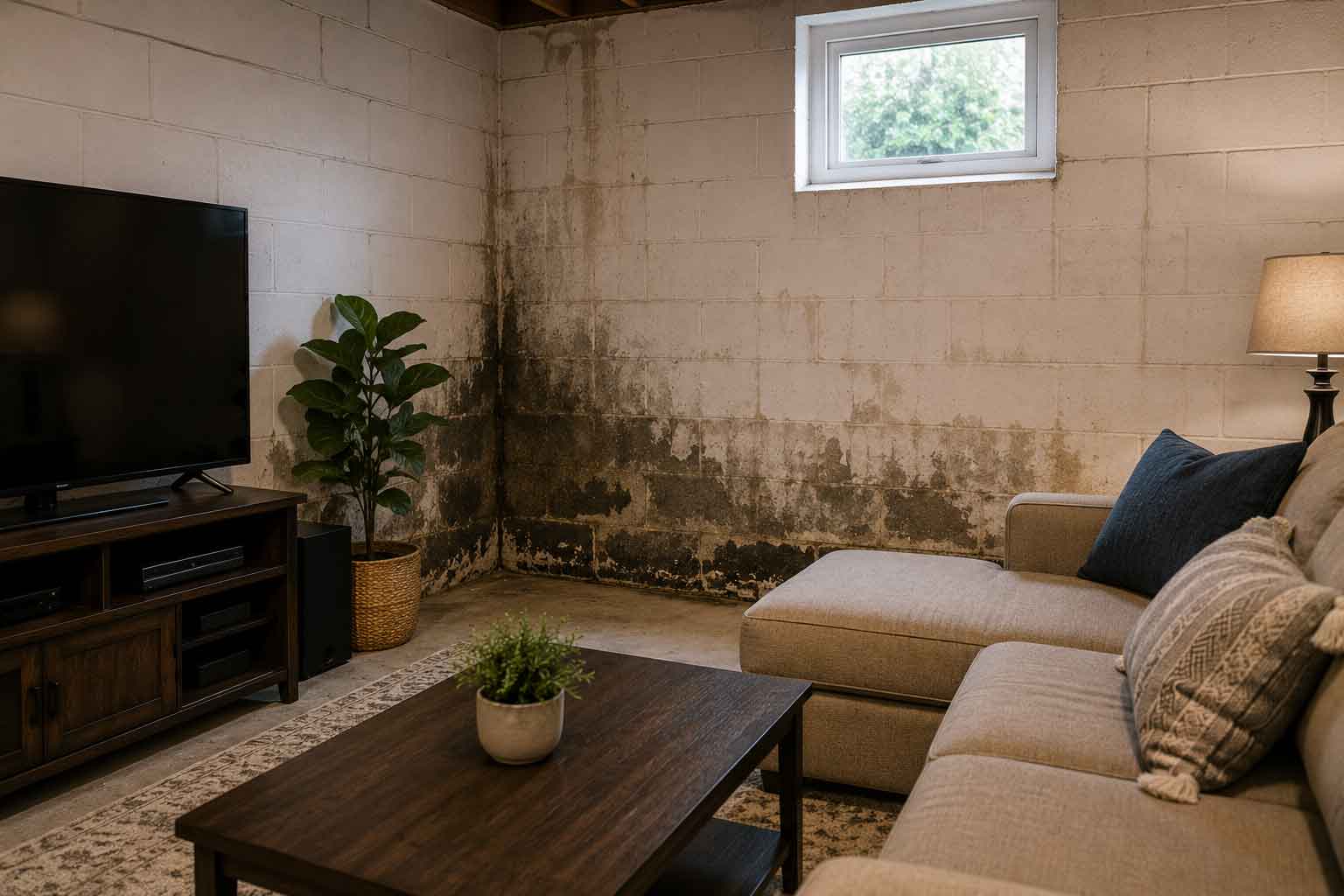

A moisture meter is one of the most useful tools in a professional’s kit. But on concrete and block, a high reading does not always mean what most people think it means.
Understanding the difference between an accurate reading and a false positive is what separates a proper assessment from a costly mistake.
Why Concrete and Block Are Different From Other Materials
Wood and drywall respond to moisture meters in fairly predictable ways. Concrete and block do not. The material itself affects how the meter reads, which means the same number on the same meter can mean something completely different depending on what is being tested.
Concrete Is Not a Uniform Material
Concrete is made up of cement, aggregate, minerals, additives, and reinforcement materials. Its density and composition vary throughout a structure. Those variations affect how electrical signals travel through the material and can produce readings that look like moisture when the actual condition is normal.
Meters Detect Electrical Changes, Not Water Directly
Most handheld moisture meters work by measuring changes in electrical resistance, capacitance, or electromagnetic response. The meter is not seeing water. It is detecting changes in the material’s ability to conduct or store electrical energy.
A higher reading on concrete may indicate increased moisture, but it can also indicate increased density, mineral content, salts, reinforcement steel, or embedded metals. Context matters as much as the number.
Also Read: Healthy Homes Start With Small Habits
What Causes False Positive Readings on Concrete and Block?
False positives are common on cementitious materials. Knowing what triggers them is part of accurate moisture detection.
Natural Moisture in Concrete
Concrete is manufactured using water as part of the curing process. Even fully cured concrete contains some level of internal moisture. Age, thickness, exposure, soil conditions, and relative humidity all influence normal moisture content in concrete. A reading that appears high does not automatically mean there is a leak or water intrusion. It has to be compared against surrounding areas and evaluated alongside other evidence.
Density Variations Throughout the Structure
Concrete is not consistent throughout a structure. Different aggregate mixtures, different pours, voids, air pockets, compaction differences, and patch materials all create variations in density. A denser section of concrete can produce a stronger meter response that resembles elevated moisture even when the material is dry.
Reinforcing Steel and Embedded Metals
One of the most common causes of false positives is hidden metal. Rebar, wire mesh, metal lath, anchors, fasteners, and embedded supports all conduct electricity. A moisture meter may interpret those areas as elevated moisture. A technician can see a reading spike directly over reinforcement even when the surrounding concrete is completely dry.
Salts and Efflorescence
Masonry materials frequently contain dissolved minerals and salts. When moisture moves through concrete or block, minerals accumulate at the surface and create efflorescence, mineral staining, and white powder deposits. Salt contamination increases electrical conductivity and can cause meters to read higher than actual moisture conditions. A wall with salt deposits may test wet even when active water leak detection finds no active intrusion.
Surface Condensation
A surface may test elevated because of condensation rather than a leak. Cold concrete walls, below-grade foundations, high humidity environments, and air-conditioned spaces can all create temporary surface moisture that has nothing to do with water intrusion. The meter detects it the same way it detects a real problem, which is why physical evidence always has to be part of the evaluation.
Coatings and Waterproofing Materials
Paint, sealers, waterproof coatings, epoxy, and membranes all change the way a meter signal travels through a substrate. A technician has to determine whether the reading reflects the concrete itself or the surface system installed over it. Those are two very different conditions.
Read More: Does Homeowners Insurance Cover Water Damage? What Property Owners Need to Know
How Should Moisture Testing on Concrete Be Done Properly?
Accurate moisture testing on concrete and block follows a process, not a single reading.
Step 1. Establish a Baseline First
Before testing any suspected area, a technician should test known unaffected locations on the same wall, at the same elevation, with the same construction type and similar environmental exposure. That baseline establishes what normal looks like for that specific structure. Without it, there is no meaningful comparison.
Step 2. Take Multiple Readings and Look for Patterns
A single reading should never be used as proof of moisture intrusion. A technician should scan multiple locations, document patterns, and compare readings across the area. A moisture problem usually creates a pattern. One isolated number is not enough to draw a conclusion.
Step 3. Compare the Right Materials to Each Other
Concrete should only be compared to concrete. Block should only be compared to block. Different materials have different electrical properties, and cross-material comparisons produce inaccurate conclusions.
Step 4. Correlate Meter Data With Physical Evidence
The meter is one diagnostic tool, not the final determination. A professional evaluation considers water staining, cracking, efflorescence, odors, deterioration, failed waterproofing, plumbing conditions, exterior drainage, and weather history alongside the readings. Mold growth in nearby areas can also be a meaningful indicator when readings are ambiguous.
What Is the Difference Between Screening and Quantitative Testing?
Moisture meters are excellent for locating suspect areas, comparing zones, identifying moisture patterns, and guiding further investigation. That is screening work and it is genuinely valuable.
But surface meters generally do not provide a complete measurement of moisture conditions deep within concrete. For situations that require more precise data, more advanced testing methods may be necessary depending on the purpose of the evaluation.
Screening Finds Where to Look
A handheld surface scan helps narrow down where elevated conditions exist. It is the starting point, not the conclusion.
Quantitative Testing Goes Deeper
Flooring installation evaluations, for example, often require standardized concrete moisture tests rather than a surface scan alone. When stakes are higher, so should the testing method.
When a Second Opinion Is Worth It
A moisture reading that does not match the physical conditions of a space, readings that keep coming back in the same area after repairs, or an assessment that relied on a single meter scan without baseline comparisons are all reasons to get a more thorough evaluation.
Absolute Maintenance & Consulting approaches every moisture assessment the same way. Understand the substrate, establish baseline conditions, identify abnormal patterns, eliminate false positive causes, and correlate everything with visible evidence. A moisture meter detects differences in material response. It does not independently prove a leak. Get in touch to schedule a professional evaluation.
FAQs
Do you offer moisture testing on concrete and block walls?
Yes, this is one of our core services. We test concrete and block using calibrated meters alongside thermal imaging and physical evidence. Every assessment includes a written report with findings and recommendations.
How is your moisture assessment different from a regular home inspection?
A standard home inspection is a general overview. Our assessments are specialized, using moisture mapping across 20 to 50 or more points to identify patterns and root causes with precision.
How long does a moisture assessment typically take?
It depends on the size and complexity of the property. Most single family home assessments are completed in one visit, and we walk you through our findings before we leave.
Do you provide a written report after the assessment?
Yes, every assessment comes with a detailed written report documenting all readings, patterns, and recommendations so you have a clear record to act on.
Can you find the source of the moisture, not just confirm it exists?
That is exactly what we are hired to do. We do not just flag elevated readings, we trace the source using thermal imaging, moisture mapping, and physical evaluation.
Do you serve all of Los Angeles?
Yes, Absolute Maintenance and Consulting serves residential and commercial properties throughout the greater Los Angeles area.
What happens after the inspection if moisture intrusion is confirmed?
We handle both detection and repair under one roof. You will not be handed a report and left to find another contractor, we see the job through from diagnosis to completed repair.
About the Author
 Cameron Figgins
Cameron Figgins is the founder of Absolute Maintenance & Consulting. With over 30 years of hands-on industry experience, he specializes in identifying complex water intrusion issues in Southern California homes and is dedicated to helping homeowners protect their property with the latest in detection technology.”