
Does Homeowners Insurance Cover Water Damage? What Property Owners Need to Know
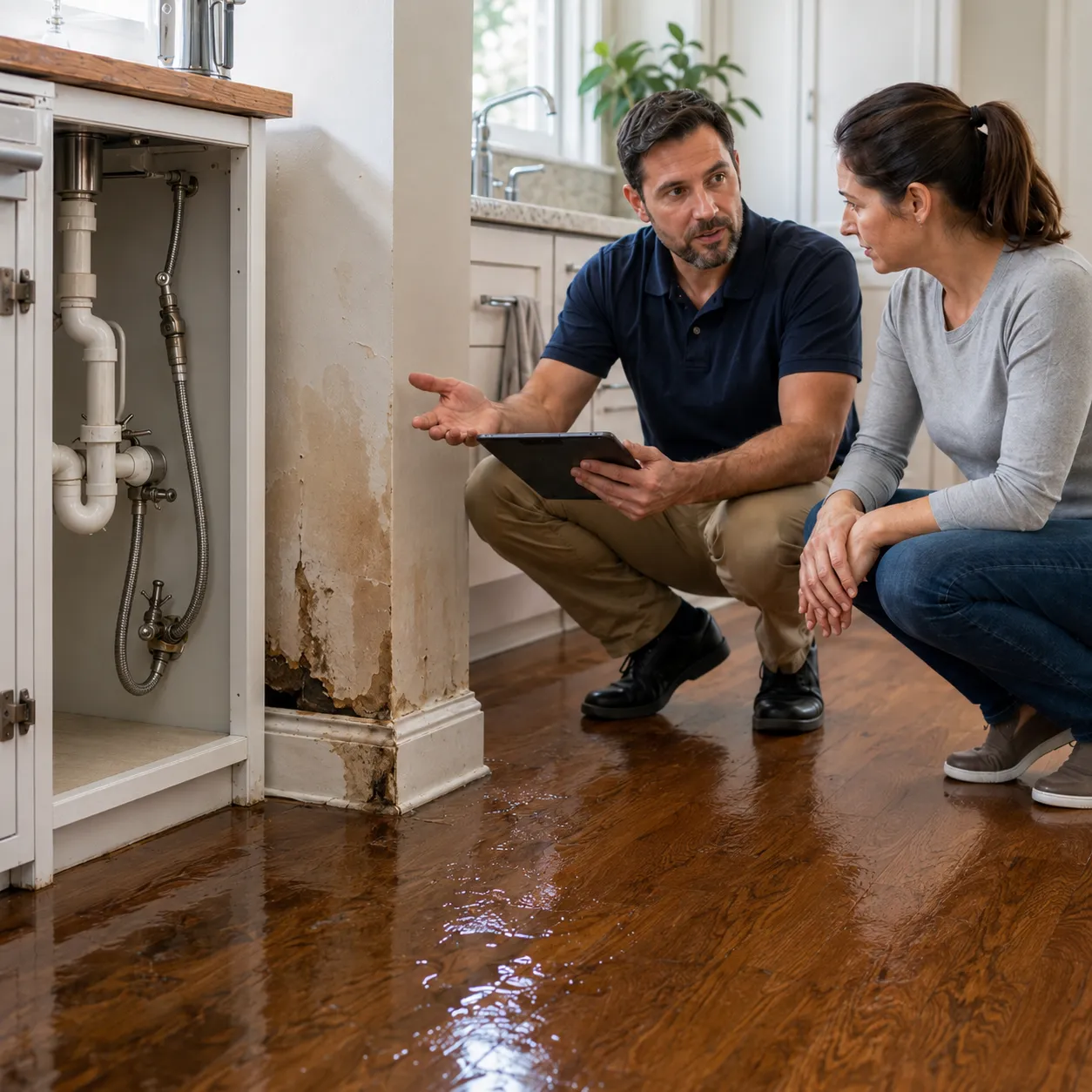

Homeowners insurance covers water damage only when the cause is sudden and accidental, such as a burst pipe or an appliance overflow. It explicitly excludes damage from gradual leaks, poor maintenance, and external flooding. That single sentence answers the question most homeowners ask after they find water where it should not be. The details below explain exactly how that rule plays out in real claims, what it means for commercial property owners, and what you need to do right now if water is already in your building.
I’m Cameron Figgins, founder of Absolute Maintenance & Consulting. I’ve been working water intrusion cases in Southern California for over 30 years. I’ve seen homeowners get full insurance payouts and I’ve seen them get nothing, often for situations that look nearly identical on the surface. The difference almost always comes down to one thing: whether the damage qualifies as sudden and accidental.
The Rule of Thumb: What Is Considered “Sudden and Accidental”?
The Insurance Information Institute defines the “sudden and accidental” standard as this: the damage must be unexpected, unintended, and occur quickly, not over time. That’s the test every adjuster applies before anything else. Was it sudden? Was it accidental? If the answer to both is yes, you likely have a covered claim. If the answer to either is no, your claim is at serious risk of denial before the adjuster even walks through your door.
This matters more than people realize. The question isn’t whether water got into your home. The question is how and why it got there.
What Homeowners Insurance Typically Covers
These are the events that generally pass the sudden and accidental test:
- A pipe freezes overnight and ruptures
- A toilet overflows because of a sudden clog
- A washing machine hose fails and floods the laundry room
- A storm damages your roof and rain enters through the new opening
Both your dwelling coverage (Structure A) and your personal property coverage can apply to these events. Structure A pays for damage to the building itself, walls, floors, ceilings. Personal property coverage addresses furniture, appliances, and belongings. Knowing which component applies helps you have a more productive conversation with your adjuster.
Your base policy does not automatically cover everything water-related. Two riders you should verify:
| Optional Rider | What It Covers | Included by Default? |
|---|---|---|
| Water Backup Coverage | Sewer or drain overflow into the property | No |
| Sump Pump Failure Coverage | Basement flooding from a failed sump pump | No |
These riders must be added to your policy separately. If you don’t have them and your sewer backs up, you are paying out of pocket.
As for dollar amounts: the average covered water damage claim runs between $12,000 and $15,000. Major events can exceed $50,000. Those numbers make coverage verification worth your time well before any emergency happens.
What Homeowners Insurance Typically Excludes
Three exclusion categories cover the vast majority of denied water damage claims:
1. Gradual damage. A pipe joint that weeps for weeks, a slow drip under a sink that rots the subfloor over months, a shower pan that seeps into the framing over years. Insurance companies call this gradual deterioration, and it is almost universally excluded.
2. Neglect exclusion. If a roof had visible damage and you didn’t repair it, and water eventually came in through that unrepaired area, the insurer can deny the claim because you had a reasonable opportunity to prevent the loss.
3. External flooding and groundwater seepage. Water rising from the ground, whether from a river, storm surge, heavy rain pooling against your foundation, or groundwater seepage through your slab, is not covered by a standard homeowners policy. Period.
Mold remediation from water damage is also frequently excluded when the insurer determines the moisture source was gradual or pre-existing. I’ve worked cases where the homeowner thought they had a sudden event, but the inspector found moisture patterns that told a different story. By the time mold shows up, it’s often too late to argue for coverage if the source was gradual. Our guide to insurance coverage for mold remediation in California covers the mold side in detail.
The flood insurance gap is real and significant. External flooding requires a separate NFIP or private flood insurance policy. Your standard homeowners policy explicitly excludes ground-up water intrusion. If you don’t have a separate flood policy, rising water is entirely your financial responsibility.
The gradual leak exclusion is the single most common reason water damage claims are denied in my experience, and it connects directly to what happens when a pipe appears to “suddenly” burst.
Does Homeowners Insurance Cover a Burst Pipe?
Yes. Burst pipe insurance coverage is one of the clearest yes scenarios under the sudden and accidental standard. A pipe that freezes and ruptures overnight is a textbook covered event.
Here is where it gets complicated. A pipe that showed visible corrosion, discoloration, or a slow drip for weeks before it finally failed can be reclassified by the adjuster as gradual deterioration. What looks like a burst pipe to you looks like a foreseeable failure to the insurer. That reclassification turns your claim from a yes to a denial.
This is why I recommend documented plumbing inspections. If your pipes were professionally inspected six months before one bursts and the report shows no pre-existing issues, you have evidence the failure was genuinely sudden. Without that documentation, you’re fighting the adjuster’s narrative with nothing.
Immediate mitigation water damage response is also non-negotiable for most policies. Shutting off the main water supply within minutes of discovering a burst pipe is something most policies require as a condition of coverage. Every member of your household should know where the main shutoff valve is before an emergency occurs. Failure to act quickly can reduce or void your payout.
Does Homeowners Insurance Cover Flooding From Heavy Rain?
No. Standard homeowners insurance does not cover flooding from heavy rain when water enters from the ground up. Storm surge, overland flooding, and rising groundwater are all excluded.
There is one specific exception worth understanding. If a storm damages your roof and creates a sudden structural breach, rain that enters through that specific opening may be covered under dwelling coverage. The key word is breach. The storm had to create a new opening. Rain simply working through an aging or poorly maintained roof does not qualify.
FEMA data shows that approximately 80% of flood damage claims occur in properties located in low-risk flood zones. Most of those property owners do not carry flood insurance because they don’t think they need it. That’s a significant financial exposure.
The only path to coverage for rain-driven flooding is a separate flood insurance policy through the NFIP or a private carrier. One critical detail: flood policies have a 30-day waiting period before they activate. You cannot buy flood insurance when a storm is already in the forecast and expect to be covered. Plan ahead.
Commercial Property Insurance and Water Damage: What Changes?
Commercial property owners carry commercial property insurance, not homeowners insurance. The same sudden and accidental principle governs coverage decisions, but the details differ in important ways.
Commercial policies often carry stricter exclusions around groundwater intrusion and equipment breakdown-related leaks. Documentation requirements for maintenance are higher because adjusters scrutinize large-loss commercial claims more aggressively. If you own a commercial building and cannot demonstrate you were maintaining it, your claim is at serious risk.
Water backup coverage is excluded by default from most commercial property policies, just as it is from residential ones. Sewer backup is a frequent commercial loss, especially in older Southern California building stock with aging municipal connections. Verify whether your commercial policy includes a water backup rider before you need it.
Maintenance documentation is not optional for commercial owners filing large claims. HVAC service records, plumbing inspection reports, and roof condition assessments from a contractor like Absolute Maintenance & Consulting can be the difference between a paid claim and a denied one.
The Most Common Reason Water Damage Claims Are Denied
The Insurance Information Institute identifies property maintenance neglect and gradual leak exclusions as the primary drivers of denied water damage claims. Not storms. Not unavoidable accidents. Neglect and gradual damage.
Here is a scenario I’ve seen play out: a slow drip develops under a kitchen sink. The homeowner notices some discoloration but doesn’t call anyone. Over six months, that moisture works into the subfloor and the base cabinets. Then the pipe fails completely and the homeowner files a claim. The adjuster comes out, finds swollen wood, stained framing, and moisture readings throughout the subfloor area, and denies the claim as gradual deterioration. The homeowner is shocked. The adjuster is not surprised at all.
Secondary denial triggers to know:
- Leaving standing water for days after a sudden event without beginning mitigation
- No documentation of prior maintenance when the insurer questions whether the damage was pre-existing
- Filing flood damage under a standard homeowners policy that does not include flood coverage
The adjuster’s job is to find evidence of pre-existing conditions. That is not cynicism. That is how the claim evaluation process works. Your job is to have documentation that proves no pre-existing problem existed. If you have dated inspection reports, you can counter the gradual damage narrative. If you have nothing, you’re starting from a disadvantaged position.
What to Do Immediately After a Water Damage Event in Los Angeles
Every hour of delay after a water event increases structural damage and complicates your insurance claim. Most policies require “reasonable and immediate mitigation” as a condition of coverage. This section is about protecting both your property and your claim at the same time.
Step 1: Stop the Source
Locate and shut off the main water supply valve immediately. Every person in your household should know where it is right now, not during a flood. For roof or appliance sources where shutoff isn’t immediate, use towels, buckets, and tarps to contain spread. Cut power to any area with standing water before anyone enters it.
Step 2: Document Everything
Before you move anything, photograph and video the following:
- The source of the water
- The path water traveled through the property
- All affected materials: flooring, drywall, cabinetry, baseboards
- Any visible structural damage
Do not discard damaged materials before the adjuster visits. Wet carpet, saturated drywall, and damaged cabinetry are physical evidence. Adjusters may request samples. Throwing them out before inspection can create problems with your claim.
Notify your insurance carrier within 24 hours. Most policies have a prompt-reporting requirement. Missing it gives the insurer grounds to limit your payout.
Step 3: Call a Professional Mitigation Company
DIY cleanup does not meet the standard most insurers expect. Professional immediate mitigation means industrial drying equipment, moisture mapping, and mold prevention treatment applied to a documented timeline. That timeline matters. Mitigation is only the first phase; see the difference between water mitigation and restoration.
When Absolute Maintenance & Consulting responds to a water event in the Los Angeles area, we provide written mitigation reports that become part of your claim file. That documentation strengthens your position with the adjuster. It shows you acted quickly and correctly.
Mold remediation from water damage becomes necessary within 24 to 48 hours of moisture exposure in Southern California’s climate. Mold discovered days or weeks after an event is far more likely to be classified as a pre-existing or gradual condition and excluded from coverage. Speed is not optional.
How Preventive Maintenance Protects Your Insurance Coverage
The gradual leak exclusion and the neglect exclusion can both be defeated by documented, routine property maintenance. A maintenance contract is not just a property protection strategy. It is an insurance protection strategy.
High-priority maintenance tasks that prevent covered claims from becoming denied claims:
- Annual pipe inspections, especially on older galvanized or copper plumbing
- Roof condition checks after every significant storm event
- Appliance hose replacement on a five-year cycle
- Sump pump testing before rainy season
Maintenance records from a contractor like Absolute Maintenance & Consulting serve as counter-documentation if a claim is disputed. A dated inspection report showing no pre-existing leak is powerful evidence against an adjuster’s gradual-damage theory. Without that report, you’re relying on your word against their interpretation of moisture staining and wood rot.
Some insurers also offer premium discounts or less adversarial claims processing for properties with demonstrated maintenance histories. Prevention pays on both ends: you avoid the damage and you protect the claim if damage still occurs.
Why Local Water Damage Expertise Matters for Your Claim
A national call center does not know that your neighborhood in the San Fernando Valley has clay soil that expands against foundations after rain. It does not know which zip codes in Los Angeles have aging cast-iron sewer laterals that back up regularly. It does not know local response times or which adjusters work which districts.
Local water damage repair matters because faster response directly affects claim outcomes. Less secondary damage means a smaller total claim, which means less scrutiny from the insurer. A local team can often be on-site in hours, not days.
Absolute Maintenance & Consulting serves property owners across Southern California. We understand the regional risk factors: local weather patterns, soil conditions affecting foundation seepage, aging municipal infrastructure in older neighborhoods, and the specific inspection and documentation standards that local adjusters apply to claims in this market.
We bridge the gap between the water event itself and a successfully documented claim. From emergency response through repair documentation, we provide the written record that protects your coverage position.
If you are searching for water damage restoration near me in Southern California, you need a team that knows your city’s specific risks, has working relationships with local adjusters, and can put a professional mitigation report in your claim file within hours of your call. That is what we provide.
Contact Absolute Maintenance & Consulting today. We are available to respond to water intrusion events across the region and can assess your property’s risk before an emergency occurs.
Frequently Asked Questions
Does homeowners insurance cover water damage from a burst pipe?
Yes. A burst pipe is the clearest example of sudden and accidental damage. The resulting water damage and the cost to repair the pipe are typically covered. The exception is a pipe that showed signs of corrosion or slow leaking before it failed, which an adjuster may reclassify as gradual deterioration.
Does homeowners insurance cover a slow leak I knew about for months?
No. A known, unaddressed leak is classified as property maintenance neglect. The insurer will deny the claim because the damage was foreseeable and preventable. This is the most common reason water damage claims are denied.
Does homeowners insurance cover sewage backup?
Not under a standard policy. Sewer backup is excluded by default from most homeowners insurance. You must add a water backup coverage rider to your policy to have this coverage. If you don’t have the rider, a sewage backup is your financial responsibility.
Does homeowners insurance cover basement flooding from rain?
No. Water entering from the ground up, whether from heavy rain pooling against the foundation, rising groundwater, or storm surge, is considered external flooding. Standard homeowners insurance explicitly excludes this. A separate flood insurance policy through the NFIP or a private carrier is required. Note that flood policies have a 30-day waiting period before they activate.
Does homeowners insurance cover mold from water damage?
Sometimes. If mold develops from a covered sudden and accidental water event and you acted quickly to mitigate, mold remediation may be covered. If the insurer determines the moisture source was gradual or pre-existing, mold coverage is almost always excluded. Acting within 24 to 48 hours of a water event is the best way to keep mold remediation from water damage inside the coverage window.
Does commercial property insurance cover water damage differently than homeowners insurance?
The governing principle is the same: sudden and accidental damage is covered, gradual damage and neglect are not. However, commercial policies typically carry stricter exclusions around groundwater intrusion and maintenance neglect, with higher documentation requirements. Commercial property owners must also verify separately whether their policy includes a water backup rider, as sewer backup is a frequent commercial loss that is excluded by default.
About the Author
 Cameron Figgins
Cameron Figgins is the founder of Absolute Maintenance & Consulting. With over 30 years of hands-on industry experience, he specializes in identifying complex water intrusion issues in Southern California homes and is dedicated to helping homeowners protect their property with the latest in detection technology.”