
Hurricane Rachel Update: What the Forecast Said and What to Check on Your Home
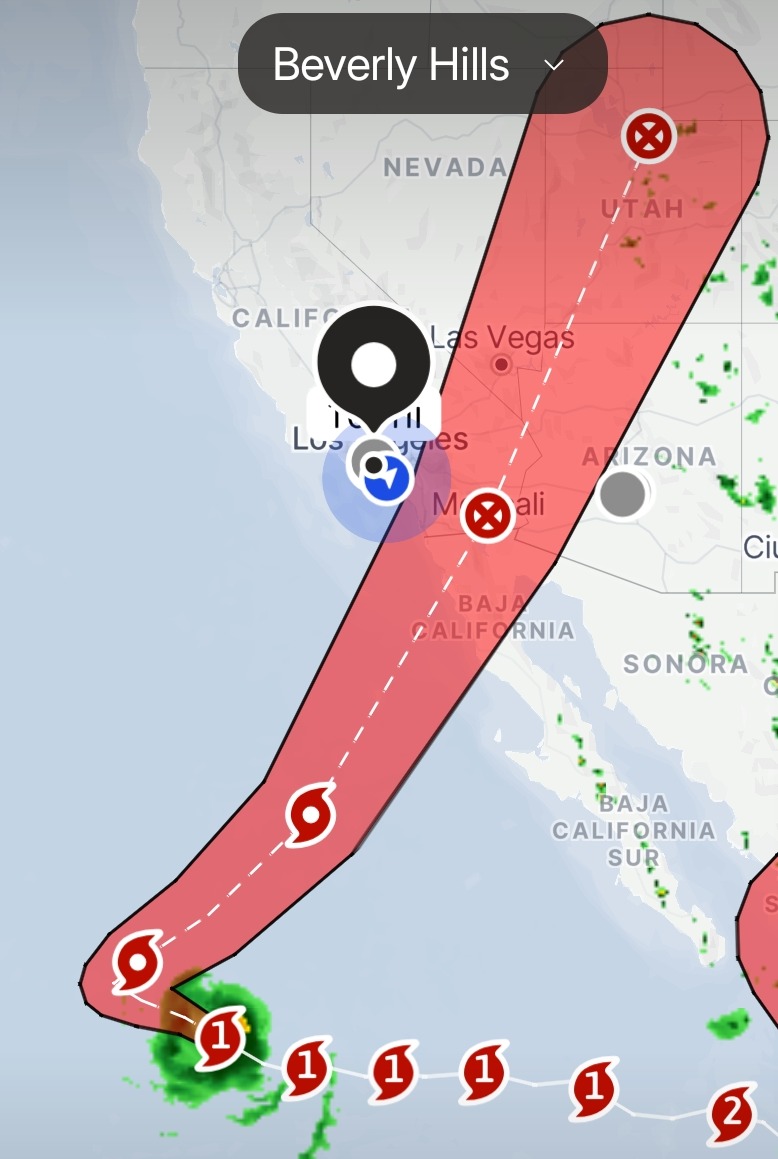

Rachel weakened to a post-tropical remnant and moved inland, and by the National Hurricane Center’s (NHC) reported positions it did not reach Los Angeles as a hurricane. NHC’s last advisory on the storm was Sunday, October 11, 2026. That is this post’s own reading, based on NHC advisories through Advisory 58 (Eastern Pacific storm EP182026). The sections below cover what to check on your exterior after a storm like this.
Updates
Newest first. Each entry says what NHC said at that time. A forecast cone shows where a storm’s center may travel, not where rain and wind will fall.
Sun Oct 11, 2026, 8:00 AM MST: Final NHC advisory on Rachel’s remnants
At 8:00 AM MST (NHC’s time zone, the same moment as 8:00 AM PDT), NHC issued its final advisory on the remnants of Rachel, centered about 255 miles north-northeast of San Diego, with maximum sustained winds of 35 mph and no coastal watches or warnings in effect. NHC said rain of 1 to 3 inches, locally up to 5 inches, was possible from Southern California into the Great Basin and Southwest, with a risk of flash and urban flooding. Source: NHC Advisory 58.
Sun Oct 11, 2026, 2:00 AM PDT: Rachel: Southern California watch discontinued
NHC listed Rachel as a post-tropical cyclone about 60 miles east-northeast of San Diego, with winds of 50 mph, moving north at about 25 mph. NHC expected rapid weakening and discontinued the tropical storm watch for the Southern California coast. Surf and coastal flooding language stayed in place. Source: NHC Advisory 57.
Sat Oct 10, 2026, 11:00 PM PDT: Post-tropical over northern Baja
NHC reported that Rachel had become a post-tropical cyclone, centered about 80 miles south-southeast of San Diego over northern Baja California, with winds near 60 mph. The tropical storm watch stayed up for the Southern California coast from the border to the San Diego/Orange County line. NHC said coastal flooding and erosion would worsen into Sunday morning with high tides. Source: NHC Advisory 56A.
Sat Oct 10, 2026, 2:00 PM PDT: Tropical storm approaching Baja California
NHC placed Tropical Storm Rachel about 400 miles south of San Diego, with winds of 65 mph, and forecast the center to approach northern Baja California and move onshore that night. A tropical storm watch covered the Southern California coast from the border to the San Diego/Orange County line. NHC also warned of life-threatening surf and rip currents. Source: NHC Advisory 55.
Fri Oct 9, 2026, 8:00 AM PDT: Tropical storm watch issued for Southern California
NHC issued a tropical storm watch for the Southern California coast from the U.S./Mexico border north to the San Diego/Orange County line. Rachel was a tropical storm with winds of 50 mph. NHC expected the center to approach northern Baja California or Southern California late Saturday or early Sunday, with rain of 1 to 3 inches, locally up to 5, across portions of Baja California, and moderate to isolated major coastal flooding possible through early the next week. Source: NHC Advisory 50.
Thu Oct 8, 2026, 2:00 PM PDT: No watches yet, sharp turn expected
NHC listed Tropical Storm Rachel with winds of 65 mph and no coastal watches or warnings in effect. It said watches could be issued that night for northern Baja California, the northern Gulf of California or Southern California. NHC expected the storm to turn sharply northeast and speed up on Friday and Saturday, with swells building along Southern California. Source: NHC Advisory 47.
Wed Oct 7, 2026, 2:00 PM PDT: The forecast in this post’s image
NHC listed Hurricane Rachel as a Category 1 storm with winds of 80 mph, about 800 miles west of the southern tip of Baja California. The forecast called for a sharp turn northeast by the end of the week, with gradual weakening. NHC’s Forecast Discussion said Rachel was expected to approach extreme northern Baja California and Southern California at tropical storm strength over the weekend, and that uncertainty grows after the turn. The image below matches this Oct 7 forecast from NHC Advisory 43. Source: NHC Advisory 43 and NHC Forecast Discussion 43.
Forecast track shown on Oct 7, 2026 at 2:50 PM, from a weather app. It matches the forecast in NHC Advisory 43 and is not a current track. A forecast cone shows where the center may travel, not where rain and wind will fall.
What the Forecast Meant for Southern California
The NHC message through the week was that strong winds and coastal flooding were possible at the far edge of Southern California, with rain, high surf and rip currents across the region and flash flood risk across the Southwest. On Oct 7, NHC expected Rachel to approach the southern edge of the state as a tropical storm. By Oct 11, it had become a post-tropical remnant centered east-northeast of San Diego, moving inland.
This post’s own reading of NHC’s Advisories 56A to 58 is that Rachel did not reach Los Angeles as a hurricane. For Los Angeles, NBC Los Angeles forecast showers and surf, and NHC’s forecasts called for a tropical storm, not a hurricane, at the southern edge of the state. NHC’s rain range covered a wide region: 1 to 3 inches, locally up to 5, across portions of Baja California on Oct 9, and in its final advisory from Southern California into the Great Basin and Southwest. The tenth-to-quarter-inch figure is the Los Angeles County forecast: NBC Los Angeles said on Oct 9 that county rain would most likely range from a tenth to a quarter-inch, with higher amounts possible in the mountains, plus surf of 6 to 9 feet on Sunday and morning high tides approaching 7 feet.
What a Storm Like This Tests on Your Home’s Exterior
A storm that brings rain to Los Angeles tests the exterior of a house, because wind-driven rain looks for cracks, failed flashing and sealant, and any joint where one material meets another. Water that gets in at one of these points rarely shows there. It runs down behind the stucco and around window frames before it stains an interior wall.
The usual entry points are:
- window and door edges, where flashing or sealant has failed
- roof-to-wall joints
- balcony and deck connections
- holes cut for lights, vents and cables
Once a wall is repaired, stucco waterproofing adds a coating or clear water repellent that helps the wall shed rain.
Signs Water Got In After the Rain
The clearest sign that water got in is a stain or bubbling paint below a window or at the base of an interior wall, especially after rain. That sign is the last to appear, so check the outside of the wall first for:
- dark patches that stay damp after the rest of the wall dries
- stucco that bulges, sounds hollow or feels soft
- cracks that grow longer or wider, especially at window and door corners
- cracked sealant where stucco meets windows, doors, trim or the roof
Then check inside the house for damp or swollen baseboards and a musty smell along one wall.
Do not fill cracks with household caulk, and do not pressure wash the wall. Stucco leak detection finds where water gets behind the wall, usually without opening it. The U.S. Environmental Protection Agency (EPA) says that if wet areas are dried within 24 to 48 hours of a leak, mold in most cases will not grow.
When to Have Your Exterior Checked
Have the exterior checked when a stain returns after rain, when cracks grow, or when damp patches linger, and do it before the next heavy rain rather than after an interior stain appears. When water has reached the interior wall, wall leak repair finds the entry point, repairs it, then dries and rebuilds the wall.
Absolute Maintenance & Consulting specializes in finding and repairing leaks from exterior sources, and we serve Los Angeles and the whole Westside. Our inspection uses thermal imaging and moisture mapping to find wet areas behind stucco, usually without opening the wall. When we do the work, the fee for a Basic or Detailed Inspection is credited toward the cost of the work.
Or call (310) 678-4345.
About the Author
 Cameron Figgins
 is the founder of Absolute Maintenance & Consulting. With over 30 years of hands-on industry experience, he specializes in identifying complex water intrusion issues in Southern California homes and is dedicated to helping homeowners protect their property with the latest in detection technology.”