
Crawl Space Encapsulation Cost in Los Angeles
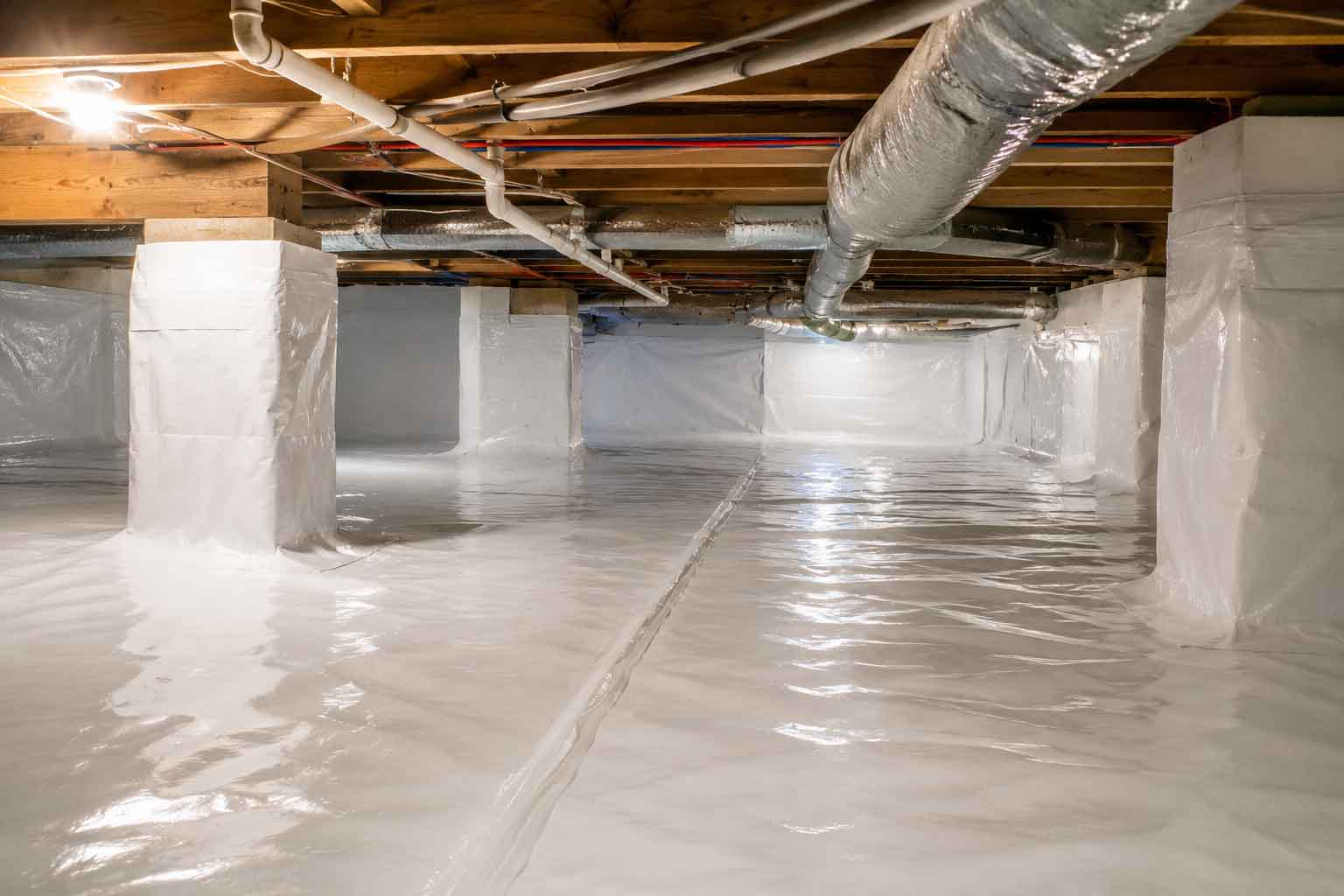

Crawl space encapsulation in Los Angeles typically costs $7 to $14 per square foot for a full encapsulation system through Absolute Maintenance & Consulting. A basic vapor barrier is less, at about $3 to $5 per square foot. Additional work such as drainage, sump pump installation, dehumidification, or mold remediation will increase the total project cost.
The final cost depends on the size and condition of the crawl space, how much moisture is present, and which components the property needs. Absolute Maintenance & Consulting starts with a crawl space assessment to identify moisture sources and determine the appropriate scope before work begins. The assessment starts at $450 and is credited toward the project cost if you hire us for the work.
How Much Does Crawl Space Encapsulation Cost in Los Angeles?
The cost of crawl space encapsulation depends on whether you need a basic vapor barrier or a complete moisture-control system.
Absolute Maintenance & Consulting currently lists the following pricing:
| Service | Current Price |
| Crawl space encapsulation assessment | Starting at $450, credited toward project cost |
| Vapor barrier only | $3–$5 per sq. ft. |
| Full encapsulation | $7–$14 per sq. ft. |
| Sump pump with battery backup | $1,200–$2,500 installed |
| Commercial crawl space dehumidifier | $1,500–$3,000 installed |
| Mold remediation | Quoted separately based on extent |
| Commercial or multi-unit encapsulation | Custom quote |
For example, Absolute Maintenance & Consulting’s current pricing places a typical 1,000-square-foot full encapsulation project at approximately $7,000–$14,000. A 1,500-square-foot space typically falls around $10,500–$21,000, while a 2,000-square-foot crawl space is approximately $14,000–$28,000. Actual pricing can change based on the property’s conditions and required components.
Also Read: Healthy Homes Start With Small Habits
Why Does Crawl Space Encapsulation Cost Vary?
Size is only one part of the estimate.
The condition of the crawl space can change the amount of preparation and equipment required. A space with exposed soil and no existing moisture damage may have a simpler scope than one with standing water, mold, damaged framing, or drainage problems.
The assessment determines which components are actually needed rather than applying the same package to every property.
Is a Vapor Barrier the Same as Encapsulation?
No. A vapor barrier is one part of a complete encapsulation system.
A basic vapor barrier primarily limits moisture rising from the soil. Full encapsulation addresses additional moisture pathways through a combination of vapor barriers, drainage, dehumidification, insulation, and sealed vents.
What Factors Affect Crawl Space Encapsulation Cost?
Several conditions can change the scope of work and the final cost.
Crawl Space Size and Accessibility
A larger crawl space requires more materials and labor.
Accessibility matters, too. Low clearances, difficult entrances, unusual layouts, and limited working space can make preparation and installation more involved.
Existing Moisture and Water Intrusion
Active water intrusion needs to be addressed before encapsulation.
Absolute Maintenance & Consulting recommends investigating the moisture source first. Depending on the property, that can involve moisture mapping and thermal imaging to identify water entering through the foundation, soil, drainage system, or other pathways.
If the issue is a specific water-entry problem, waterproofing services may be appropriate instead of, or before, full encapsulation.
Mold and Damaged Materials
Existing mold should not simply be sealed inside an encapsulated crawl space. Our process calls for professional mold remediation when mold is present before encapsulation begins. Damaged insulation, wood, or other materials may require separate work depending on their condition.
Drainage and Moisture-Control Equipment
A drainage mat can direct water toward a collection point. A sump pump can remove collected water when needed. A crawl-space-rated dehumidifier helps maintain controlled humidity inside the sealed space. Each component adds to the project total, and the crawl space’s moisture level and drainage conditions determine which ones are needed.
What Does Crawl Space Encapsulation Include?
Full crawl space encapsulation is more than a sheet of plastic placed over the ground. Absolute Maintenance & Consulting’s complete system can include several components, each addressing a specific moisture pathway. Leaving out any one of them can compromise the system as a whole.
Vapor Barrier
A heavy-duty vapor barrier is installed across the crawl space floor and up the foundation walls. We use a 20-mil reinforced polyethylene liner with sealed seams and mechanical fastening to the walls. The 20-mil thickness resists punctures from foot traffic and debris and holds up over decades, unlike the basic 6-mil sheeting sold at hardware stores. Seams are overlapped and sealed with waterproof tape rather than butted together, which is where most moisture breaches occur in lower-grade installations.
Drainage Mat
A dimpled drainage mat is installed beneath the vapor barrier across the crawl space floor. The dimpled profile creates a continuous air gap between the soil and the underside of the liner, so any water that reaches the floor can travel freely to a collection point rather than pooling below the barrier. Without this layer, groundwater pressure can push up against the vapor barrier from below and eventually compromise it.
Sump Pump
A sump pump actively removes water collected by the drainage system. We install battery-backed units when needed, which matters most during the storms that most often cause water to accumulate. A sump pump without battery support can fail at exactly the moment the crawl space is taking on the most water.
Dehumidification
Sealing a crawl space eliminates the largest moisture sources, but residual humidity from soil outgassing and temperature differentials can still accumulate. A crawl-space-rated dehumidifier maintains appropriate humidity levels year-round and prevents mold conditions from re-establishing after the space is sealed. We specify commercial-grade units designed for the volume and airflow conditions below the floor, not standard portable dehumidifiers.
Wall Insulation and Sealing
Wall insulation prevents warm, humid outdoor air from condensing on cooler foundation walls during temperature swings, which is a common moisture source in Los Angeles crawl spaces during marine-layer conditions. Sealing foundation vents converts the crawl space from a traditionally vented configuration into a conditioned space, the approach modern building science identifies as more effective for long-term moisture control.
Read More: What Happens When Home Repairs Can’t Wait Any Longer?
Why Do Los Angeles Crawl Spaces Have Unique Moisture Concerns?
Los Angeles homes can face several conditions that contribute to crawl space moisture. The assumption that Southern California’s dry climate eliminates this risk is one of the more common and costly mistakes property owners make.
Older Homes and Exposed Soil
Many Los Angeles properties built before 1980 have crawl spaces with bare soil, no vapor barrier, and aging or absent drainage systems. Bare soil releases moisture continuously through evaporation, and that vapor rises directly into the crawl space and the floor system above it. The older the construction, the less likely any moisture management was built in from the start.
Coastal Moisture
Properties near the coast face persistent humidity from marine-layer conditions that recur throughout the year, not just during rain season. When a crawl space relies on foundation vents for ventilation, it draws in that humid outdoor air directly. In an unencapsulated space, the combination of cool foundation surfaces and warm humid air creates condensation on framing, insulation, and the underside of the subfloor.
Rain and Drainage Problems
Los Angeles receives most of its annual rainfall in concentrated bursts during atmospheric river events. Soil around foundations can saturate rapidly, and water that is not directed away from the structure finds the path of least resistance into the crawl space through soil, foundation gaps, or aging drainage systems. Many properties that appear dry eleven months of the year develop significant moisture problems after a single heavy storm season.
What Should Be Included in a Crawl Space Encapsulation Estimate?
A useful estimate should explain more than the final project cost.
It should identify the condition of the crawl space and show what work is required to address it.
Look for details such as:
- Crawl space preparation and cleaning
- Moisture-source correction
- Vapor barrier installation
- Wall and vent sealing
- Drainage requirements
- Sump pump installation, when needed
- Dehumidification
- Insulation
- Mold remediation, if required
- Removal or replacement of damaged materials
- Final cleanup
This makes it easier to compare estimates fairly.
It can also prevent a low initial quote from becoming much more expensive once hidden moisture or damage is discovered.
Is Crawl Space Encapsulation Worth the Cost?
Crawl space encapsulation can be worthwhile when persistent moisture is affecting the space or creating conditions that may damage the property. The purpose is not simply to cover the ground. A properly designed system helps control moisture and humidity throughout the crawl space.
It may be especially useful for homes with recurring dampness, exposed soil, poor ventilation, or ongoing moisture concerns. Encapsulation is not automatically the right solution for every property. Some crawl spaces may need targeted waterproofing or drainage work first.
Why Professional Crawl Space Assessment Matters
Crawl space encapsulation works best when it addresses the conditions causing moisture in the first place. A professional assessment looks beyond the visible signs to determine what is happening beneath the home and what the space needs before it is sealed.
Absolute Maintenance & Consulting evaluates the crawl space to identify moisture sources, existing damage, and the right combination of waterproofing and moisture-control measures. This helps prevent homeowners from paying for an encapsulation system that does not address the underlying problem.
A professional assessment can help:
- Identify the source of moisture: Determine whether dampness is coming from the soil, foundation, drainage problems, groundwater, or another source that needs to be addressed.
- Find hidden moisture: Moisture can remain beneath materials or inside areas that are difficult to see. Professional inspection methods can help locate moisture that a visual inspection may miss.
- Evaluate existing damage: Inspect insulation, wood components, vapor barriers, and other crawl space materials for signs of moisture damage, mold, or deterioration.
- Determine drainage needs: Assess whether water needs to be redirected or collected through drainage improvements or a sump pump before the space is encapsulated.
- Determine humidity-control needs: Evaluate whether the sealed space would benefit from a dedicated dehumidification system to maintain controlled conditions after encapsulation.
- Identify necessary preparation: Determine whether cleaning, material removal, mold remediation, waterproofing, or other work should be completed before the encapsulation system is installed.
- Develop the right encapsulation scope: Match the vapor barrier, wall sealing, insulation, drainage, and humidity-control components to the actual conditions of the crawl space.
The goal is a crawl space system designed for the property rather than a one-size-fits-all installation. Addressing moisture sources first ensures the encapsulation holds and prevents the same problems from returning after the space is sealed.
If you are concerned about moisture, standing water, mold, or poor conditions under your home, contact Absolute Maintenance & Consulting for an assessment.
Frequently Asked Questions About Crawl Space Encapsulation
Does Every Crawl Space Need Full Encapsulation?
No. The appropriate solution depends on the source and severity of the moisture problem, the crawl space condition, and the goals of the property owner.
Some spaces may need targeted waterproofing or drainage work. Others may benefit from a complete encapsulation system.
Can You Encapsulate a Crawl Space With Standing Water?
Standing water should be addressed before the crawl space is encapsulated.
The source needs to be identified and controlled, and the affected area should be properly dried before the encapsulation system is installed.
Does Crawl Space Encapsulation Stop Mold?
Encapsulation can help control the moisture conditions that support mold growth, but it is not a substitute for mold remediation.
If mold is already present, the affected area should be evaluated and addressed before the crawl space is sealed.
Do I Need a Dehumidifier After Encapsulation?
Not every crawl space requires the same equipment.
A dehumidifier may be appropriate when humidity cannot be adequately controlled through sealing and other moisture-management measures.
Is Crawl Space Encapsulation the Same as Waterproofing?
Not exactly.
Waterproofing focuses on preventing or controlling water intrusion through specific areas or pathways. Encapsulation creates a broader moisture-control system within the crawl space.
The two approaches can be used together when the property requires both water intrusion protection and controlled crawl space conditions.
Can Encapsulation Fix Existing Foundation Problems?
Encapsulation does not automatically repair structural or foundation problems.
If water is entering through foundation cracks or other foundation-related pathways, those issues should be investigated and repaired as part of the overall moisture-control plan.
How Do I Know If My Crawl Space Needs Encapsulation?
Signs can include persistent dampness, musty odors, standing water, visible mold, condensation, wet insulation, exposed soil, or recurring moisture problems.
A professional assessment can determine whether encapsulation is appropriate or whether another waterproofing or repair solution would better address the problem.
How Long Does Crawl Space Encapsulation Take?
A straightforward installation in a standard-sized crawl space typically takes one to two days. Projects requiring mold remediation, drainage installation, extensive preparation, or repairs can take longer depending on the scope.
How Long Does Crawl Space Encapsulation Last?
A properly installed 20-mil liner can last 20 years or more with periodic inspection and maintenance. Drainage problems, moisture issues, or mechanical damage can require repairs or attention sooner.
About the Author
 Cameron Figgins
 is the founder of Absolute Maintenance & Consulting. With over 30 years of hands-on industry experience, he specializes in identifying complex water intrusion issues in Southern California homes and is dedicated to helping homeowners protect their property with the latest in detection technology.”