
Italian Lime Stucco vs Synthetic Stucco (EIFS) vs Cement Stucco: Which Works Best for LA Homes
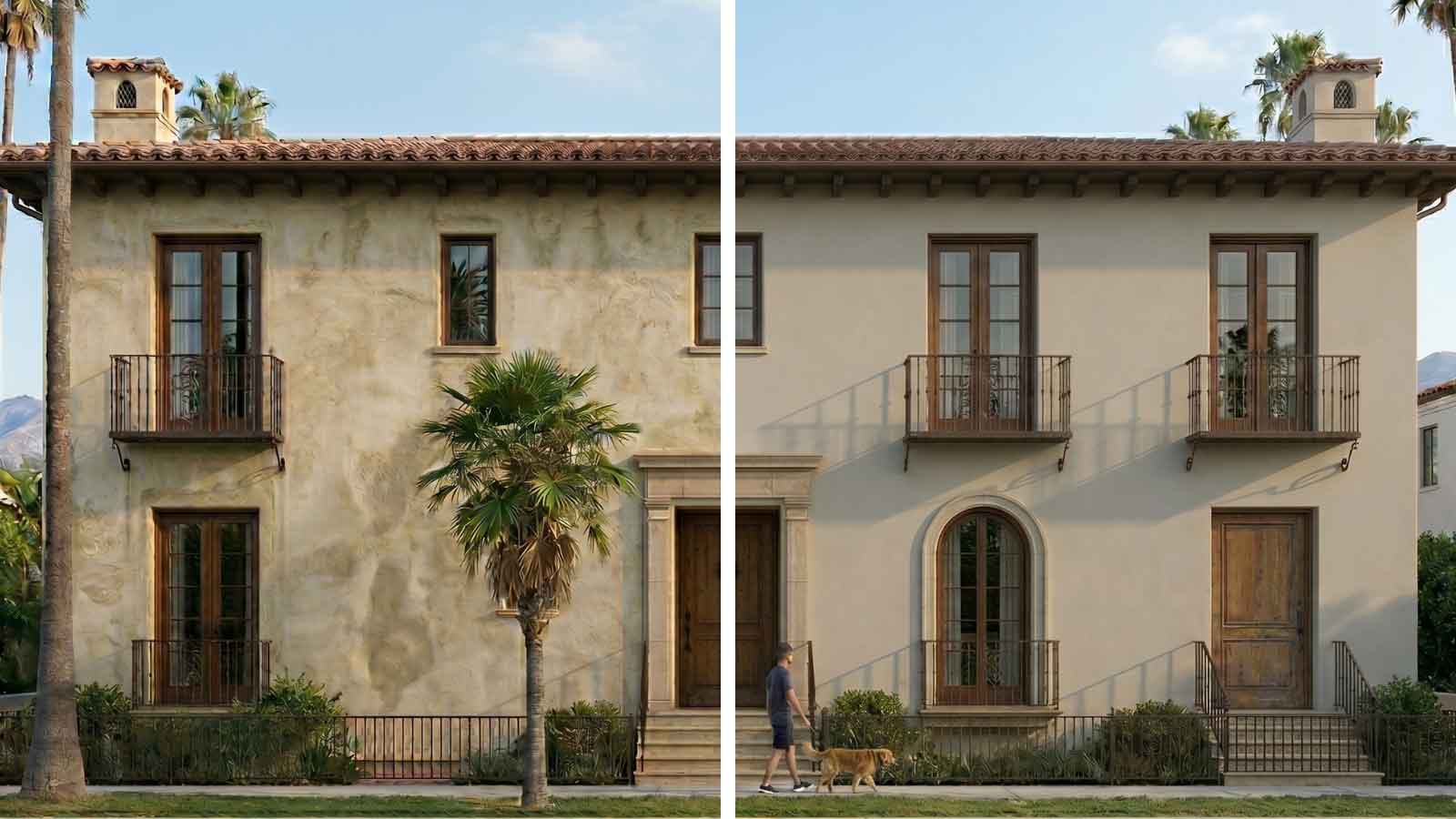

Choosing between Italian stucco vs synthetic stucco is really a decision about four things: what the material is made of, how it manages moisture, what it asks of skilled labor, and how each system behaves over the life of the wall. The right choice depends on the home, budget, and exposure.
Recent storm seasons have put unusual pressure on Los Angeles building envelopes, and synthetic stucco assemblies are showing the strain. Failed sealant joints, hidden moisture behind foam panels, and interior staining months after the rain ended are familiar calls for any LA waterproofing crew. For homeowners weighing a stucco choice on a new build, or considering whether their existing EIFS still has integrity, understanding how each system handles water is no longer optional.
This guide compares both fairly, adds the cement stucco system most Los Angeles homes actually use, and ends with a clear decision framework. If your synthetic stucco is already showing signs of trouble, our stucco waterproofing services in Los Angeles cover the repair side directly.
The Core Difference Between Italian Stucco, Cement Stucco, and EIFS
The single most important distinction between Italian stucco and synthetic stucco is how each system handles water. Lime-based Italian stucco breathes; synthetic EIFS is built around a sealed assembly that depends on drainage detailing to manage moisture. Cement stucco sits between the two, drying reasonably well without the breathability of lime or the sealed dependence of EIFS. That one difference shapes most of the other trade-offs in this comparison, including repair approach, mold risk, and how each material responds to bad detailing. The table below compares all three systems across the factors that matter most.
| Feature | Italian Lime Stucco | Cement Stucco (3-Coat) | Synthetic Stucco (EIFS) |
| Materials | Lime, sand, marble dust | Portland cement, sand, lime | Foam board, acrylic, mesh |
| Breathability vs sealing | Moves moisture out naturally | Dries reasonably well | Relies on drainage detailing |
| Failure visibility | Gradual, surface-visible | Gradual, surface-visible | Sudden, often hidden behind foam |
| Crack response | Self-heals through carbonation | Cracks visible, repairable | Hidden behind finish |
| Cost vs longevity | Highest upfront cost, longest service life | Middle on both axes | Lower upfront cost, shorter lifespan, higher maintenance |
| Insulation value | Low | Low | High (built-in foam) |
| Installation sensitivity | Workmanship-dependent | Workmanship-dependent | Least forgiving of detailing mistakes |
| Skilled labor pool in LA | Smallest | Largest | Specialty trade |
| Best fit | High-end, long-hold builds | Most LA homes | Newer builds, inland, well-detailed |
What Is Authentic Italian Stucco?
Authentic Italian stucco, often called lime-based or traditional stucco, is built from three ingredients: aged slaked lime, fine sand or marble dust, and water. The technique traces back to the Tuscan villas and Mediterranean homes that defined the look most California buyers associate with high-end coastal architecture. No acrylics, no polymers, no foam.
Mineral Composition and Self-Healing
The chemistry is what separates lime stucco from synthetic alternatives. Because the binder is mineral rather than polymer, the wall stays inert across its lifespan. Lime-based stucco also undergoes a slow chemical process called carbonation, where the lime reacts with carbon dioxide in the air and gradually returns to a stone-like state. Hairline cracks can close on their own as this reaction continues, and the surface develops a soft patina with age.
Why It Suits the LA Climate
Los Angeles walls do get wet during winter rains, even in a generally dry climate. A breathable lime system absorbs incidental moisture and releases it as conditions dry. The mineral surface also holds up well under year-round UV exposure, which is harder on acrylic-based finishes. Lime stucco’s strength lies in working with the climate rather than fighting it.
Application and Skill Requirements
Real Italian stucco is labor-intensive. It is applied in multiple thin coats, hand-troweled by skilled applicators, and built up over masonry or a properly prepared substrate. Applicator experience matters more for lime stucco than for most other exterior finishes.
Read More: Venetian Stucco Waterproofing in Los Angeles: Why Most Sealants Fail (And What Actually Works)
What are the Limitations of Traditional Lime Stucco?
Lime stucco performs well, but it is not a default answer for every project. Three honest limitations matter when comparing it against other systems:
- Higher upfront cost. The price is meaningfully higher than cement stucco or EIFS, driven by both the material and the labor intensity.
- Smaller applicator pool. Skilled lime applicators are in short supply compared with crews experienced with cement or synthetic systems, which can affect contractor selection and scheduling.
- Workmanship sensitivity. Improperly applied lime stucco can crack, debond from the substrate, or develop surface defects that remain visible for the life of the wall.
Most properly installed Los Angeles applications require very little maintenance once fully carbonated, but heavily UV-exposed elevations may benefit from periodic surface refreshes.
What Is American Synthetic Stucco (EIFS)?
American synthetic stucco is technically known as EIFS, short for Exterior Insulation and Finish System. It is a multi-layer assembly: rigid foam insulation board fastened to the wall, a base coat with mesh reinforcement, and an acrylic or polymer-based finish coat troweled over the top. EIFS became common in U.S. residential and commercial construction in the 1980s and 1990s because it offered fast installation and built-in insulation in a single exterior system.
Barrier EIFS vs Drainage EIFS
There are two generations of EIFS, and the distinction matters. Older barrier EIFS, common in homes built before widespread code reform in the late 1990s, was designed to repel water entirely at the face of the wall. If water got behind the finish, it had nowhere to go. Modern drainage EIFS, developed in response to widespread barrier-system failures, includes a drainage plane behind the foam that allows incidental moisture to escape downward. Performance still depends heavily on installation quality, but a properly built drainage EIFS wall is materially safer than the barrier systems it replaced.
The Insulation Trade-Off
The foam layer adds insulation value that traditional stucco assemblies do not have. In hot inland Los Angeles neighborhoods, energy efficiency is meaningful. In coastal areas where temperature swings remain mild year-round, the insulation benefit matters less than the detailing discipline EIFS requires.
A Quick Note on Cement Stucco
Most Los Angeles homes are not finished in either Italian lime stucco or EIFS. They use traditional three-coat cement stucco, which sits in the middle of the spectrum. Cement stucco offers moderate breathability, has a smaller cost gap from EIFS than lime does, and has been the default California exterior since the early 1900s. For homeowners weighing this comparison, cement stucco is often the practical baseline: not premium, not problematic, and well-suited to most LA architecture.
Where Do EIFS Run Into Trouble in LA?
EIFS performs well when it is installed correctly and maintained. The problems show up in two scenarios: older barrier-style installations that lack a drainage plane, and any installation where flashing and sealant detailing were rushed. Both are common reasons homeowners call us about EIFS walls.
Common Failure Points
The vulnerabilities cluster in predictable places:
- Window and door perimeters
- Roof-to-wall transitions
- Deck-to-wall connections
- Any spot where a previous repair was done without addressing the underlying flashing
The barrier EIFS or a poorly drained modern installation can lead to prolonged moisture exposure behind the wall during water intrusion. Hidden rot, mold growth, and framing damage can follow, often without visible signs at the surface for some time.
Coastal vs Inland Behavior
EIFS behaves differently across LA’s microclimates. Coastal homes in Santa Monica, Venice, and Pacific Palisades face salt-laden air that can affect the longevity of sealants over time. Inland homes in the San Fernando Valley and east toward Pasadena see more thermal cycling, which stresses the same sealant joints differently. Hillside homes face wind-driven rain at angles flat-lot homes do not. The same EIFS wall can perform fine in one neighborhood and develop problems in another, which is why local knowledge matters when evaluating an existing installation.
Read More: Why Is Rain Leak Detection In Los Angeles So Important?
How Does Lime Stucco Handle the Same Conditions?
The contrast worth noting between lime stucco and EIFS under the same conditions is the failure mode. When lime stucco deteriorates, it shows at the surface. EIFS rarely offers that warning.
Which System Is Right for Your LA Home?
The decision usually comes down to budget, hold period, and architectural fit.
- Choose lime stucco if you are doing new construction or a major renovation on a long-hold property, the architecture is Mediterranean or Spanish Revival, you want low-maintenance performance over the long term, and the upfront premium is workable.
- Choose cement stucco if you want the proven LA default: solid moisture performance, reasonable cost, broad availability among applicators, and a finish that fits almost any neighborhood.
- Choose EIFS if energy efficiency is a priority, the project is a newer build with proper drainage detailing, you have access to a contractor who installs it correctly, and you accept the ongoing maintenance discipline around sealant joints and flashing.
If you already have EIFS and are unsure of its condition, the next practical step is to conduct a stucco wall leak detection before the next storm season. Interior staining, soft spots, musty odors, or visible bulging in the finish usually mean damage is already behind the foam. For older synthetic stucco installations, preventive stucco waterproofing is typically less expensive than waiting for a failure to occur.
How Absolute Maintenance & Consulting Handles Failed Synthetic Stucco
The signs homeowners notice first are usually:
- Soft spots in the wall
- Areas that sound hollow when tapped
- Water stains on interior walls
- Musty odors near exterior walls
The actual entry point is often not where the interior damage appears, because water travels through the wall cavity before exiting. Our team has 37+ years of experience serving Los Angeles homes. AMC starts with a building envelope inspection, using thermal imaging, moisture mapping, and ASTM E1105-controlled water testing to locate the exact entry point and map how far water has traveled.
Once the source is identified, the repair targets three things:
- Stop the breach. Stucco repair with proper drainage behind it, window or door reflashing, or roof-to-wall flashing correction, depending on the source.
- Dry the wall assembly. Damaged drywall, insulation, and framing get replaced. When trapped moisture has produced active mold growth, we coordinate mold remediation before the wall is closed back up.
- Verify the fix. AMC is IICRC and MICRO certified, and we water-test the repaired area to confirm the fix holds before finishing the interior.
For a deeper look at the diagnostic and repair process, contact us today to schedule a site evaluation with our water intrusion experts.
About the Author
 Cameron Figgins
Cameron Figgins is the founder of Absolute Maintenance & Consulting. With over 30 years of hands-on industry experience, he specializes in identifying complex water intrusion issues in Southern California homes and is dedicated to helping homeowners protect their property with the latest in detection technology.”