
Why Sun-Exposed Coastal Buildings Need Exterior Stucco Waterproofing
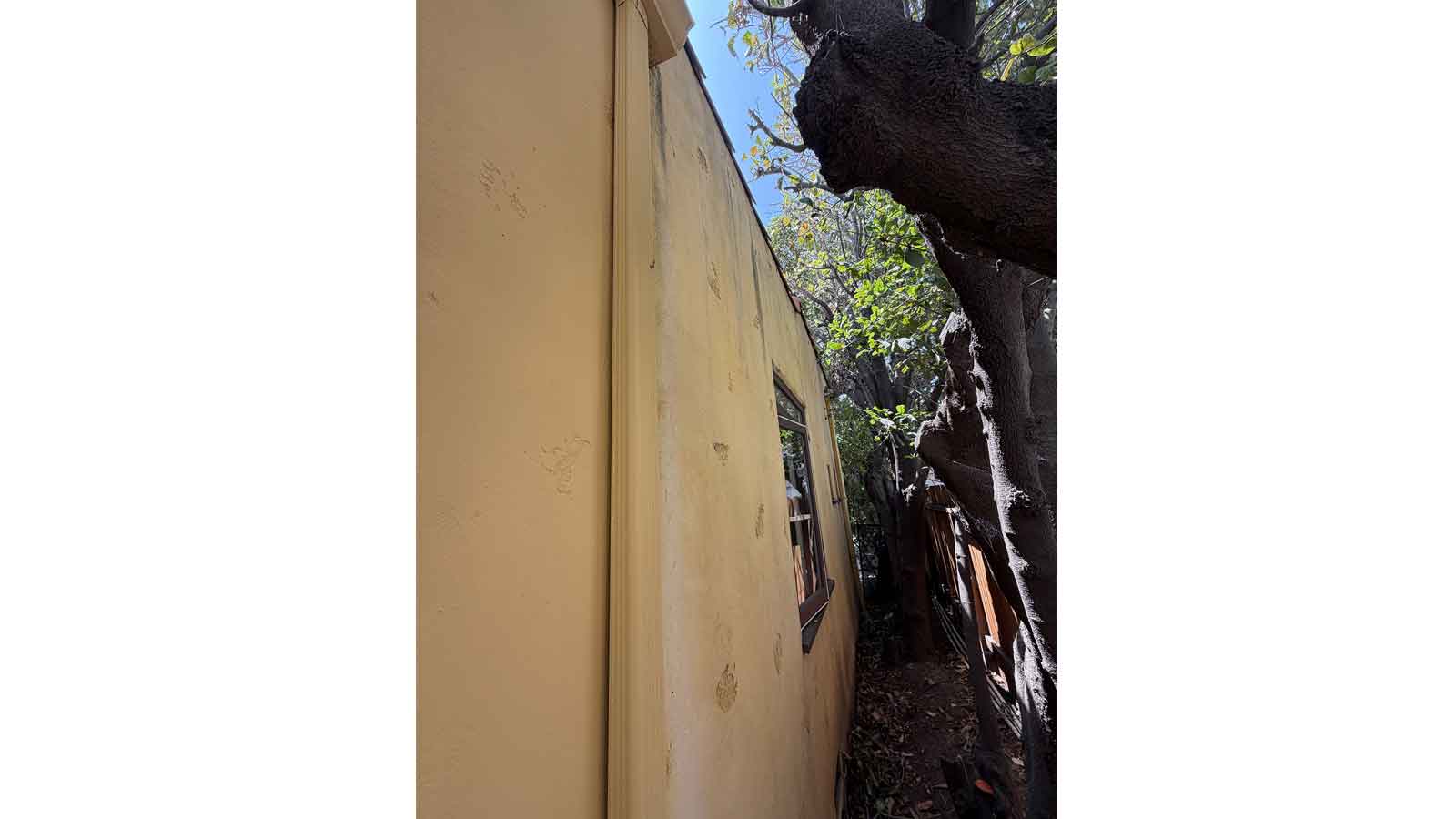

Coastal Los Angeles buildings fail in a specific way: sun exposure breaks down exterior paint, marine layer humidity expands and contracts the stucco, and seasonal storms drive water through the porous wall into the units below. Most of these leaks show up around window frames, which is why owners often blame the windows when the real problem is the building envelope itself. This article walks through how that failure happens, why standard recaulking won’t fix it, and what an exterior stucco waterproofing system actually needs to do.
How Sun Exposure and Marine Layer Break Down the Building
When a building faces the sun and the unit sits on the top level, and when the previous paint job didn’t really use a UV-resistant paint or coating, problems start early.
Over a period of time, being blasted by the sun, the marine layer acting like a prism; it basically eats through the paint and opens up the porosity of the building. These photos show why waterproofing has to happen on the exterior of the building to have waterproofing protection.
When repairs are delayed, water starts traveling above the roofing members and around the exterior of the building envelope as evidence by the elevator rooms over the roof and around the exterior leaking into units below of the building envelope.
How Open Stucco Porosity Lets Storm Water Reach the Window Frames
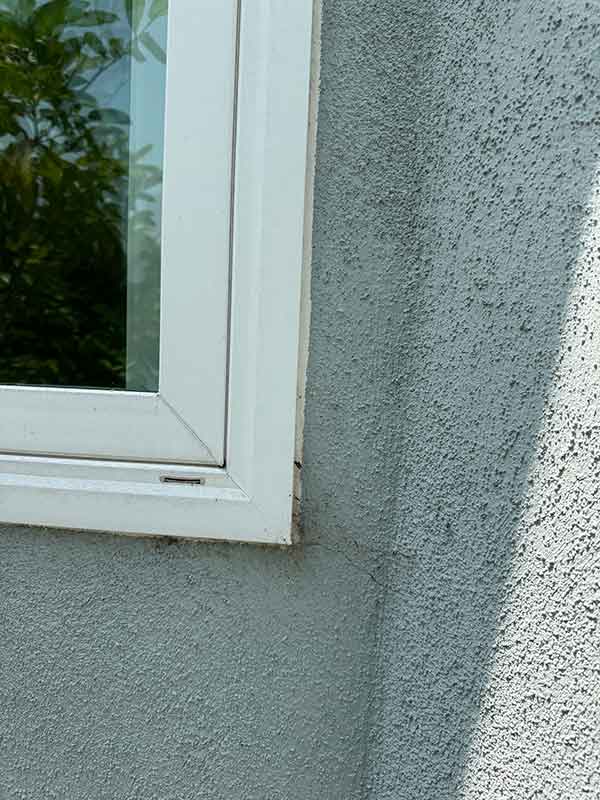
When the porosity is open, then you have three years of major rain storms that are pounding on the building. The water gets in through the building, and passes in through past the paint, into the cement or stucco, and works its way around the areas of building movement, which are the window frames and the windows themselves.
How this works is the building expands and contracts with the marine layer facing the ocean, the expansion and the contraction of the sun over and over again with the large amount of water continues to be blasting the building, acts like a sponge, expands and contracts, and breaks the seals between the building and the windows.
The Exterior Stucco Waterproofing System That Actually Works
This does not mean the window frames have failed. This just means the building needs to be waterproofed over the stucco. This waterproofing takes place by several processes.
Our process, we use a combination of a penetrating sealer, primers, a material called Wet Suit which elongates 25%, 100% over the expansion areas, and then we use Dow Cornings Dowsil All Guard Paint Waterproofing System.
This is the only system you want to put on this building from this point forward, or any other building of age specifically in this location near all these elements. Regular paint will no longer work. This is the best system to be able to put on this building and we retrofit a lot of buildings with it.
At the very least, your entire units need to be done with this, and this is not a process of the resealant and painting. It’s a complete system that expands and moves with the building and is also breathable and UV-resistant.
Why Recaulking Window Sealants Is Only a Temporary Fix
Any sealant work to trying to remove the sealant and caulkings around the windows and recaulk it is only a temporary fix because the water will penetrate other sources and get around that, and then loosen up that sealant and it’ll fail like it’s now done previously.
Due to the age of the building, a more complex system that is more resilient like this, will be the more permanent solution. Without this, stopping the water penetration through these areas will not stop the leaks that are now occurring in these areas that needs to be addressed because of these failure points.
For more information, Cameron Figgins has about 35 years of experience working through these kinds of issues on coastal Los Angeles buildings. Below is a more complicated overview of this that can be shared with property management, insurance, or otherwise. Thank you very much.
Case Study: How Water Penetrates Concrete and Stucco on Coastal Buildings
This is the case study for justification of the statement we’re making.
For your understanding, this is what we’re talking about. This is what I’m alluding to of how water penetrates concrete and stucco at the building.
Capillary Action and Moisture Absorption Through Concrete
Concrete is a material that acts like a slow sponge during heavy rains that actually absorbs moisture through capillary action.
That absorption wicking happens because concrete, even under normal circumstances, may deflect up to 90% of rainwater. The remaining gets soaked into the material. However, on your building, because of the intense storms and all the elevated weather conditions, including the sun with the marine layer acting like a prism drilling into the building, then storms become so intense that the concrete is not dried quickly and the moisture wicks deeper into the wall.
Then, the sun super dries that out when it comes back out and cracks the wall.
Pressure-Driven Water Intrusion Through Hairline Cracks
Then, you have pressure driven intrusion during the rapid storms and windblown, creates a hydraulic pressure, literally forcing water through tiny hairline cracks and the material’s pores, faster than it can naturally evaporate.
Pathway failures happen because water does not just soak through. It often finds direct highways of cracks as wide as 1/16 of an inch that act as water highways, allowing bulk water to pour directly behind the concrete layer.
Why 70% of Stucco Leaks Happen at Window Frames
Your common link points at windows and penetrations; we find that the window frame area where it meets the building is 70% of that concrete cladding near those area leaks. That, in my opinion, is an HOA issue, not a window issue. It’s just the fact that the building is going through the responses I’ve listed above.
Then additional leaks are because of three main failures.
Flashing Failures Around Window Frames
Flashing failures happen because flashing is the raincoat for the window frames. If it is missing, improperly, or not kept properly sealed, all the elements will create direct damage and allowing that water to leak through in that joint area and into the building, which is happening with your unit.
Sealant and Caulking Gaps from UV Degradation
Sealant and caulking gaps literally on a building like yours need to be addressed every few years. Yours have not been addressed properly for years because in a lot of case occasions, you need to put up scaffolding to do it. And when it was done last, in my opinion, they used inferior materials.
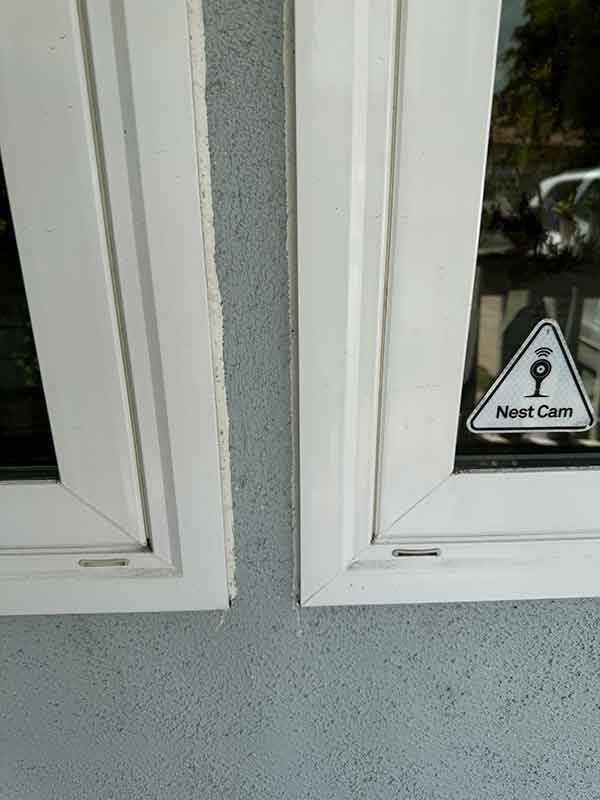
All these are natural leak spots. Over time the caulking shrinks, cracks due to sunlight, temperature swings creating seams where wind driven rain can enter, which is happening on your project. Your window frames, joints between there and the concrete, once again, building leaks is what’s causing these leaks into your unit.
Water-Resistant Barrier Breakdown Behind the Stucco
And even though once the water gets through the exterior concrete shell, then it depends on the water-resistant barrier, often building paper or some other elements that are inside that wall.
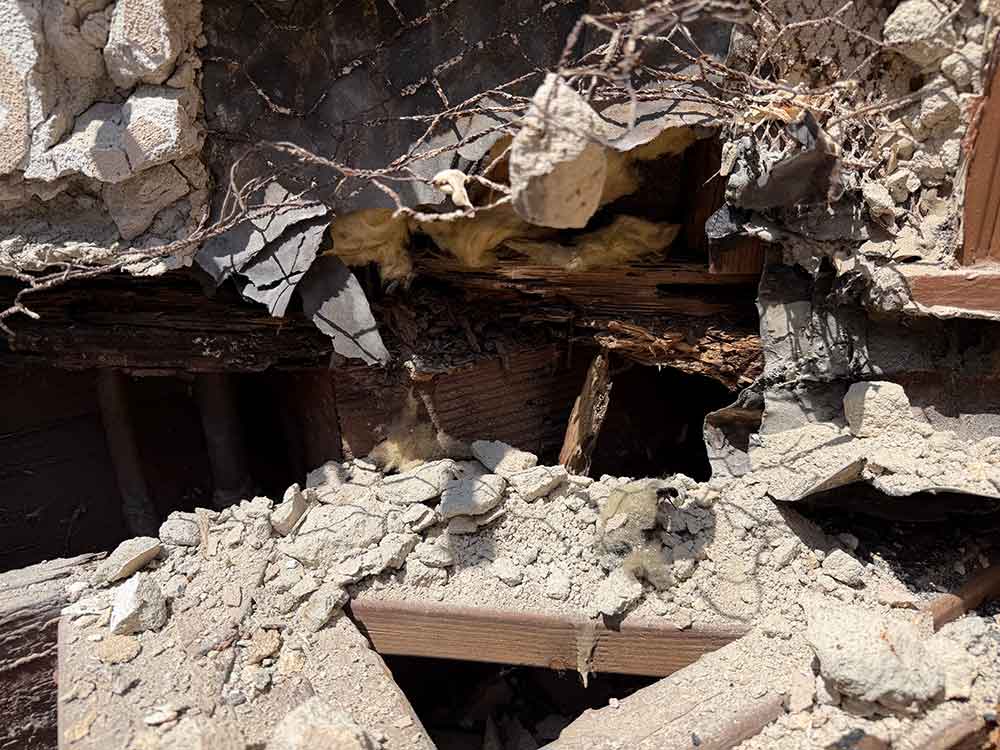
These elements get weak by damage from the sun. Just imagine if you were to have a human body out in the sun every day facing those elements, what would the damage be? And yet people continue to expect that you need no maintenance on those areas.
All this water saturation, along with the winds, the sun, and the elements is what’s caused this damage and it has not been maintained properly.
Why Coastal Building Envelope Waterproofing Requires Ongoing Maintenance
As I often state, there is no set it and forget it in building waterproofing, specifically near the ocean like your building is located.
You got to use super quality materials, not standard sealants, paints, and caulkings. And you have to do maintenance.
On each of the buildings, there’s required maintenance that has to be done on this building envelope. And in my opinion, that has not been done properly.
If your property shows signs of paint failure, stucco porosity, or unit-level water intrusion, the longer the building goes without proper waterproofing, the more damage accumulates within the envelope. Absolute Maintenance & Consulting assesses the building as a whole and specifies the right system for the location, age, and exposure. Contact us today to schedule an evaluation.
About the Author
 Cameron Figgins
Cameron Figgins is the founder of Absolute Maintenance & Consulting. With over 30 years of hands-on industry experience, he specializes in identifying complex water intrusion issues in Southern California homes and is dedicated to helping homeowners protect their property with the latest in detection technology.”