
Why Does a Failing Retaining Wall Cause Water Intrusion Inside Your Home?
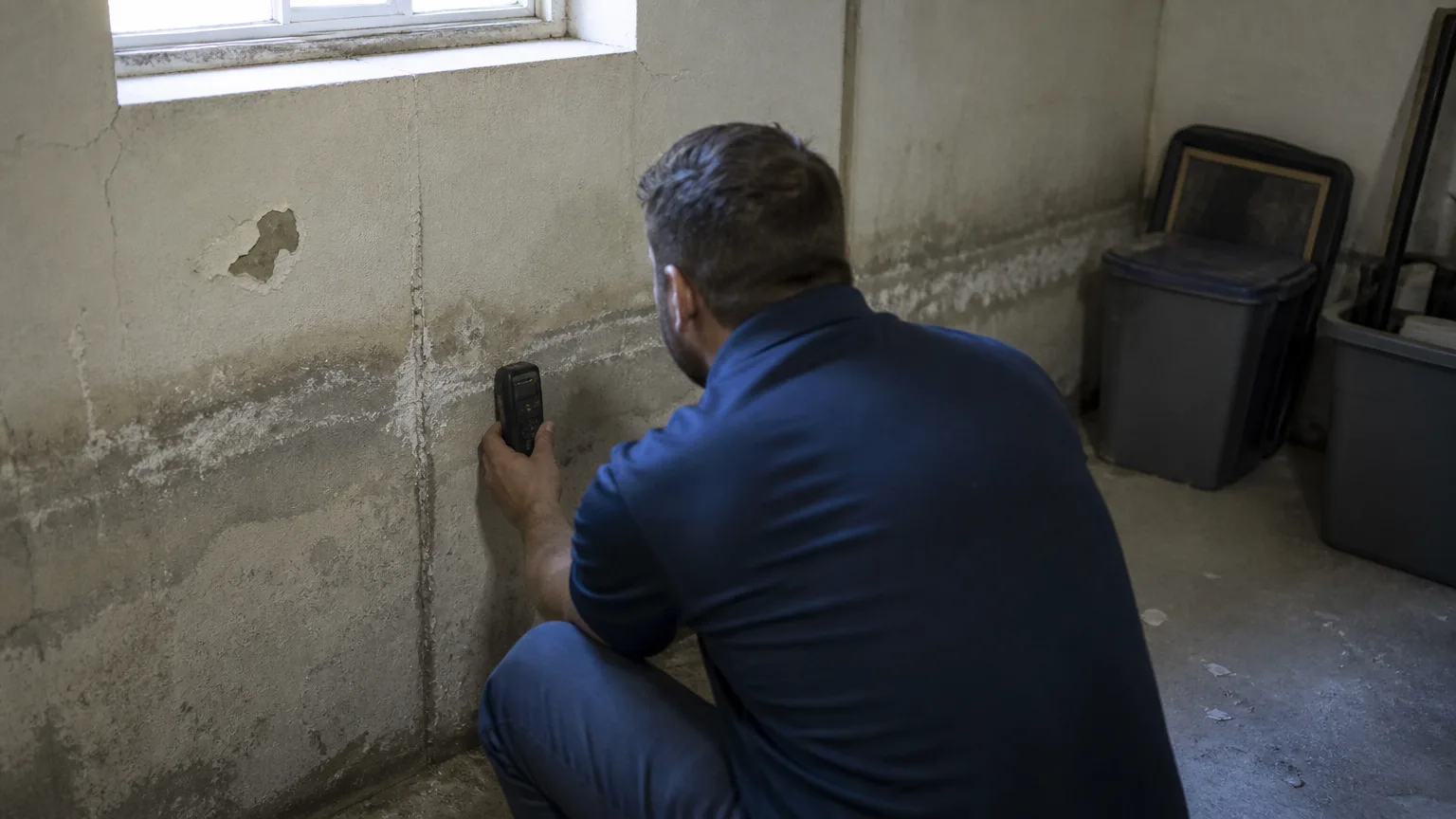

Table of Contents
Retaining wall drainage failure causes water intrusion inside Los Angeles homes when clogged or missing drainage lets hydrostatic pressure force groundwater through the foundation into basements, crawl spaces, and interior walls. I’ve traced this exact path on hillside properties from Silver Lake to Palos Verdes, and the wall almost never looks like the problem until you know what to check.
How a Retaining Wall Becomes a Hidden Water Intrusion Source
A retaining wall’s only job is to hold back soil. But when the drainage behind it fails, the wall stops being a structural element and starts acting like a reservoir. Water collects in the backfill soil, has nowhere to go, and sits there under pressure until it finds an exit.
That exit is rarely the wall face. More often it’s your foundation. Water migrates laterally through saturated soil, finds a crack, a cold joint, or even just porous concrete, and pushes through into the living space. I’ve walked into homes where the retaining wall thirty feet up the slope looked fine, and the client had no idea it was the source of the damp wall in their downstairs bedroom.
This is why water intrusion from a failing wall is often misdiagnosed. Homeowners look for a leak inside the house. The real source is uphill, invisible, and slow-moving.
What Is Hydrostatic Pressure and Why It Overwhelms Retaining Walls
Hydrostatic pressure is the outward force created by standing water in saturated soil. It’s different from normal soil pressure, which assumes water drains freely. Once drainage stops working, that assumption breaks down fast.
When a drainage system fails, hydrostatic pressure can increase the lateral force on a wall by 40 to 60 percent. Most residential retaining walls were never engineered for that kind of load. The result is bulging, cracking, leaning, or in the worst cases, outright collapse.
Even before any of that shows up, the pressure is already pushing water through the foundation. You don’t need a visible crack in the wall to get interior dampness. The water finds a path long before the structure shows distress.
The Retaining Wall Drainage System: Weep Holes, French Drains, and Perforated Pipe
A properly built retaining wall drainage system has three working parts: weep holes, a perforated pipe (often called a toe drain), and a gravel buffer. Together these form what’s called a subdrain, or French drain, and its job is to intercept water before pressure ever builds.
When all three parts are functioning, water never gets a chance to saturate the backfill soil long enough to cause problems. When one part fails, the whole system fails.
How Weep Holes Are Supposed to Work
Weep holes are small openings at the base of a wall that let trapped water escape before it builds pressure. They need to stay clear. Soil, debris, and even insect nests clog them more often than people expect, and once they’re blocked, water has to find another way out.
One sign I look for on every inspection is efflorescence, the white mineral deposits left behind as water evaporates near a weep hole. It’s not mold. It’s a clear signal that water has been moving through the concrete for a while, and it’s usually visible well before anyone notices interior damage.
The Role of the Perforated Pipe and Gravel Buffer
The perforated pipe sits at the base of the wall and carries collected water to a safe discharge point away from the foundation. Best practice calls for a minimum 12-inch buffer of clean, angular gravel wrapped around that pipe.
The gravel isn’t just there for flow. It filters out fine soil particles that would otherwise clog the pipe over time. I’ve dug up plenty of “drainage systems” where someone used native soil instead of clean gravel, and the pipe was packed solid within a few years.
How Exterior Water Migrates Into Basements and Crawl Spaces
Once backfill soil is saturated, water takes the path of least resistance. That path usually runs through foundation cracks, cold joints, or porous concrete straight into a basement or crawl space.
It can also travel horizontally, moving under the slab itself if the subdrain is missing or blocked. That’s how you end up with crawl space moisture on the opposite side of the house from the retaining wall, which confuses a lot of homeowners until we map it out.
Here’s the key point: water always wants to follow the easiest path. When the subdrain is working, that path is the pipe. When it’s clogged, the water finds a new path, and that new path is often through your foundation.
Warning Signs of Retaining Wall Drainage Failure
There are two categories of warning signs: what shows up on the wall, and what shows up inside the house. Catching either one early can save you from a much bigger structural or mold problem down the road.
Exterior Signs on the Wall Itself
- Bulging near the base of the wall, which means hydrostatic pressure is physically pushing it outward
- Horizontal cracks with visible water staining
- Leaning at the top of the wall
- Efflorescence on the wall face
- Soil erosion channels or gullies behind or beside the wall
Bulging is one of the more urgent signs. It means the wall is already losing the fight against pressure, not just showing surface wear.
Interior Signs of Water Intrusion
- Damp spots on basement walls or floors that don’t correlate with recent rain
- Peeling paint
- Mold growth or musty odors
- Horizontal tide marks on interior walls
These symptoms can show up during completely dry weeks. That’s the part that throws people off. Trapped water behind a failing wall keeps exerting hydrostatic pressure long after the rain stops, so the leak detection process has to account for water that’s been sitting there for weeks or months.
Why Los Angeles Rainy Seasons Accelerate Drainage Failure
LA’s rainy season doesn’t deliver steady, gentle rain. It delivers short, intense downpours that saturate backfill soil fast, often faster than an aging drainage system can handle.
A lot of older Los Angeles retaining walls, especially in hillside neighborhoods, were built without proper engineering or drainage to begin with. They were fine for decades under normal conditions, then one heavy season pushes hydrostatic pressure past what the wall can tolerate.
There’s also a slower process at work. Wet-dry cycling causes clay soils to shrink and swell, opening gaps around the foundation and behind the wall. Each rainy season widens those gaps a little more, which is why a wall that seemed stable for twenty years can suddenly show cracking after one wet winter.
Why Tracing the Source Requires Moisture Mapping, Not Just Wall Repair
Moisture mapping uses tools like thermal imaging and moisture meters to trace water back to its actual entry point, rather than guessing based on where the damage shows up inside. I’ve had jobs where the visible damp spot was ten feet away from the actual entry point, because the water traveled along a utility trench before showing up in the wall.
Patching a crack without fixing the drainage behind it almost never works. The hydrostatic pressure doesn’t go away just because you sealed one exit. It finds another one, usually within a season or two.
Moisture mapping also matters because not every water problem is a retaining wall problem. Sometimes it’s the foundation slab, sometimes it’s a hidden pipe leak. You need to rule those out before you spend money on wall drainage work that won’t fix the real issue.
Retaining Wall Repair vs. Waterproofing: What Actually Stops the Water
These are two different jobs, and confusing them wastes money.
| Approach | What it fixes | What it doesn’t fix |
|---|---|---|
| Structural repair | Bulges, cracks, leaning, wall integrity | Does not stop water from building up behind the wall |
| Waterproofing membrane | Blocks water penetration through the wall material | Fails under sustained hydrostatic pressure if drainage isn’t fixed first |
| Drainage repair (subdrain, weep holes, gravel) | Relieves pressure at the source | Should always come before or alongside waterproofing |
The correct sequence is drainage first, waterproofing second. A waterproofing membrane applied over a wall with no working drainage behind it is fighting a losing battle. The pressure will eventually push water through the membrane or around its edges.
Full wall replacement can be costly depending on height and slope conditions. Drainage repair is a fraction of that cost, which is exactly why catching this early matters so much. I’ve seen homeowners put off a drainage fix for years and end up facing a full wall replacement that could have been avoided.
If you’re seeing any of the warning signs above, have a professional trace the actual water path before you spend money on repairs that might not address the real cause.
Frequently Asked Questions
Why is my basement damp even when it hasn’t rained recently?
Old water trapped in the backfill soil behind a failing retaining wall keeps exerting hydrostatic pressure long after the rain stops. That pressure continues forcing moisture through the foundation, which is why basement dampness often shows up during dry stretches.
What does it mean if water is coming out somewhere other than the weep holes?
It means the drainage system is overwhelmed or the weep holes themselves are blocked. Water under pressure will find any available exit, so seeing it emerge from unexpected spots on the wall face is a sign the subdrain isn’t handling the load anymore.
Can I just seal or patch the cracks in my retaining wall?
No. Patching a crack doesn’t remove the hydrostatic pressure causing it. The pressure stays behind the wall and will push through a new spot, usually within a season or two, making the patch a short-term fix at best.
How do I know if a retaining wall is the source of my interior water intrusion?
Look for exterior signs like bulging, efflorescence, or soil erosion behind the wall, paired with interior signs like damp spots or musty odors on the side of the house closest to the slope. Moisture mapping confirms the exact path if it’s not obvious.
Is this more common in older Los Angeles hillside homes?
Yes. Many older hillside walls were built without engineering or proper drainage, and decades of wet-dry cycling in clay soils have widened cracks and gaps over time, making drainage failure a frequent issue in these properties.
Why do I need a water intrusion specialist instead of just a wall contractor?
A wall contractor focuses on structural repair, not on tracing where water is actually entering your home. A water intrusion specialist uses moisture mapping and leak detection to confirm the source before any repair work starts, which prevents paying for fixes that don’t address the actual problem.
About the Author
 Cameron Figgins
Cameron Figgins is the founder of Absolute Maintenance & Consulting. With over 30 years of hands-on industry experience, he specializes in identifying complex water intrusion issues in Southern California homes and is dedicated to helping homeowners protect their property with the latest in detection technology.”