
Water Damage From Firefighting: The Hidden Aftermath of House Fires
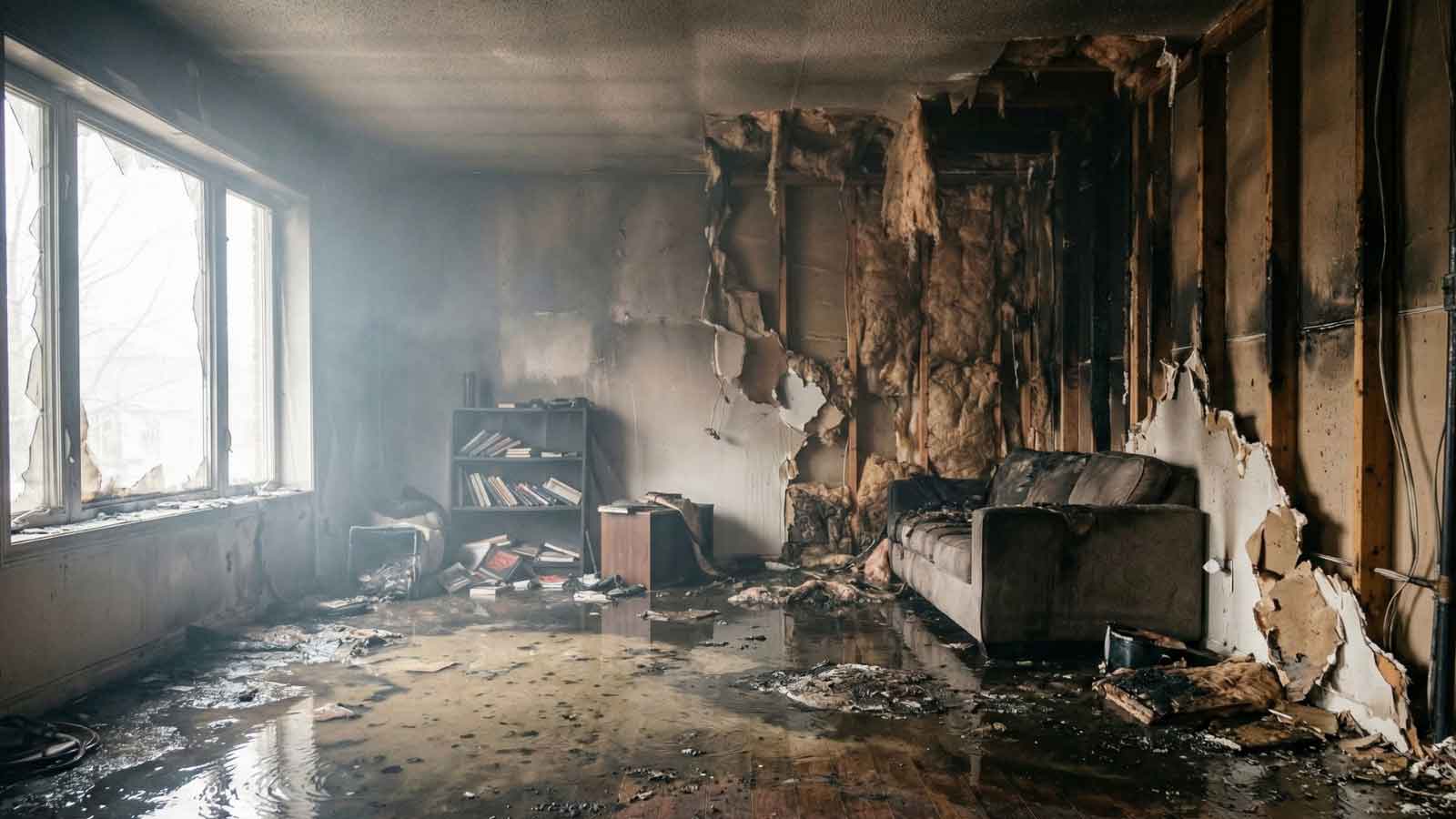

Table of Contents
The fire has been contained. The responders have left, and it feels like the worst is over. In truth, a second problem caused by fire-related water damage is already unfolding.
Firefighting efforts release thousands of gallons of water into your home’s structure during suppression. That water doesn’t evaporate when the hoses stop. It seeps into walls, soaks through subfloors, saturates insulation, and pools in cavities you can’t see or reach without professional equipment. For many homeowners, this water damage from firefighting becomes a serious secondary problem that demands its own professional response.
Recognizing this “second disaster” early is the difference between a manageable restoration and a full structural rebuild.
When the Fire Goes Out, a Second Problem Begins
Most people expect smoke damage and charred materials after a house fire. Few expect their home to contain thousands of gallons of contaminated water within its walls. Yet that’s exactly what happens, and the damage starts accumulating the moment suppression ends.
How Much Water Actually Enters Your Home
A firetruck typically carries between 500 and 1,500 gallons of water. Most residential fires require multiple units running hoses for extended periods. In extended suppression efforts, total water volume can exceed 10,000 gallons.
What makes fire suppression water damage particularly severe is how deep it travels. Heat causes expansion, cracking, and increased permeability in building materials, allowing water to penetrate far beyond the surface. Foam additives used during suppression reduce water’s surface tension, spreading it further into cavities a standard flood would never reach.
The Water Damage Nobody Warns You About After a House Fire
Once inside the structure, hidden water damage after a fire becomes nearly impossible to detect through visual inspection alone. Water settles into wall voids, beneath subfloors, inside crawl spaces, throughout insulation batt systems, and into HVAC ductwork, reaching areas of your home untouched by flames. None of these locations shows obvious wetness from the outside.
Heat-warped pipes frequently develop cracks or joint failures post-fire, leading to ongoing leaks in an already saturated structure. Professional restoration technicians use moisture meters and thermal imaging cameras to map saturation across your building envelope. Without these tools, hidden moisture goes undetected until mold growth or structural failure makes it visible.
Read More: How Non-Invasive Moisture Meters Pinpoint Water Damage
Several Serious Risks Develop Fast If You Wait
Water sitting inside a fire-damaged structure doesn’t stay neutral. Multiple hazards accelerate on a compressed timeline, and the longer you wait, the higher your remediation cost and the greater your structural loss.
Electrical Hazards Make the Structure Unsafe to Enter
This risk is present before you step back inside, and it’s one of the most immediate.
Water travels through wall assemblies and reaches electrical outlets, junction boxes, fixtures, and wiring runs. Water in electrical systems creates live short circuit conditions that persist even after the fire is out. Entering your home with active utilities before a professional inspection puts you at risk of electrocution. In some cases, wet wiring inside walls can also reignite, creating a secondary fire hazard after the original event.
Treat any home that has been through fire suppression as electrically compromised until a qualified technician confirms otherwise.
Mold Growth Starts Within 24 to 48 Hours
Mold after a house fire is not a future concern. It’s a present one. Mold spores exist throughout any built environment, and all they need is moisture, warmth, and darkness: three conditions your fire-damaged home provides in abundance.
Growth can begin inside saturated wall cavities and subfloor systems within 24 to 48 hours. By the time it becomes visible on surfaces, colonies are already established behind them. Health risks include:
- Respiratory irritation and chronic coughing
- Aggravated asthma and allergy symptoms
- Fungal infections in immunocompromised individuals
- Long-term air quality degradation in living spaces
The combination of soot and moisture also creates an acidic sludge that accelerates the breakdown of drywall, wood framing, and finishes, generating the persistent odor common in homes that weren’t properly dried after a fire.
Read More: What Are the Symptoms of Mold Exposure in Los Angeles Homes?
Structural Deterioration Compounds Every Day
Material damage follows its own timeline. Wood framing absorbs moisture and begins warping within days. Drywall softens and sags. Flooring systems buckle and separate from subfloor assemblies. Metal fasteners, joist hangers, and support brackets begin to corrode.
Left unaddressed beyond a week, saturation can significantly weaken structural components and may require partial structural replacement:
- Structural posts and beams lose load-bearing capacity
- Subfloor assemblies delaminate, requiring full replacement
- Floor and ceiling repair, removal, and reconstruction
Acting within the first 24 to 48 hours keeps restoration costs manageable. Waiting turns a drying project into a rebuild.
Contamination and Toxic Residue Spread
Firefighting water doesn’t stay clean as it moves through a burned structure. It picks up soot, ash, chemical fire retardants, and bacteria, reclassifying it as contaminated greywater that requires specialized handling. Standard drying equipment and household cleaning products are not designed for this type of hazardous residue.
As this water spreads into wall cavities and subfloor systems, it carries toxic residue into areas that were never directly exposed to fire. Soot and contaminated moisture also infiltrate HVAC ductwork during a fire event. If you turn your system on before it has been professionally inspected and cleaned, it will distribute that airborne contaminant to every room connected to the duct system, including rooms the fire and water never reached. Do not operate your HVAC until a qualified technician has cleared it.
Without proper containment, remediation, and duct cleaning, contamination expands well beyond the original fire zone, increasing both the scope of cleanup and the health risk to anyone inside the structure.
What to Do in the Hours Immediately After a Fire
The response window is narrow. Taking the right steps in the right order protects both your home and your safety.
Safety and Documentation Before Anything Else
Step 1
Shut off all utilities at the main panel and meter before anyone enters the structure. Electrical hazards remain active even when the lights are not working. Gas lines may also be compromised by heat damage to connections and valves.
Step 2
Wear PPE before entering. Firefighting water mixed with soot, ash, and fire retardants is contaminated. You need gloves, eye protection, and respiratory protection before making contact with any affected surfaces.
Step 3
Photograph and video every area of visible damage before anything is moved, cleaned, or disturbed. This documentation becomes your record for the insurance adjuster. Once cleanup begins, the original damage state is gone. Capture all rooms with visible water or wet surfaces, charred structural elements, flooring and ceilings, and exterior water intrusion points.
Water Extraction and Drying Cannot Wait
Standing water must be pumped out using commercial-grade extraction equipment. Household wet-dry vacuums and mop-and-bucket approaches remove only surface water, doing nothing to address moisture trapped in wall assemblies or subfloor systems.
Professional water extraction after a fire involves:
- Truck-mounted or portable extraction units for bulk water removal
- Commercial dehumidifiers and air movers for structural drying
- Cavity drying systems that direct airflow directly into wall voids
- Continuous moisture monitoring to confirm drying progress
By the time surface materials feel dry to the touch, the structure behind them can still hold moisture well above acceptable dry standards, enough to sustain mold growth for months. Professional drying equipment reaches where surface observation cannot.
Why Integrated Restoration Matters More Than You Might Expect
After a fire, the instinct is to call a fire restoration company first, then deal with water damage separately. That approach creates gaps. Fire contractors assess what burned. Water damage contractors assess what’s wet. Neither team has the full picture, and delays between handoffs allow damage to continue accumulating.
What to Look for in a Restoration Professional
The right restoration professional treats fire and water damage as one interconnected problem, not two separate jobs. Moisture mapping across the full building envelope should happen before any drying begins. Detection tools like thermal imaging and calibrated moisture meters are necessary to locate saturation in areas that visual inspection can’t reach.
Look for certified technicians who can address all damage categories under one scope of work:
- Water extraction and structural cavity drying
- Mold remediation with containment and air filtration
- Fire damage cleanup, including soot removal and odor treatment
- Structural assessment with board-up and stabilization as needed
A single coordinated scope means no waiting for handoffs and no areas overlooked because one contractor wasn’t responsible for finding them.
Read More: The Science of Thermal Imaging for Finding Hidden Leaks
Why Documentation Affects Your Insurance Outcome
Fire-related water damage insurance claims are complicated by the dual nature of the event. Adjusters need to separate fire damage from water damage for accurate scope reporting, and gaps in documentation create disputes that delay your settlement.
A qualified restoration professional generates records from day one, including drying logs with moisture readings, scope of loss reports, mold assessments, and photo documentation tied to specific areas of your property. Homeowners who attempt to dry structures independently before calling a professional risk complicating their claim by altering the damage state before it has been professionally assessed.
The Window to Act Is Shorter Than You Think
Firefighting water damage doesn’t announce itself with obvious signs. It moves silently through your wall assemblies and subfloor systems while the clock ticks on mold growth and structural deterioration.
If your home needs the help of water damage experts, contact Absolute Maintenance & Consulting immediately. With 37 years of serving Los Angeles and IICRC- and MICRO-certified technicians handling every stage of recovery, the faster the response, the more of your home can be saved.
About the Author
 Cameron Figgins
Cameron Figgins is the founder of Absolute Maintenance & Consulting. With over 30 years of hands-on industry experience, he specializes in identifying complex water intrusion issues in Southern California homes and is dedicated to helping homeowners protect their property with the latest in detection technology.”