What is the Difference Between Water Mitigation and Restoration?

Water mitigation and water restoration are two distinct, sequential phases of the water damage recovery process. Mitigation stops the damage from spreading, while restoration rebuilds the property to its pre-loss condition. The phrase “water damage recovery” covers both phases from start to finish, but they are not the same job. You cannot skip mitigation and go straight to restoration any more than you can set a cast on a broken leg before setting the bone.
What Is Water Mitigation?
Water mitigation is the emergency triage phase triggered by water intrusion. As soon as water gets inside a structure, the clock starts ticking on secondary damage. Mold can begin growing within 24 to 48 hours. Wood swells. Drywall wicks moisture up the wall. Mitigation is designed to stop that chain reaction. It follows the IICRC S500 standard, which sets the professional benchmark for extraction, drying, containment, and antimicrobial treatment.
What Happens During the Mitigation Phase?
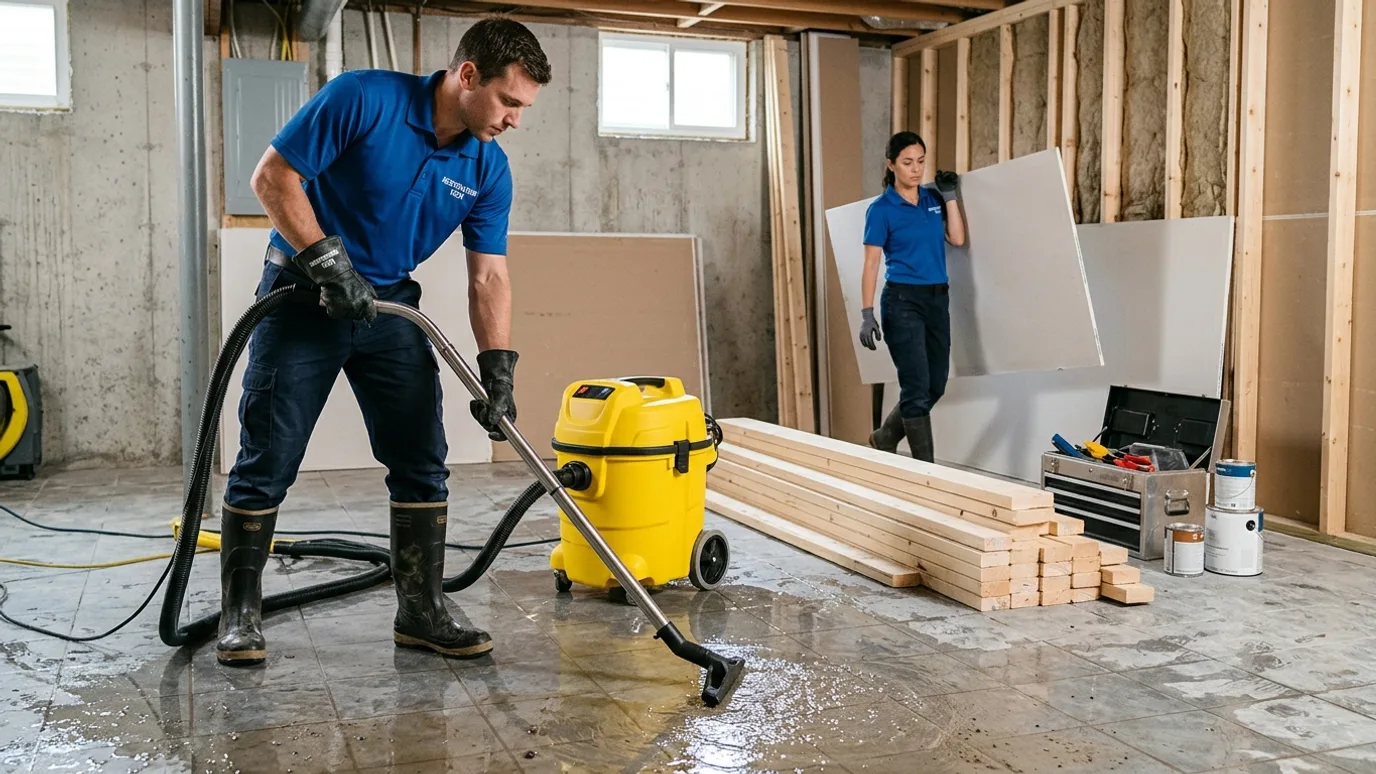
Standing water extraction is the first action. We use pumps and wet vacs to remove visible water fast. Every minute of delay increases the amount of moisture absorbed into porous materials.
Containment of wet area prevents moisture from migrating into unaffected rooms. We set up physical barriers and manage airflow to keep the problem isolated.
Structural drying is where industrial air movers and dehumidifiers do the heavy lifting. The goal is to pull moisture out of framing, subfloor, and drywall back to acceptable levels.
Moisture meter verification confirms that materials meet the dry standard defined by the IICRC S500 standard. We test repeatedly during drying and at the end to prove the structure is ready.
Antimicrobial treatment is applied to wet surfaces to inhibit mold growth and other microbial activity. This is not mold remediation; it is a preventive measure during mitigation.
How Long Does Water Mitigation Take?
For a typical residential water intrusion, mitigation runs one to two days. Commercial jobs may take a little longer because of larger square footage or higher saturation. Factors that extend the timeline include the extent of water intrusion, the type of materials affected, and access constraints like tight crawlspaces or multi-story buildings. We do not move to restoration until drying verification shows the structure meets IICRC dryness benchmarks. For how long each material takes to dry, see how long water damage takes to dry out.
What Is Water Restoration
Once the structure is verified dry, water restoration begins. This is the rebuild phase that returns the property to its pre-loss condition. Restoration involves removing dried-out material that cannot be saved, then installing new building materials, finishes, and systems. It does not begin until mitigation is complete and documented.
What Happens During the Restoration Phase?
Removal of dried drywall, insulation, flooring, and any compromised structural components is the first step. Even after drying, some materials lose integrity or absorb contaminants and must be replaced.
Installation of new building materials follows. This includes hanging drywall, laying subfloor, installing carpet or tile, replacing cabinets, and painting.
Final cosmetic and functional repairs cover HVAC registers, electrical outlets, plumbing fixtures, and any other systems that were disconnected or removed during mitigation. The goal is to make the property look and perform exactly as it did before the water event.
Drying verification sign-off and post-restoration inspection confirm the work meets both the pre-loss condition standard and local building codes. The insurance claim is closed only after this inspection passes.
How Long Does Water Restoration Take?
Restoration is not a quick sprint. It can take anywhere from a few weeks to several months. The duration depends on the size of the affected area, the materials being replaced, and whether permits are required. Coordination with insurance adjusters also plays a role, because restoration work often cannot proceed until claim approvals come through.
Why the Sequence Matters: Mitigation Must Come First
Restoration cannot begin on wet structures. If you install new drywall over damp framing, you trap moisture inside. That leads to rot, mold, and structural failure, all of which are much more expensive to fix later. The sequential restoration process exists for a reason.
Cost implications of out-of-order work are significant. If restoration starts before drying is verified, the new materials have to be torn out and replaced again. That doubles labor and materials. Insurance adjusters will see the mistake and may deny the claim for the rework.
Regulatory and insurance norms require a clear handoff from mitigation to restoration. Most standard policies cover both phases, but they must be completed in the correct order. Mixing the line items in a claim creates confusion and delays.
Side-by-Side Comparison: Mitigation vs. Restoration
| Aspect | Water Mitigation | Water Restoration |
| Purpose | Stop damage, prevent secondary damage | Rebuild to pre-loss condition |
| Primary Action | Standing water extraction and structural drying | Replacement of drywall, flooring, finishes |
| Containment | Containment of wet area to limit migration | No containment needed during rebuild |
| Verification | Moisture meter verification of dryness | Inspection of finished work |
| Typical Timeframe | 1-2 days | Weeks to months |
| Cost Driver | Equipment, labor, antimicrobial treatment | Materials, skilled trades, permits |
How Insurance Treats Each Phase Differently
Insurance adjusters see mitigation and restoration as separate line items. Mitigation costs are usually approved quickly because they stabilize the property and prevent further damage. Restoration costs require more documentation, including the drying verification report that proves the structure is ready for rebuilding. Our water damage insurance claims support includes the drying documentation adjusters ask for.
Most full water loss insurance claims require both phases. If you only do mitigation but never complete restoration, the claim is not fully settled. If you skip mitigation and try to claim restoration costs directly, the adjuster will question whether secondary damage could have been prevented. The IICRC S500 standard is often referenced in policy language as the benchmark for acceptable drying work.
What Industry Standards Govern These Processes?
The IICRC S500 standard is the primary document for water damage restoration. It covers inspection, water classification, extraction, drying, and the documentation required for verification. For mold issues, the IICRC S520 standard applies. Other relevant guidelines include ASHRAE recommendations for drying environments and OSHA safety rules for electrical shutdown during initial assessment.
Reputable contractors advertise compliance with these standards because it gives property owners confidence that the work meets the industry’s recognized best practices.
What About Mold, Where Does Remediation Fit In?
Mold remediation is a separate process from mitigation and restoration, but it can overlap when moisture has been present for more than 24 to 48 hours. If water intrusion goes unaddressed that long, mold may already be growing. At that point, the project may need mold remediation before, during, or after mitigation.
Mold remediation involves assessment, containment of the affected area, removal of contaminated materials, antimicrobial treatment, and post-remediation verification to confirm the area is clear. The IICRC S520 standard governs this work. Insurance claims often require separate documentation for mold remediation, so it is important to distinguish it from the mitigation phase.
Frequently Asked Questions
Are water mitigation and water restoration the same thing?
No. Mitigation is the emergency phase that stops damage from spreading. Restoration is the rebuild phase that returns the property to its pre-loss condition. They are two halves of the water damage recovery process.
Does insurance cover both water mitigation and restoration?
Yes, most standard homeowners and commercial policies cover both phases, but they must be completed in the correct sequence. Mitigation costs are typically approved faster, while restoration costs require drying verification and additional documentation.
Can restoration start before mitigation is finished?
No. You cannot install new materials on a wet structure. If you do, secondary damage like mold and rot will develop behind the new finishes. The IICRC S500 standard requires drying verification before restoration begins.
How long does each phase take?
Mitigation usually takes 1 to 2 days for residential jobs. Restoration can take weeks to months, depending on the severity of the damage and the scope of rebuilding. Commercial projects may run longer due to size and permitting.
What is the difference between water mitigation and mold remediation?
Water mitigation focuses on extraction, drying, and preventing secondary damage. Mold remediation is the specific process of containing, removing, and treating mold growth that has already occurred. If moisture sits for more than 24 to 48 hours, mold remediation may be needed in addition to mitigation and restoration.
What happens if I skip mitigation and go straight to repairs?
You will trap moisture inside the structure. That leads to hidden mold, wood rot, and structural weakening. Insurance may deny the claim for the repairs because the proper sequential restoration process was not followed. You end up paying for the work twice.
If you have water intrusion in your home or commercial property, the right move is to call a professional who understands the difference between mitigation and restoration and follows IICRC standards. Contact us to discuss your specific situation and the next steps.
About the Author
 Cameron Figgins
Cameron Figgins is the founder of Absolute Maintenance & Consulting. With over 30 years of hands-on industry experience, he specializes in identifying complex water intrusion issues in Southern California homes and is dedicated to helping homeowners protect their property with the latest in detection technology.”