
Moisture Detection in Your Home
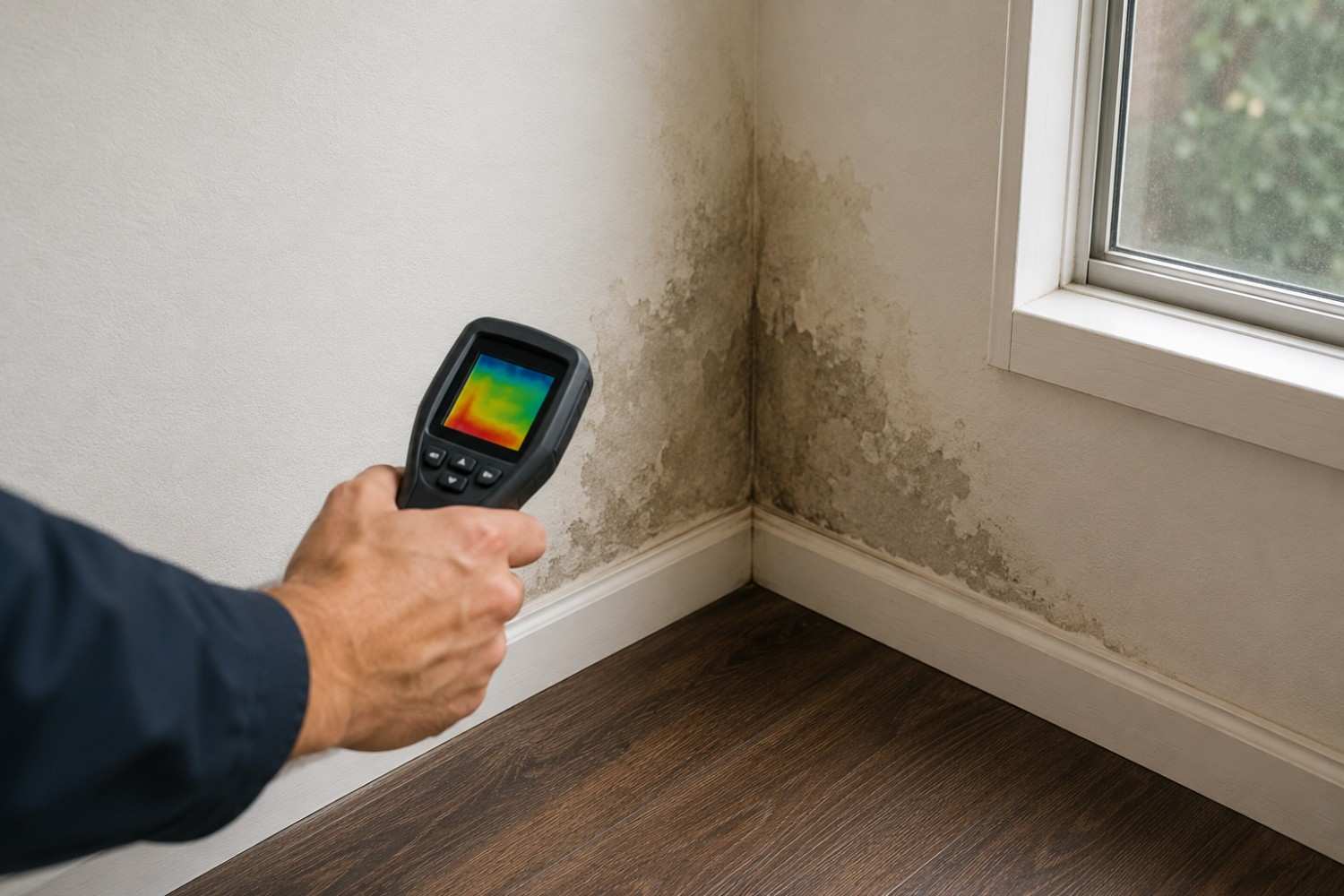

Moisture problems rarely start loud. They build quietly behind walls, beneath floors, and inside concrete until the signs are impossible to ignore.
Knowing what to look for early makes all the difference.
Why Moisture Detection Matters More Than Most People Think
By the time a stain appears on your ceiling or a smell surfaces in a room, moisture has usually been present for a while. Catching it earlier means less damage, less disruption, and almost always a lower repair cost.
It Does Not Always Look Like a Leak
Not every moisture problem presents as a visible drip or puddle. Water intrusion can work its way through concrete, block walls, and masonry slowly and silently. What looks like a surface stain is often a sign of something that has been building underneath for much longer.
Mold Follows Moisture
Where moisture sits long enough, mold tends to follow. Mold growth is not always visible right away. It often starts in areas with poor airflow, behind finishes, or in corners that rarely get attention. Early moisture detection is one of the most effective ways to prevent mold from taking hold.
Concrete and Masonry Are Not Immune
A lot of property owners assume concrete means dry. It does not. Concrete and block materials are naturally porous. They absorb and release moisture depending on conditions. That does not always mean there is a problem, but it does mean moisture in those materials needs proper evaluation, not just a quick reading with a meter.
What Are the Early Signs of a Moisture Problem?
Most moisture issues give early signals before they become serious. Knowing what to look for can help you catch a problem while it is still manageable.
1. Staining on Walls or Ceilings
Discoloration, watermarks, or tide lines on interior surfaces are common early indicators. They do not always mean active water intrusion is happening right now, but they do mean moisture has been present at some point and is worth investigating.
2. Efflorescence on Concrete or Block
White powdery deposits on concrete, block walls, or masonry surfaces are a sign that water has been moving through the material and leaving mineral deposits behind. It is one of the clearest visual signals that moisture is traveling through a structure.
3. A Persistent Musty Smell
A musty smell that does not go away with ventilation is often the first sign of mold activity. If a room smells off and there is no obvious source, moisture is usually the place to start looking.
4. Soft Spots or Bubbling Near Windows and Doors
Paint that bubbles, wallboard that feels soft, or caulking that has separated around windows and door frames are all signs that moisture is getting in through the building envelope. These are common water leak detection entry points that often go unnoticed until the damage is more advanced.
5. Recurring Dampness in Low-Lying Areas
Basements, crawl spaces, and below-grade rooms that feel damp after rain or feel consistently cooler and heavier than the rest of the home may have an ongoing moisture condition. A single damp episode after a storm is not always cause for alarm. A pattern of it is.
Also Read: What Are the Symptoms of Mold Exposure in Los Angeles Homes?
How Does Professional Moisture Detection Actually Work?
A moisture meter reading alone does not tell the full story. Professional moisture detection involves understanding the material being tested, establishing what normal looks like for that specific structure, and comparing findings across the affected area.
Visual Inspection Comes First
Before any equipment is used, a thorough visual inspection documents what is already visible. Staining, cracking, failed sealants, efflorescence, and signs of previous repairs all provide important context for what the readings will mean.
Environmental Conditions Matter
Temperature, humidity, recent rainfall, and irrigation exposure all affect how moisture behaves in concrete and masonry materials. A professional assessment accounts for these conditions before drawing any conclusions.
Baseline Readings Are Essential
A single elevated moisture reading does not automatically mean water damage. Accurate moisture detection requires establishing a baseline from unaffected areas of the same material, then comparing readings across the structure. Patterns matter more than any one number.
Moisture Mapping Identifies the Source
When elevated moisture is found, mapping the affected area helps identify whether the condition is isolated or widespread, active or historical, and consistent with water intrusion or normal substrate behavior. This step is what separates a proper assessment from a surface-level guess.
READ MORE: Chimney Leak Detection: A Common but Overlooked Water Entry Point
What Happens If Moisture Goes Undetected?
Ignoring early moisture signals tends to make things more complicated over time.
Water Intrusion Spreads Through the Structure
Water intrusion does not stay in one place. It follows the path of least resistance through a structure, which means what starts as a small affected area can quietly expand into surrounding materials before it becomes visible.
Mold Becomes Harder to Address
The longer moisture sits, the more opportunity mold has to establish itself. Early moisture detection gives property owners a chance to address conditions before mold becomes part of the problem.
Structural Materials Begin to Deteriorate
Prolonged moisture exposure weakens concrete, corrodes metal components, and compromises the integrity of building materials over time. Early detection preserves the structure and keeps repair options simpler. Learn more about waterproofing solutions that can help protect your property long term.
When Is It Time to Call Someone?
Some moisture issues are easy to spot and simple to address. Others need a more thorough look.
If staining keeps coming back after repairs, if a musty smell persists despite ventilation, or if dampness in certain areas of the property shows up every rainy season without a clear explanation, those are signs that the root cause has not been found yet.
Absolute Maintenance & Consulting provides professional moisture detection and assessment services for homeowners, property managers, and building owners across Southern California. The goal is accurate diagnostics, not assumptions. Get in touch to schedule an evaluation.
About the Author
 Cameron Figgins
Cameron Figgins is the founder of Absolute Maintenance & Consulting. With over 30 years of hands-on industry experience, he specializes in identifying complex water intrusion issues in Southern California homes and is dedicated to helping homeowners protect their property with the latest in detection technology.”