
Interior vs. Exterior Waterproofing: Pros, Cons, and Costs
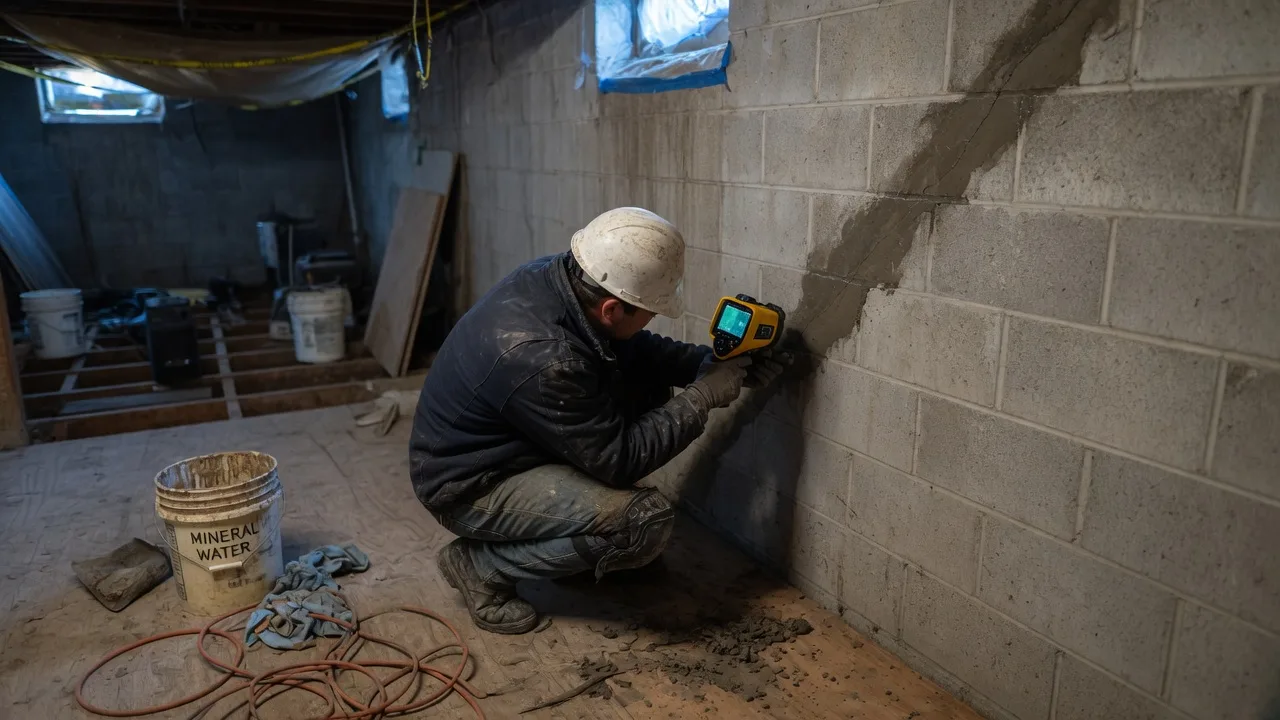

Exterior waterproofing stops water at the source by blocking infiltration before it reaches the foundation, while interior waterproofing only manages water after it has already entered. That’s the whole debate in one sentence. I’ve dug up enough foundations over many years to say it plainly: if you want water to never touch your concrete, you go exterior. If you’re dealing with a wet floor and can’t excavate, interior is your fallback, not your fix.
Interior vs. Exterior Waterproofing: The Core Difference
Exterior waterproofing is preventative. It blocks water before it ever reaches the foundation wall by cutting off hydrostatic pressure and soil moisture at the source. Interior waterproofing is reactive. It manages water that has already entered the structure using a sump pump, drain tile, and negative-side coatings.
The distinction that matters most: exterior stops infiltration before it starts. Interior only handles seepage after it has already breached the wall or floor. I’ve walked into basements where a homeowner spent thousands on interior drain tile only to find the wall itself was still soaking wet and slowly deteriorating behind the finish. The pump was working fine. The wall wasn’t.
How Exterior Waterproofing Works
Exterior waterproofing starts with full excavation around the foundation to expose the exterior wall. Once that wall is exposed, we install a waterproof membrane on the positive side along with a drainage board that channels water down and away. It is the standard method for foundation waterproofing.
A 4-inch drain tile gets placed right next to the footing to carry water away from the structure, usually to a sump pump or a daylight outlet if the grade allows gravity drainage. Fluid-applied water-resistive barrier systems have become the modern standard on high-performance residential jobs because they perform more consistently than older sheet membranes.
Positive-Side Waterproofing Explained
Positive-side waterproofing is applied to the exterior face of the foundation, the side that actually faces the incoming water. That placement matters because it keeps water from ever contacting the concrete.
Keeping water off the concrete prevents chemical deterioration, carbonation, and corrosion of the reinforcing steel inside. This is why positive-side systems are the current standard for new construction and any high-performance project where exterior access is available. If you’re pouring a new foundation, there’s no excuse to skip it.
Fluid-Applied WRB Systems
A fluid-applied water-resistive barrier is sprayed or rolled on as a liquid that cures into a seamless, flexible membrane bonded directly to the foundation wall.
Because it’s applied wet and cures in place, it eliminates the seams and overlap joints you get with sheet membranes, which are usually where I find the first sign of failure on older jobs. WRB systems are specified in Section 4 of industry standards for high-performance residential construction, and I spec them on almost every exterior job where excavation is already happening anyway.
How Interior Waterproofing Works
Interior waterproofing manages water that has already made its way into the basement or crawlspace. It doesn’t stop that water outside. It collects it and redirects it once it’s inside. It is the usual approach in basement waterproofing when excavation isn’t possible.
The typical setup involves excavating a trench along the interior foundation wall, about 12 inches wide and 8 to 10 inches deep, to install a drain tile system. That drain tile leads to a sump pit, and the sump pump discharges the collected water away from the building.
Negative-Side Waterproofing Explained
Negative-side waterproofing is applied to the interior face of the foundation. It’s reserved for existing buildings where exterior excavation isn’t feasible, whether that’s a shared wall, tight urban lot, or a finished landscape nobody wants torn up.
Common materials include cementitious coatings, crystalline waterproofing products like Xypex or Penetron, and epoxy or polyurethane crack injection for active cracks. Crystalline waterproofing works by reacting with moisture inside the concrete to form crystals that seal the pores from within. None of these methods stop water at the source. They seal the interior surface against moisture that has already worked its way through the wall.
Sump Pumps and Drain Tile Systems
Interior drain tile sits along the footing, usually 4-inch pipe, capturing water that comes in through the wall-floor joint. That’s the most common entry point I see in older Southern California homes with aging footings.
The tile feeds into a sump pit, and the sump pump, ideally with a battery backup, ejects that water outside before it can flood the space. Sump pumps need periodic testing. I tell every client to test theirs at least once a season, because I’ve seen pumps sit dead for years until the one storm that actually needed them. Expect a working lifespan of 10 to 15 years for the system overall, though the pump itself often needs replacing sooner than that.
Cost Comparison: Interior vs. Exterior Waterproofing
| Method | Typical Cost Range | What’s Included |
|---|---|---|
| Interior waterproofing | Varies | Sump pump, drain tile, crack sealing |
| Exterior waterproofing | Varies | Excavation, membrane, drainage board, restoration |
Exterior waterproofing runs roughly 2 to 3 times higher than interior work, mostly because of the labor involved in excavation and putting the landscaping or hardscaping back afterward. I’ve had jobs where the concrete walkway removal and replacement cost nearly as much as the waterproofing itself.
Actual costs vary by property size, excavation depth, local labor rates, and whether there’s a patio, deck, or mature landscaping in the way that needs to come out and go back.
Lifespan and Maintenance: 10-15 Years vs. 20-30+ Years
Exterior waterproofing systems typically deliver 20 to 30-plus years of performance with minimal upkeep. Mostly you’re just checking that drainage outlets stay clear.
Interior systems last 10 to 15 years and need ongoing attention: sump pump testing, battery backup replacement, and periodic drain tile cleaning to keep sediment from clogging the line. That gap in lifespan reflects the basic difference between the two approaches. One is a permanent barrier. The other is a mechanical system you have to maintain.
Which Method Fits Your Property?
The right choice depends on how severe the water problem is, whether you can actually access the exterior wall, your budget, and whether you’re building new or retrofitting an existing structure.
Exterior waterproofing is the definitive answer for high water tables, constant groundwater pressure, structural cracks, or homes in flood-prone parts of the region. Interior waterproofing is a practical alternative when excavation isn’t possible, like with shared walls or dense urban lots, or when you’re dealing with minor, intermittent seepage rather than a constant intrusion.
When Exterior Waterproofing Is the Right Call
Exterior waterproofing is the right call for homes with constant water exposure, a high water table, flood-prone conditions, or visible wall movement and bowing. It’s also the obvious choice on new construction, since the foundation is already exposed and excavation costs are already baked into the project.
- Constant or seasonal groundwater exposure
- Structural cracking or bowing walls
- New construction with exposed foundation
- Long-term ownership where a permanent, low-maintenance fix makes sense
When Interior Waterproofing Makes Sense
Interior waterproofing makes sense for minor seepage, condensation, small non-structural cracks, or any situation where exterior access is physically or financially off the table.
- Shared property lines or dense urban lots
- Existing exterior system that’s aged out and needs a stopgap
- Rental or short-term ownership situations
- Budget-driven decisions where full excavation isn’t justified
Is a Hybrid Waterproofing Approach Better?
A hybrid approach pairs exterior drainage improvements, like French drains or regrading, with interior drain tile and a sump pump. For existing homes with moderate seepage, this combination often gives the best real-world results because it addresses surface water and groundwater at the same time.
Hybrid systems can also come in under the cost of a full exterior overhaul while still giving you reliable, long-term control. I’ve recommended this route more than once for homes where full excavation wasn’t in the budget but the seepage was too persistent for interior-only fixes.
Source Diversion: The First Step Before Any Waterproofing
Before I even talk about membranes or drain tile, I look at where the water is coming from. Installing gutters and downspouts with long leaders, and regrading the lot so water flows away from the foundation instead of toward it, solves more problems than people expect.
Exterior French drains intercept groundwater before it ever reaches the foundation, cutting down hydrostatic pressure before it becomes a wall’s problem. I’ve had jobs where fixing the grading and extending the downspouts resolved the seepage entirely, no membrane or sump pump needed. Source diversion often shrinks the scope, and cost, of whatever waterproofing comes next.
If you’re not sure which category your property falls into, get a quote and I’ll walk the site with you before recommending a direction.
Frequently Asked Questions
Which method actually stops water from entering my home?
Only exterior waterproofing stops water at the source, since it blocks infiltration before it reaches the foundation wall. Interior waterproofing doesn’t prevent entry. It collects and redirects water that has already passed through the wall or floor joint.
Is interior waterproofing a permanent fix?
Interior waterproofing can be a lasting solution for mild to moderate seepage, but it’s not permanent in the way exterior systems are. It relies on mechanical components, mainly the sump pump, which typically needs maintenance or replacement well before the 20-plus-year mark exterior systems reach.
Can I waterproof if I can’t dig around my foundation?
Yes. Interior waterproofing is the standard solution when excavation isn’t possible, such as shared walls, tight urban lots, or established landscaping you don’t want to disturb. It won’t stop water at the source, but it manages it effectively for minor to moderate seepage.
Does interior waterproofing stop mold growth?
Not on its own. Interior systems manage water after it enters, but the wall itself can stay damp, which is exactly the condition mold needs. Exterior waterproofing prevents mold more reliably because it keeps water from contacting the wall in the first place.
How much longer does exterior waterproofing last compared to interior?
Exterior waterproofing typically lasts 20 to 30-plus years, while interior systems last 10 to 15 years. The gap comes down to design: exterior is a static barrier with little to maintain, while interior depends on a mechanical sump pump and drain tile that wear over time.
Is a hybrid waterproofing approach worth it?
Yes, for many existing homes with moderate seepage. Combining exterior drainage improvements like French drains with interior drain tile and a sump pump addresses both surface water and groundwater, often at a lower cost than a full exterior excavation project.
About the Author
 Cameron Figgins
Cameron Figgins is the founder of Absolute Maintenance & Consulting. With over 30 years of hands-on industry experience, he specializes in identifying complex water intrusion issues in Southern California homes and is dedicated to helping homeowners protect their property with the latest in detection technology.”