
Is Mold Remediation Covered by Homeowner’s Insurance in California?
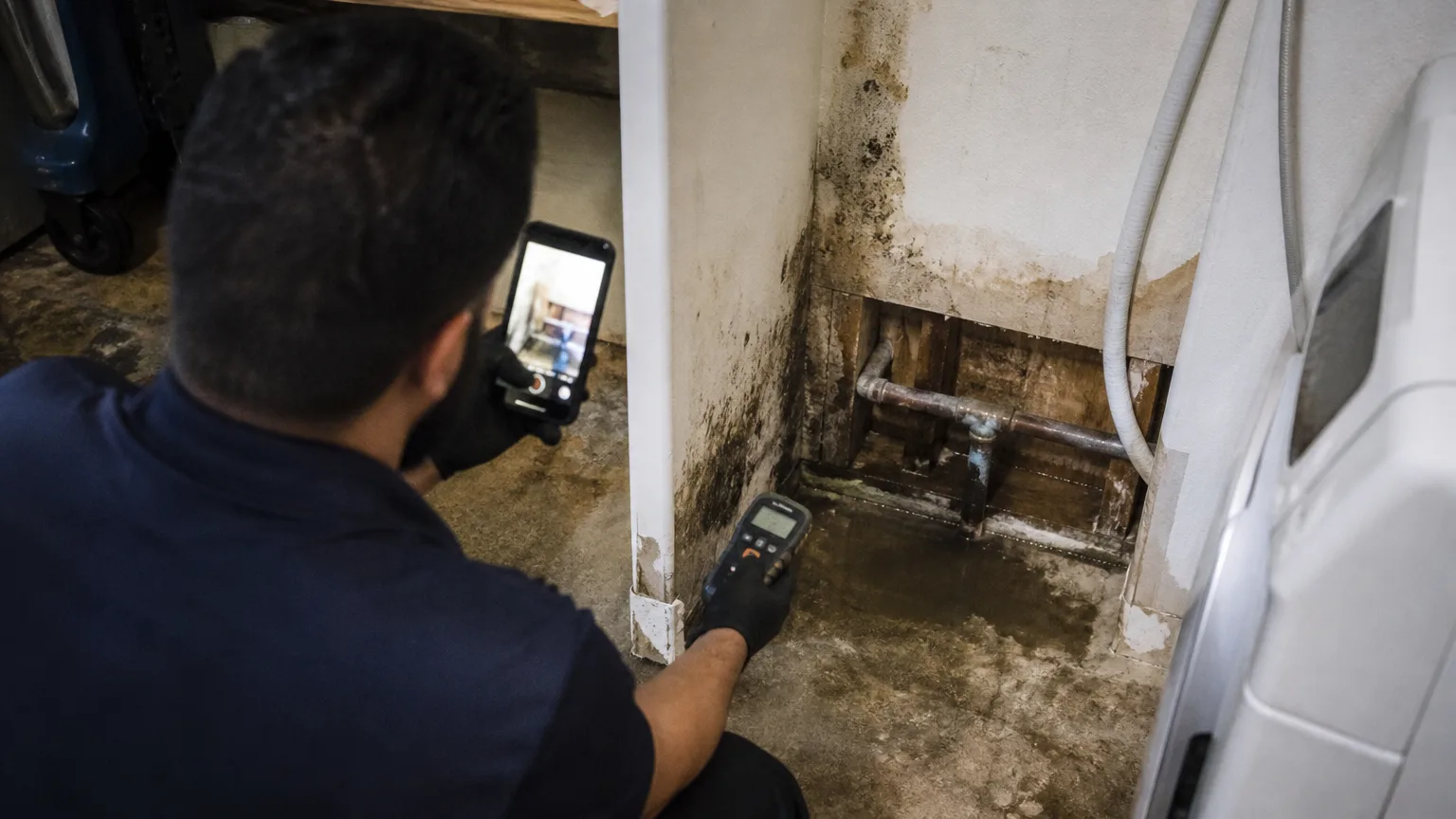

California homeowner’s insurance covers mold remediation only when the mold directly results from a sudden, accidental covered peril, such as a burst pipe or appliance overflow. If your mold problem started from a slow leak, humidity buildup, or years of neglected maintenance, your claim will almost certainly get denied. I’ve walked through hundreds of these claims with homeowners over my career, and the pattern is consistent: insurers pay when the water arrived fast and unexpectedly, and they push back hard when it didn’t.
When Does Homeowner’s Insurance Cover Mold Remediation?
Coverage comes down to one question: was the water intrusion sudden and accidental, or was it gradual? Your policy only responds to mold caused by a covered peril, meaning an event specifically named in your policy documents. For the water damage side of the same rule, see whether homeowners insurance covers water damage.
Common covered perils I see trigger legitimate mold claims include:
- Burst pipes (especially in attics, under slabs, or behind walls)
- Washing machine or dishwasher hose failures (appliance overflow)
- Storm-driven roof leaks
- Water used by fire crews during a structure fire
The catch is that you carry the burden of proof. The insurer won’t take your word for it that the water came on suddenly. You need documentation showing the timeline, and that’s where a lot of claims fall apart before they even get submitted.
What Counts as a ‘Covered Peril’
A covered peril is a specific, named event in your policy, not a general category of bad luck. Most standard HO-3 policies cover the dwelling on an “open perils” basis but still list exclusions, and mold coverage always traces back to what caused the water in the first place.
The California Department of Insurance has stated that mold resulting from a covered peril may be covered, but insurers are expected to document that link clearly. In practice, this means the adjuster wants a paper trail connecting the water source to the mold growth.
Examples of Covered Mold Situations
Here are scenarios I’ve personally inspected that led to approved claims:
- A supply line burst under a kitchen sink overnight, flooded the cabinet base, and mold appeared on the particleboard within a week
- In another case, a washing machine hose blew out while the homeowner was at work, soaking the laundry room and adjacent wall cavity
- Additionally, a wind-driven storm tore shingles loose, water poured through the attic insulation, and mold developed on the ceiling drywall within days
In each case, the sudden nature of the event was documentable, which made the difference.
When Is Mold Remediation NOT Covered?
Most of the denied claims I encounter share one trait: the water had been present for weeks or months before anyone noticed. Insurers treat that as a maintenance failure, not an accident.
Mold is also excluded when:
- It’s linked to flooding rather than an internal plumbing or appliance failure
- It existed before the policy went into effect
- The homeowner ignored visible signs of water intrusion for an extended period
Slow Leaks, Humidity & Poor Maintenance
A slow leak behind a wall that drips for months before anyone notices is treated as negligence, not an accident. I’ve opened up walls where a hairline crack in a pipe joint had been leaking for so long that the drywall had turned to mush and mold had spread across multiple stud bays. That’s an expensive lesson, and insurance won’t cover it.
High humidity or poor ventilation, common in older bathrooms and attics across Southern California homes, is also excluded. Policy language typically excludes “continuous or repeated seepage or leakage” that happens gradually rather than all at once.
Pre-Existing Mold and Flood-Related Mold
Pre-existing mold, meaning mold that existed before your policy’s effective date, is never covered regardless of how it started. Insurers will ask when you noticed it and when you bought the policy, and any mismatch raises red flags.
Flood-related mold is a separate issue entirely. Standard homeowner’s insurance does not cover mold caused by flooding. You need a flood policy through the National Flood Insurance Program or a private flood carrier for that. California’s Residential Property Claims Guide confirms this distinction clearly.
How Much Does Insurance Pay for Mold Claims?
Even when your claim gets approved, don’t expect it to cover everything. Most California policies cap mold remediation payouts at a mold sublimit, typically between $5,000 and $10,000, regardless of how extensive the damage is.
Mold Sublimits and Endorsement Options
Check your declarations page for the exact number. Some carriers now offer optional endorsements that raise the mold sublimit to $25,000 or more, but this isn’t standard and comes with an added premium.
Here’s how the coverage typically breaks down:
| Item | Typically Covered Separately? |
|---|---|
| Repairing the burst pipe or appliance | Yes, under dwelling coverage |
| Mold remediation and material removal | Subject to mold sublimit |
| Mold inspection costs | Often included in sublimit |
| Replacement of unaffected finishes | Usually not covered |
I’ve seen homeowners assume the $10,000 sublimit would cover a full remediation after a slab leak flooded three rooms. It didn’t come close. Know your number before you need it.
How to Document and File a Mold Claim Successfully
The claims that succeed are the ones with a clean paper trail from day one. Here’s what I recommend to every homeowner I work with:
- Photograph and video the water source immediately, before any cleanup begins
- Get a written report from a plumber, roofer, or appliance technician confirming the cause was sudden and accidental
- Report the claim to your insurer right away, since delays can be used to argue you failed to mitigate further damage
- Hire an IICRC-certified inspector to produce a report tying the mold growth directly to the covered water loss
- Save post-remediation verification, such as air sampling or surface testing, showing the mold was properly removed
Why an IICRC-Certified Mold Inspection Matters
An IICRC-certified inspector is trained under standardized protocols set by the Institute of Inspection, Cleaning and Restoration Certification. This matters because insurers increasingly reject reports from general contractors who lack this credential.
A proper mold inspection involves moisture mapping and a visual assessment of the affected area, distinct from mold testing, which involves lab sampling. The written report needs to explicitly state that the mold resulted from the covered water event, not from a pre-existing condition or ongoing maintenance issue. I’ve seen claims get denied simply because the inspector’s report was vague about causation, even when the underlying cause was legitimately a burst pipe.
Can You Clean Mold Yourself or Do You Need a Professional?
You can handle small mold problems yourself. If the affected area is 10 square feet or less, roughly the size of a small bathroom wall, you can clean it safely using gloves, an N95 mask, and ordinary detergent.
For anything larger, or if the mold is growing on porous materials like drywall or carpet, call in professional, IICRC-certified remediation. The same applies if anyone in the household has asthma, allergies, or a compromised immune system.
If you do clean it yourself, keep photos and receipts. That documentation shows the insurer you took reasonable steps to mitigate damage, though DIY cleaning alone usually won’t support a full remediation claim if the mold turns out to be more extensive than it looked.
California Regulations and Recent Policy Changes
The California Department of Insurance’s 2024 Residential Property Claims Guide requires insurers to clearly document the connection between a covered peril and resulting mold before approving a claim. This has tightened up how adjusters evaluate submissions.
By 2025, more carriers were requiring IICRC-certified inspection reports rather than accepting general contractor assessments, a shift I’ve noticed firsthand when submitting claim documentation. And recently, some insurers began offering optional higher-limit mold endorsements, up to $25,000 or more, though these remain non-standard add-ons rather than part of a typical policy.
Practical Takeaway
If you’re dealing with water intrusion right now, don’t wait to see if mold shows up before calling for help. Document the source, get repairs started, and bring in a mold inspection before you file anything with your insurer. Whether you’re dealing with water damage restoration after a pipe failure or you suspect a slower, hidden leak, getting an accurate read on the cause protects both your home and your claim.
Frequently Asked Questions
Does homeowners insurance cover mold from a burst pipe in California?
Yes. A burst pipe is a classic example of a covered peril, so resulting mold is typically covered. Payment is still limited by your policy’s mold sublimit, usually $5,000 to $10,000, even though the pipe repair itself falls under standard dwelling coverage.
Is mold from a slow leak covered by insurance?
No. Insurers classify slow leaks as a maintenance failure rather than a sudden accident. If a leak went undetected for weeks or months before mold appeared, the claim will almost certainly be denied, since the policy excludes continuous or repeated seepage.
Does flood insurance cover mold remediation?
Standard homeowner’s insurance never covers mold caused by flooding. You need a separate flood policy through the National Flood Insurance Program or a private flood carrier. Without that coverage, flood-related mold remediation costs come entirely out of pocket.
How much does homeowners insurance pay for mold remediation?
Most California policies cap mold payouts at a sublimit between $5,000 and $10,000, regardless of the total damage. Some insurers now offer optional endorsements raising that limit to $25,000 or more, but this costs extra and isn’t part of a standard policy.
Can I remove mold myself instead of hiring a professional?
You can, if the affected area is 10 square feet or less. Use gloves and an N95 mask with basic detergent. Larger areas, porous materials like drywall or carpet, or a household with allergy or asthma concerns call for professional, IICRC-certified remediation instead.
What documentation do I need to file a mold insurance claim in California?
You need photos and video of the original water source, a written report from a plumber or contractor confirming the cause was sudden and accidental, and an inspection report from an IICRC-certified inspector linking the mold directly to that covered event.
About the Author
 Cameron Figgins
Cameron Figgins is the founder of Absolute Maintenance & Consulting. With over 30 years of hands-on industry experience, he specializes in identifying complex water intrusion issues in Southern California homes and is dedicated to helping homeowners protect their property with the latest in detection technology.”