
Ceiling Water Damage: Signs, Causes, and Repair Options
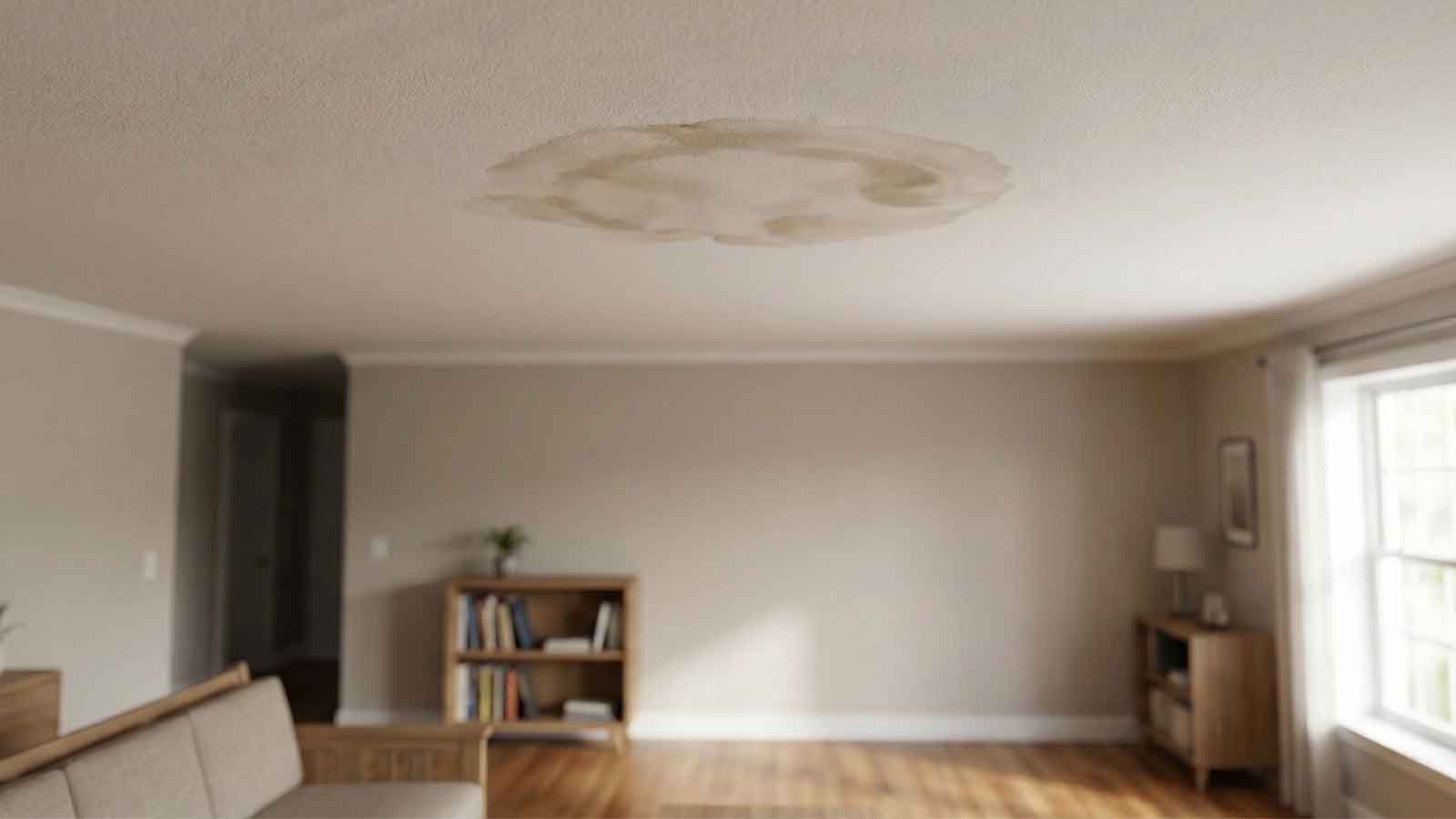

Table of Contents
That brown ring spreading across your ceiling is not just an eyesore. It signals that water has already moved through layers of building material above you, and the damage is almost always further along than what you can see from the floor. The question is not how bad it looks. It is how far it has spread, what caused it, and what needs to happen next.
This guide walks you through reading the warning signs, identifying the source, assessing severity, and understanding what a proper ceiling leak repair actually involves.
How to Recognize Ceiling Water Damage
Most homeowners notice something is off before they can name what they are looking at. A faint smell. A spot that was not there last week. A section of paint that looks different from the rest. These are not cosmetic quirks. They are your ceiling signaling that something above it has gone wrong.
Visual Warning Signs
Water stains are the most common first sign, typically appearing as brown or yellowish rings that expand outward over time. A stain that develops between rainstorms usually indicates a roof-related leak. One that appears after running a shower or dishwasher points toward plumbing or an appliance above.
Other visible signs to watch for:
- Sagging or bulging drywall means water has pooled in the ceiling cavity, and the material is holding weight it was never designed to carry. A ceiling holding standing water can fail without warning, bringing insulation, debris, and potentially electrical components down with it.
- Peeling or bubbling paint happens when moisture works between the paint layer and the substrate beneath. By the time paint starts lifting, the drywall behind it has already absorbed significant moisture.
Less Obvious Signals
Not every warning sign is visible:
- A musty odor without visible staining often means mold has already colonized the enclosed cavity above your ceiling. You smell it before you see it, which means growth is already underway.
- Soft or spongy spots when you press the ceiling surface indicate that the drywall’s integrity has been compromised.
- Intermittent drips that stop and start with weather patterns or water-use cycles are still active leaks, just ones that become visible only under specific conditions.
Common Causes of Ceiling Water Damage
Identifying what you see is only the first step. Understanding where the water is coming from determines whether a repair will last or fail within weeks. Source identification is the step most incomplete repairs skip entirely.
Roof Leaks and Clogged Gutters
Damaged shingles, cracked flashing, and deteriorated roofing materials are among the most frequent causes of ceiling water damage. Rainwater enters the roof assembly and travels along rafters and joists before appearing at your ceiling, often far from the actual intrusion point. Clogged gutters force water to back up under the roofline rather than directing it away from the structure, creating a secondary entry path that is easy to overlook.
Stains that appear at the corners where walls meet ceilings deserve extra attention. This pattern can point to water intrusion around poorly sealed windows or through cracked exterior walls rather than a roof failure, since water traveling along the wall-ceiling junction behaves similarly to a roof leak and correlates with the same rain events.
Plumbing Failures Above the Ceiling
Pinhole leaks, joint failures, and drain issues in upstairs bathrooms allow water to flow through floor assemblies into the ceiling below. These leaks are often intermittent because they only activate when water is running. A toilet with a slow leak at the wax ring, a shower drain with a failing seal, or a supply line with a hairline crack may go unnoticed for weeks before water stains become visible.
Shower Pan and Wet Area Waterproofing Failures
This cause is distinct from a plumbing failure and frequently gets misdiagnosed as one. When the shower pan liner deteriorates, tile grout cracks, or caulk around a bathtub breaks down, water seeps through the floor assembly with every shower or bath. No pipe is leaking. The waterproofing layer at the wet surface itself has failed.
The staining pattern tends to be diffuse rather than localized, and the ceiling below an upstairs bathroom is the most common location restoration professionals encounter it. Because the source is the finished surface rather than a mechanical component, repairs require addressing the bathroom waterproofing failure directly, not just drying out the ceiling below.
Appliance and HVAC Leaks
Water heaters, washing machines, and refrigerators with ice makers create slow, sustained leaks when supply lines or drain connections deteriorate. Because water migrates quietly through the floor structure before emerging at the ceiling below, appliance-related ceiling damage tends to cover a broader area than plumbing leaks. HVAC systems introduce a separate moisture source: overflowing drain pans and clogged condensate lines deposit water into ceiling cavities during heavy system use, most often in summer months.
Attic Condensation
Poor attic insulation allows warm, humid interior air to rise and contact cold surfaces in the attic assembly, where it condenses and drips into the ceiling below. Unlike active leaks, this damage is gradual and seasonal, intensifying during cold nights and humid conditions. Older homes with inadequate attic ventilation are particularly prone to this pattern.
Read More: Common Causes of Wall and Ceiling Leaks
How Serious Is Your Ceiling Damage?
Not every ceiling water leak requires the same response. Understanding where your situation falls helps you act appropriately and communicate clearly with a restoration professional.
Minor Damage: Stains Without Structural Compromise
If you are dealing with discoloration only, no sagging, no soft spots, and the source has already been confirmed and resolved, the repair sequence is straightforward:
- Allow the area to dry completely and confirm moisture readings have returned to normal.
- Apply a stain-blocking primer before repainting.
- Match the existing paint finish to restore appearance.
The most common mistake at this stage is repainting before the drying phase is complete. Moisture trapped beneath new paint will cause stains to bleed through within weeks.
Moderate Damage: Compromised Drywall and Wet Insulation
If you notice soft, crumbling, or lightly sagging drywall with wet insulation above, you are dealing with a more involved repair. Keep in mind that mold can begin forming within 24-48 hours, so time matters. This level requires:
- Cutting out the damaged drywall and removing saturated insulation.
- Allowing exposed joists to dry fully before any replacement material goes in.
- A professional assessment of the cavity before closing it, given how quickly organic materials like insulation and paper-faced drywall support mold growth.
Sealing wet materials behind new drywall is the primary risk at this stage. It silently damages the compound behind a ceiling that appears repaired.
Severe Damage: Structural Involvement and Mold
Warped or rotted joists, extensive mold growth, electrical components in the affected zone, or any risk of ceiling collapse all indicate severe damage. Rot and mold spread beyond their visible boundaries, and the structural integrity of the ceiling assembly requires direct inspection by an experienced technician. Proceeding without a professional assessment creates safety risks and can significantly expand the overall cost of restoration.
Repair the Source First, Always
This is the single most common reason ceiling water damage returns after repair, sometimes more than once.
The failure pattern is consistent: the stain gets painted over, new drywall goes up, and the ceiling looks finished. Then weeks or months later, the stain reappears or water drips from the same spot. The repair was cosmetic. The source was never resolved.
Water follows established paths. Once it finds a route through your roof assembly, a pipe joint, or an appliance connection, it will use that same path every time conditions allow. Any ceiling leak repair that does not begin with identifying the source is not a repair. It is a delay.
What Professional Ceiling Water Damage Repair Involves
For moderate and severe cases, professional restoration follows a specific sequence. Knowing what that process looks like helps you evaluate any contractor you speak with before work begins.
Locating the Source With Precision
Technicians use thermal imaging to detect temperature differentials that reveal hidden moisture beyond what is visible at the surface. Moisture meters then map how far saturation has spread through the ceiling assembly, which is often a larger area than the visible stain suggests. Visual inspection alone misses the actual entry point in most cases.
Read More: How Non-Invasive Moisture Meters Pinpoint Water Damage
Extraction, Drying, and Demolition
Once the source is addressed, the restoration process moves through a clear sequence:
- Damaged drywall sections and saturated insulation are removed to fully expose the cavity.
- Refrigerant dehumidifiers and air movers reduce ambient humidity and accelerate structural drying. For most residential properties, this phase takes 3 to 5 days, depending on the saturation level and material type.
- Moisture content is measured throughout, with wood framing needing to reach 12-15% before the cavity is closed.
- Affected areas receive antimicrobial treatment to eliminate existing mold colonies and prevent new growth in the restored assembly.
Restoration to Pre-Loss Condition
Once the structure is confirmed dry and treated:
- New drywall is installed, taped, finished, and textured to match the surrounding ceiling.
- A stain-blocking primer is applied before paint to prevent residual discoloration from bleeding through.
- Insulation is replaced to restore thermal performance.
- If mold remediation is required, that work is completed and documented before reconstruction begins.
Throughout the process, documentation of scope, moisture readings, and completed work supports your insurance claim and provides a clear record of what was found and resolved.
Read More: What is the Difference Between Water Mitigation and Restoration?
Ceiling Water Damage Absolute Maintenance & Consulting Repairs
Ceiling water damage rarely stays contained to the spot you can see. It moves through insulation, compromises framing, and creates conditions for mold before most homeowners realize the full scope of the problem.
At Absolute Maintenance & Consulting, our IICRC-certified water intrusion technicians bring over 37 years of water damage restoration experience to every job. We locate the source, assess the full extent of the damage using thermal imaging and moisture mapping, and restore your ceiling. Contact us to schedule an assessment.
About the Author
 Cameron Figgins
Cameron Figgins is the founder of Absolute Maintenance & Consulting. With over 30 years of hands-on industry experience, he specializes in identifying complex water intrusion issues in Southern California homes and is dedicated to helping homeowners protect their property with the latest in detection technology.”