
New Year, No Leaks: Why Rain Leak Detection is Essential for Los Angeles Homes Coming Out Of Winter
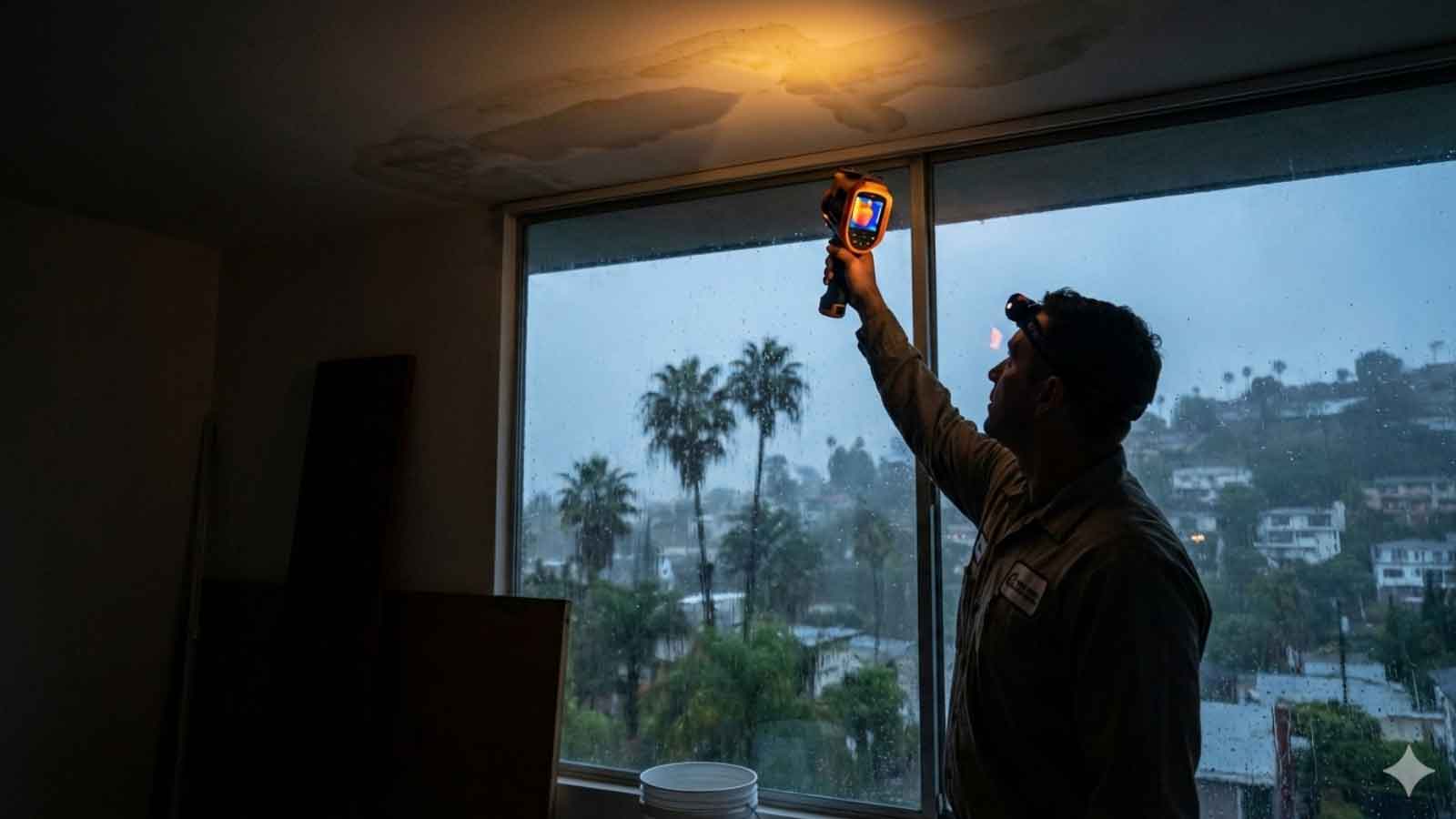

Table of Contents
Intense storms roll through Los Angeles in winter, dumping significant rainfall on properties that spend most of the year baking in the sun. Many leaks that develop during these storms stay hidden for weeks or months because water moves slowly through building materials. Drywall absorbs moisture gradually before paint bubbles. Wood framing holds water without warping immediately. By the time you notice a ceiling stain, water has often been present for a month or longer.
Catching leak problems while water damage remains limited to easily replaceable materials like drywall saves you from expensive structural reconstruction later.
The Importance of Post-Winter Rain Leak Detection in LA
Southern California buildings are designed primarily for heat and drought, not sustained rainfall. When winter storms arrive between November and March, they test every seal, joint, and membrane on your property. Water intrusion often begins at small, overlooked entry points and travels far from the original breach before becoming noticeable.
Southern California’s rainy season typically runs from November through March, making April and May ideal months for post-winter leak detection. By this time, any damage from winter storms has had a chance to manifest, and you can address problems before the long dry season.
Leak Entry Points Are Not Always Noticeable
Your home has dozens of potential failure points that winter rains can exploit. Most homeowners focus on obvious areas like the roof, but water frequently enters through less conspicuous locations.
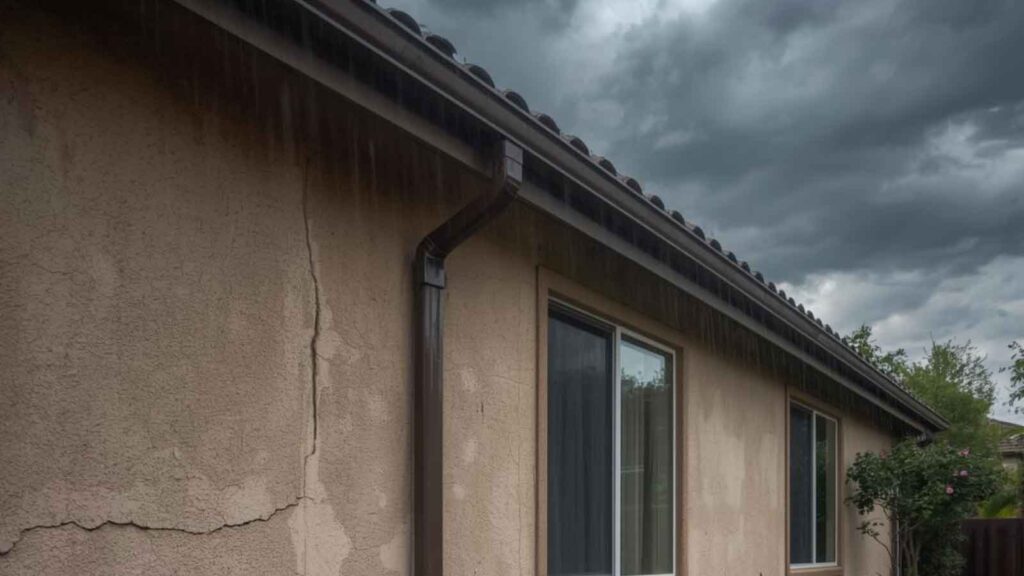
Stucco vulnerabilities present a major concern for LA properties. Hairline cracks that seem cosmetic actually allow water to penetrate the exterior and reach the building paper beneath. Once moisture gets behind stucco, it wicks through wall cavities and can emerge in rooms far from where it entered.
Window seals and door frames are among the most common sources of leaks. The caulking and weatherstripping around these openings degrade with sun exposure, creating gaps that allow water to enter during wind-driven rain. Sliding glass doors, particularly older aluminum-framed models, frequently allow water to pool and seep into the subfloor.
Other commonly overlooked entry points include:
- Roof flashing around vents, skylights, and chimneys with cracked sealant
- Deck-to-wall connections with improper flashing that allows water into adjacent rooms
- HVAC penetrations through walls and roofs that lack adequate sealing
- Garage-to-house transitions where different building materials meet
Waiting Too Long Can Lead To Higher Costs
When you delay leak detection after the rainy season, the same leak goes unaddressed for months, resulting in serious damage to your home. What starts as a simple rain leak repair involving caulking replacement becomes a major project requiring water damage restoration, mold remediation, framing replacement, and reconstruction. You face potential costs in the tens of thousands of dollars and weeks of disruption.
Mold adds another layer of risk. Spores begin colonizing wet materials within 24 to 48 hours, and wall cavities provide ideal conditions for growth. Significant mold growth can develop before you notice any visible signs or odors. Exposure triggers allergic reactions, asthma attacks, and respiratory irritation, with young children, elderly individuals, and those with existing respiratory conditions facing elevated risks.
Your insurance coverage also depends on timely action. Policies typically cover sudden, accidental water damage but exclude damage from neglected maintenance or gradual leaks. Professional inspection reports and testing documentation strengthen your claim when you act promptly.
Recognizing Hidden Leak Damage in Your Home
These warning signs can tell you whether you need rain leak detection for your Los Angeles home.
Exterior Clues For Leaks
Watch for these clues during your post-winter inspection:
- Staining below rooflines, indicating water running down exterior walls rather than draining through gutters
- Efflorescence, the white crystalline deposits on stucco, brick, or concrete that signal moisture has passed through masonry
- Swollen or soft wood trim around windows, doors, or roof edges
- Gaps forming between different materials at transitions
- Rust staining from corroding fasteners or flashing
- Algae or moss growth in shaded areas that remain perpetually damp
Interior Warning Signs
The musty smell in your basement or crawl space may indicate an unnoticed leak. Pay close attention to areas near exterior walls, windows, and beneath upper-floor bathrooms or kitchens. The same window and door frames that allow water entry often show the first interior damage signs.
Visual indicators to watch for:
- Damp or soft baseboards, especially along exterior walls
- Paint bubbling, peeling, or developing a wavy texture
- Drywall that feels spongy when pressed
- Ceiling stains that grow or darken after rain
- Discoloration around window frames or door casings
- Warped or buckling flooring near exterior walls
How Professionals Find What You Cannot See
The warning signs above help you identify potential problems, but confirming the source and extent of water intrusion requires professional equipment.
Consumer-grade moisture meters measure only surface moisture, missing saturation deeper in wall assemblies. Effective water leak detection requires more than visual inspection. Professional diagnostics use specialized equipment to locate moisture and identify entry points precisely.
Calibrated Water Testing Using ASTM Standards
When thermal imaging identifies potential entry points, technicians often perform controlled water testing to confirm exactly how moisture enters your building.
Spray rack testing simulates rainfall conditions in a controlled, systematic manner. Technicians isolate specific areas, such as individual windows or wall sections, and apply water at calibrated pressure and volume while monitoring interior surfaces. Many homeowners discover that the “obvious” leak source was not the problem at all, which helps you avoid paying for unnecessary repairs.
Infrared Thermography and Moisture Mapping
Thermal imaging cameras reveal moisture hidden behind walls, ceilings, and floors without any need for demolition. This technology identifies the full extent of water spread, not just the visible surface stain.
Moisture meters complement thermal imaging by quantifying water content in specific materials. Water intrusion experts map readings throughout affected areas, documenting the scope of saturation. This documentation supports both targeted repair planning and insurance claim submissions.
What to Expect During a Professional Assessment
A comprehensive assessment includes an initial consultation about your concerns, visual inspection of exterior and interior surfaces, and diagnostic testing using infrared thermography and moisture meters. You receive a report summarizing findings with thermal images, moisture readings, and repair recommendations prioritized by severity.
The process typically requires several hours for a standard single-family home. Most inspections are non-invasive, though technicians may recommend exploratory openings if diagnostics suggest significant concealed damage.
Once leaks are confirmed, you’ll receive prioritized recommendations addressing immediate water intrusion sources first, followed by repairs to damaged materials and preventive measures to protect against future storms.
Contact Absolute Maintenance & Consulting
Absolute Maintenance & Consulting brings over 37 years of experience to water leak detection and rain leak repair throughout Los Angeles and Southern California. Our team combines advanced diagnostic technology with deep knowledge of local building practices and common failure patterns in stucco exteriors, flat roofs, and hillside foundations.
When we identify active leaks, we provide complete water damage restoration to dry affected materials and prevent mold growth. If mold has already developed, our mold remediation team contains and removes contamination safely. We also offer stucco, roof, and foundation waterproofing to protect your property against future storms.
Call us today or visit our contact page to schedule your post-winter inspection.
About the Author
 Cameron Figgins
Cameron Figgins is the founder of Absolute Maintenance & Consulting. With over 30 years of hands-on industry experience, he specializes in identifying complex water intrusion issues in Southern California homes and is dedicated to helping homeowners protect their property with the latest in detection technology.”