
HVAC and Air Duct Mold Remediation Services
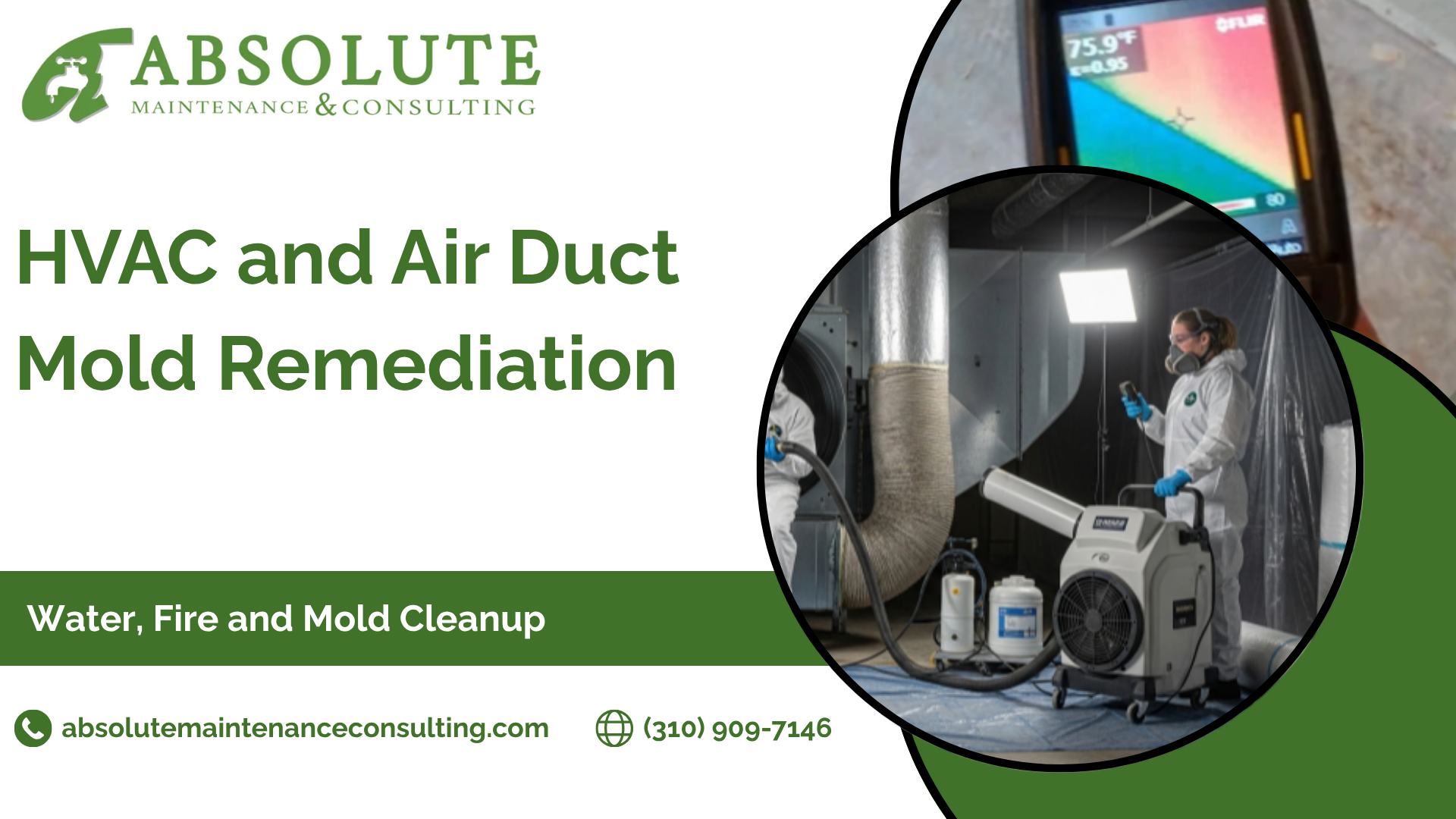

Table of Contents
When mold invades your HVAC system and air ducts, it creates a silent threat that spreads throughout your entire home or business. HVAC mold remediation and air duct mold removal require specialized expertise to safely eliminate contamination while preventing future growth.
Mold in HVAC systems is particularly dangerous because it can remain hidden while continuously degrading air quality. Unlike surface mold, HVAC mold lurks inside ductwork where it’s difficult to detect without professional inspection, making professional remediation services essential for healthy indoor environments.
Why Mold in HVAC and Air Ducts Demands Immediate Action
The dangers of HVAC mold extend beyond aesthetic concerns, creating serious health risks and property damage. When mold colonizes your air distribution system, it transforms your HVAC into a delivery mechanism for airborne contaminants. Every heating or cooling cycle pushes mold spores and mycotoxins directly into your breathing air.
Mold in air ducts poses unique challenges because the dark, humid environment inside ductwork provides ideal growing conditions. Temperature fluctuations, condensation, and accumulated debris create perfect breeding grounds for various mold species. Once established, colonies spread rapidly throughout the system, making remediation increasingly complex and expensive.
The health implications are particularly concerning for vulnerable populations, including children, elderly individuals, and those with compromised immune systems. Prolonged exposure can trigger allergic reactions, asthma attacks, and respiratory infections.
Signs of Mold in HVAC Systems and Air Ducts
Recognizing signs of mold in HVAC systems requires attention to visual cues and subtle changes in air quality. Visual signs of mold in air vents include dark staining, fuzzy growths, or discoloration around vent openings. However, visible mold represents only a fraction of potential contamination, as most growth occurs deep within ductwork.
Musty odors that worsen when the HVAC system operates often indicate hidden mold colonies. System performance changes including reduced airflow, unusual noises, or increased energy consumption may signal blockages or contamination within ductwork.
Health Symptoms Linked to HVAC Mold
Health risks of HVAC mold exposure manifest through respiratory symptoms including persistent coughing, sneezing, throat irritation, and difficulty breathing. These symptoms typically improve when away from the contaminated environment and worsen upon return.
Allergic reactions can include skin irritation, watery eyes, runny nose, and headaches. Individuals with existing allergies or asthma often experience exacerbated symptoms when exposed to mold spores circulating through HVAC systems.
More severe health effects can occur with certain mold species or heavy exposure levels. Fatigue, concentration difficulties, and memory problems sometimes result from mycotoxin exposure.
Visual and Odor-Based Clues
Black dust in air ducts often indicates mold growth, particularly when this material appears greasy or sticky. This contamination may accumulate around vent openings or settle on surfaces near air registers.
A moldy smell from vents represents one of the most reliable indicators of HVAC mold problems. This musty, earthy odor typically becomes more pronounced when the system first starts up or during periods of high humidity.
Other visual clues include water stains around ductwork connections, suggesting moisture problems that promote mold growth. Condensation on ductwork surfaces creates ideal conditions for mold development.
Causes and Conditions for Mold Growth in HVAC and Air Ducts
Understanding causes of HVAC mold helps property owners address underlying problems and prevent future contamination. Mold requires moisture, organic matter, and suitable temperatures to thrive. HVAC systems can provide all three conditions when proper precautions aren’t maintained.
Moisture represents the primary driver of mold growth, originating from condensation, leaks, and high humidity levels. Air conditioning systems naturally produce condensation as they cool humid air. When drainage systems fail, this moisture accumulates within the system.
HVAC moisture problems also result from poor system design, inadequate insulation, or improper installation. Ductwork in unconditioned spaces experiences temperature differences that promote condensation.
Moisture, Humidity, and HVAC Design Flaws
Humidity in ductwork creates ideal conditions for rapid mold development. When warm, moist air contacts cold ductwork surfaces, condensation forms on interior surfaces. This moisture may not drain properly, especially in horizontal duct runs or areas with inadequate slope.
Design flaws that contribute to moisture problems include undersized condensate drains, inadequate vapor barriers, and insufficient insulation. Ductwork installed without proper support may sag, creating low spots where water accumulates.
Oversized HVAC equipment compounds humidity problems by short-cycling, failing to run long enough to remove moisture from indoor air. This leaves humidity levels elevated, promoting condensation within ductwork.
Maintenance Issues
Poor HVAC maintenance mold problems develop when routine system care is neglected. Clogged air filters restrict airflow and trap moisture, creating stagnant conditions that promote mold growth. Dirty evaporator coils provide both moisture and organic matter necessary for mold development.
Infrequent duct cleaning allows debris accumulation that supports mold growth once moisture is present. This organic matter also restricts airflow, creating areas of poor ventilation where humidity levels remain elevated.
HVAC and Air Duct Mold Remediation Process
The HVAC mold remediation process requires systematic approaches that address contamination while preventing cross-contamination. Professional air duct cleaning steps must be adapted for mold remediation, incorporating specialized techniques not used in routine maintenance.
Successful remediation begins with thorough assessment and proper containment to prevent spreading contamination during cleaning. The complexity of HVAC systems demands comprehensive approaches that address all potentially affected components.
Inspection and Mold Assessment
Duct mold inspection begins with comprehensive visual examination of accessible system components, including air handlers, ductwork, and registers. Professional inspectors use specialized tools including borescopes to examine interior surfaces, moisture meters to identify problem areas, and air sampling equipment to assess spore concentrations.
The inspection process includes identification of mold species present, assessment of contamination extent, and evaluation of underlying moisture problems. This information guides remediation planning and helps determine appropriate treatment methods.
System Shut Down & Containment
HVAC system shut down represents a critical first step in preventing spread of mold spores during remediation work. The system must remain offline throughout the entire process to prevent distribution of disturbed spores to clean areas.
Containment protocols establish controlled work areas using plastic sheeting and negative air pressure to prevent cross-contamination. HEPA-filtered negative air machines create airflow patterns that direct disturbed spores away from clean areas.
Mold Removal & HEPA Filtration
HEPA vacuum HVAC cleaning utilizes specialized equipment designed to capture mold spores and prevent their release during remediation work. These systems provide filtration efficiency of 99.97% for particles 0.3 microns and larger, ensuring effective capture of mold spores.
Physical removal of mold growth may require wire brushing, scraping, or other mechanical methods depending on contamination severity. Heavily contaminated porous materials, including insulation, typically require removal and replacement as they cannot be effectively cleaned.
Disinfection and Preventive Treatments
HVAC mold disinfecting involves application of EPA-registered antimicrobial products specifically designed for use in HVAC systems. These treatments must be effective against specific mold species while being safe for use in occupied buildings.
Preventive treatments may include application of mold-resistant coatings or sealants to prevent future growth on treated surfaces. These products must be compatible with HVAC system materials while providing long-term protection.
Post-Remediation Testing and Restoration
Air quality testing after remediation confirms successful elimination of mold contamination and safe indoor air quality levels. Testing protocols typically include both air sampling and surface sampling to verify that spore levels have returned to acceptable ranges.
System restoration includes replacement of removed components with mold-resistant materials when possible. The entire system undergoes thorough inspection and testing to ensure proper operation before being returned to service.
Why Hire Certified Remediation Professionals?
Certified HVAC mold specialists possess the specialized knowledge, equipment, and experience necessary for safe and effective mold remediation. NADCA certified professionals have completed extensive training in proper cleaning procedures and safety protocols.
Professional mold removal companies maintain specialized equipment including powerful HEPA vacuum systems, negative air machines, and antimicrobial application equipment. The cost of purchasing this equipment often exceeds the cost of hiring professional services.
DIY vs. Professional Mold Remediation
DIY HVAC mold removal risks include inadequate containment, improper cleaning techniques, and potential health hazards from mold exposure. Without proper equipment and training, well-intentioned efforts may actually spread contamination throughout the building.
The complexity of HVAC systems makes thorough DIY remediation extremely difficult for untrained individuals. Access to interior ductwork surfaces requires specialized tools and techniques, while proper assessment demands experience and training.
Preventing Future Mold in HVAC and Air Ducts
Strategies to prevent HVAC mold focus on moisture control, proper maintenance, and system design improvements. Prevention is significantly more cost-effective than remediation and provides ongoing protection for building occupants.
Regular maintenance represents the foundation of mold prevention, ensuring HVAC systems operate properly and moisture problems are identified early. This includes routine filter changes, coil cleaning, and drain maintenance.
Routine Maintenance and Filtration Upgrades
An effective HVAC maintenance schedule includes monthly filter inspections, quarterly system inspections, and annual professional maintenance service. Filter upgrades to higher efficiency models can improve indoor air quality and reduce debris accumulation.
Coil cleaning should be performed annually to prevent moisture and debris accumulation. Condensate drain inspection and cleaning prevents backups that create moisture problems.
Dehumidification and Moisture Control
HVAC dehumidifiers for mold prevention provide additional moisture removal beyond normal air conditioning operation. Whole-house dehumidification systems can maintain optimal humidity levels year-round, particularly in humid climates.
Proper system sizing ensures adequate dehumidification without excessive energy consumption. Oversized cooling equipment may fail to provide adequate moisture removal, while undersized systems cannot maintain comfortable conditions.
Cost of HVAC and Air Duct Mold Remediation
HVAC mold remediation cost varies significantly based on contamination extent, system complexity, and accessibility factors. Basic remediation for limited contamination may cost several thousand dollars, while extensive contamination can reach tens of thousands. Air duct cleaning price for mold remediation typically exceeds routine maintenance costs due to specialized requirements.
Early intervention typically results in lower overall costs than allowing problems to worsen over time. Professional assessment can provide accurate cost estimates based on specific conditions and requirements.
Factors Affecting Price (severity, size, accessibility)
Mold remediation cost factors include the extent of contamination throughout the HVAC system, with limited growth costing significantly less than widespread contamination. System size directly impacts costs, as larger buildings require more time, labor, and materials.
Accessibility challenges can significantly impact costs when ductwork is located in difficult areas such as above ceilings or within walls. Limited access may require additional labor time or specialized equipment to reach contaminated areas.
Frequently Asked Questions (FAQ)
How dangerous is mold in HVAC ducts? Mold in HVAC ducts poses significant health risks because it distributes spores throughout the building every time the system operates. This continuous exposure can trigger allergic reactions, asthma attacks, and respiratory infections.
Can mold in air ducts make you sick? Yes, mold in air ducts can cause respiratory problems, allergic reactions, headaches, fatigue, and skin irritation. Symptoms often worsen when indoors and improve when away from the contaminated environment.
How long does mold remediation take? HVAC mold remediation typically requires 3-7 days depending on contamination extent and system complexity. Systems must remain offline during the entire process.
Is air duct cleaning enough to remove mold? Standard air duct cleaning is insufficient for mold remediation because it doesn’t address underlying moisture problems or provide specialized containment and disinfection required for safe mold removal.
Do you need to replace ductwork after mold? Ductwork replacement depends on contamination severity and material type. Porous materials typically require replacement, while metal ductwork can often be cleaned successfully.
How can I tell if my HVAC has mold? Signs include musty odors when the system operates, visible growth around vents, black dust from air vents, and health symptoms that worsen when indoors.
What certifications should a mold remediation company have? Companies should have NADCA certification for duct cleaning, IICRC certification for mold remediation, and appropriate state licenses.
Call to Action: Request Your HVAC Mold Inspection Today
Don’t let mold in your HVAC system continue compromising your indoor air quality and health. Professional inspection can identify problems early when remediation is most cost-effective and successful.
Schedule HVAC inspection services today with Absolute Maintenance & Consulting to protect your family from health risks associated with airborne mold exposure. Our comprehensive assessment includes visual inspection, air quality testing, and evaluation of system conditions that may promote mold growth.
Our air duct mold removal service combines industry-leading techniques with state-of-the-art equipment to safely eliminate contamination and restore healthy indoor air quality. Contact us today for a free consultation and take the first step toward cleaner, healthier indoor air.
About the Author
 Cameron Figgins
Cameron Figgins is the founder of Absolute Maintenance & Consulting. With over 30 years of hands-on industry experience, he specializes in identifying complex water intrusion issues in Southern California homes and is dedicated to helping homeowners protect their property with the latest in detection technology.”