How We Restore and Save Water-Damaged Hardwood Floors


Table of Contents
Walking into your home and discovering water pooling across your hardwood floors triggers an immediate question: Can these floors be saved? The answer depends on how quickly you respond and who handles the restoration.
Water-damaged floor restoration requires specialized expertise that goes beyond standard flooring work. At Absolute Maintenance & Consulting, our IICRC-certified technicians have experience restoring wood floors for homeowners facing situations like this. We’ve seen floors that looked beyond repair come back to their original beauty, and we’ve been honest with clients when replacement made more sense than restoration.
This page explains our hardwood floor restoration process, what determines salvageability, and how we protect your investment long after the visible work is complete.
Signs Your Hardwood Floors Have Water Damage
Before restoration begins, you need to understand what you’re dealing with. Water damage to hardwood floors shows up in specific ways, and recognizing these signs helps determine the right approach. Some damage is immediately visible. Other warning signs lie beneath the surface, revealing themselves only through subtle changes in how your floor looks, feels, or smells.
Visible Red Flags Of Water-Damaged Floorboards
Cupping is the most common sign of moisture imbalance in hardwood flooring. You’ll notice the edges of individual boards rising while the center sinks, creating a wavy, rippled appearance across the floor. This happens when the underside of boards absorbs moisture while the top surface stays relatively dry.
The wood fibers swell unevenly, causing the edges to pull upward. Cupped boards often recover with proper drying techniques, though this requires patience and professional equipment.
Crowning is the opposite pattern. The center of each board rises while the edges remain low, typically when the top surface absorbs more moisture than the bottom surface or when cupped floors are sanded before fully drying.
Buckling represents the most severe damage, with boards lifting completely away from the subfloor. You’ll see gaps, tenting, or boards that have separated entirely. Buckling almost always requires board replacement rather than repair.
Other damage indicators include:
- Discoloration or dark staining between boards
- Soft spots that give slightly underfoot
- Gaps appearing between previously tight-fitting boards
- A spongy or bouncy feel when walking across certain areas
Floor Damage Can Run Deeper Than You Think
Visible floor damage often signals deeper problems. Moisture trapped beneath hardwood creates conditions for mold growth, structural deterioration, and ongoing decay that you cannot see. The plywood or OSB subfloor readily absorbs water, and once saturated, it swells, delaminates, and loses structural integrity.
This is why professional moisture meter readings matter. Surface appearance alone cannot tell you what’s happening underneath. Some homeowners discover hidden water damage only after noticing a musty smell that won’t go away, even after the visible water has dried. If your basement or crawl space suddenly smells like a leak, the source may be moisture trapped beneath your flooring.
Our Hardwood Floor Restoration Process
Restoring water-damaged wood floors follows a precise sequence. Each phase builds on the previous one, and rushing or skipping steps causes problems to resurface within months. Our water damage restoration approach applies these same principles across all services: stop the water, remove the moisture, dry completely, assess the damage, then repair what needs repair.
Emergency Water Extraction and Source Control
The first priority is stopping active water intrusion. A burst pipe, failed appliance, roof leak, or foundation seepage will continue worsening damage with every passing hour. Our technicians identify and control the water source before any extraction work begins.
Once the source is contained, we deploy professional-grade wet vacuums and extraction equipment to remove standing water. These commercial units pull water not just from the surface but also from seams, gaps, and cavities beneath the flooring. Household wet-vacs lack the suction power and capacity for this work. The difference in extraction speed directly affects how much of your floor can be saved.
Controlled Drying with Professional Equipment
After extraction, the drying phase begins. We position industrial dehumidifiers and high-velocity air movers strategically throughout the affected area. This equipment works in tandem: air movers accelerate evaporation at the surface while dehumidifiers pull moisture out of the air before it can resettle into wood fibers.
Hardwood floor drying requires patience. The process typically takes 3-5 days minimum, and longer when the subfloor has absorbed significant moisture. Rushing this phase leads directly to mold development and re-warping. We take daily moisture readings at multiple points across the floor and subfloor, continuing the drying process until readings confirm the wood has reached acceptable moisture content.
Damage Assessment and Board-by-Board Inspection
Once the floor is thoroughly dry, our technicians inspect each board individually. Some boards return to their flat position after proper drying. Others remain permanently warped, cracked, or structurally compromised.
This inspection determines exactly how many boards need to be replaced versus refinished. We photograph damaged sections and provide transparent assessments that prevent unnecessary replacement costs. If boards can be saved, we’ll let you know. If they cannot, we’ll explain exactly why replacement makes more sense.
Subfloor Evaluation and Repair
Subfloor damage often goes unaddressed by companies focused only on the visible flooring. We lift damaged boards to inspect the plywood or OSB beneath for swelling, delamination, mold growth, and soft spots indicating rot.
Damaged subflooring must be repaired or replaced before any new hardwood goes down. Installing beautiful new boards over compromised subfloor material creates a floor that will fail again within months. We test subfloor moisture content against manufacturer specifications and won’t proceed until readings confirm the structure is ready to receive flooring.
Repair, Refinishing, and Matching Your Existing Floors
After structural drying and subfloor repairs, the visible restoration work begins. This phase determines the final appearance of your floors. Done correctly, you won’t be able to distinguish restored sections from original flooring. Done poorly, your floors will show obvious patchwork for years to come.
Selective Board Replacement and Wood Matching
We remove only boards that cannot be salvaged, keeping as much original flooring as possible. For boards that need replacement, we source wood that matches your existing floor’s wood species (oak, walnut, maple, or other hardwoods), grain pattern, board width, and age characteristics.
Matching aged wood requires experience. New wood looks different than flooring that has been in place for years. We acclimate replacement boards to your home’s humidity levels before installation, ensuring the wood reaches equilibrium moisture content. This prevents future movement, gaps, or warping in the new sections.
Installation methods vary based on your original floor construction. We match the existing approach by installing replacement boards with glue, nails, or a floating technique as appropriate.
Sanding, Staining, and Sealing
Here’s what separates professional wood floor restoration from amateur repairs: we sand the entire floor, not just repaired sections. Sanding only the new boards leaves visible height differences and color variations that never fully blend.
Full-floor sanding creates a uniform surface level and prepares the wood to accept stain evenly. Our finishing process includes progressive sanding at multiple grit levels, careful stain matching to your floor’s existing color, and application of polyurethane or a penetrating oil sealant, with various finish coats for durability.
The final sealant provides a protective barrier against future moisture exposure. While no finish makes hardwood waterproof, quality sealants buy you critical response time during spills or minor leaks.
Protecting Your Floors from Future Water Damage
Restoration solves the immediate problem. Prevention stops the next incident. We don’t consider a job complete until we’ve addressed the cause of the damage and implemented measures to protect your floors going forward.
Waterproof Coatings and Sealant Options
Advanced waterproof sealants add moisture resistance to your finished floors. These products won’t make hardwood impervious to water, but they significantly slow moisture penetration during spills, tracked-in rain, or minor leaks. That extra time can mean the difference between wiping up a spill and calling for restoration services.
We recommend higher-grade sealants for high-risk areas, including kitchens near sinks and dishwashers, bathrooms with hardwood flooring, entryways where wet shoes accumulate, and dining areas near sliding doors.
For comprehensive protection beyond floor surfaces, our waterproofing services address moisture intrusion at the source, including basements, foundations, and exterior walls.
Moisture Monitoring and Maintenance Recommendations
Periodic moisture monitoring catches problems before they become emergencies. We recommend moisture meter checks after heavy rain events, any plumbing repairs, HVAC system changes, and seasonal humidity swings.
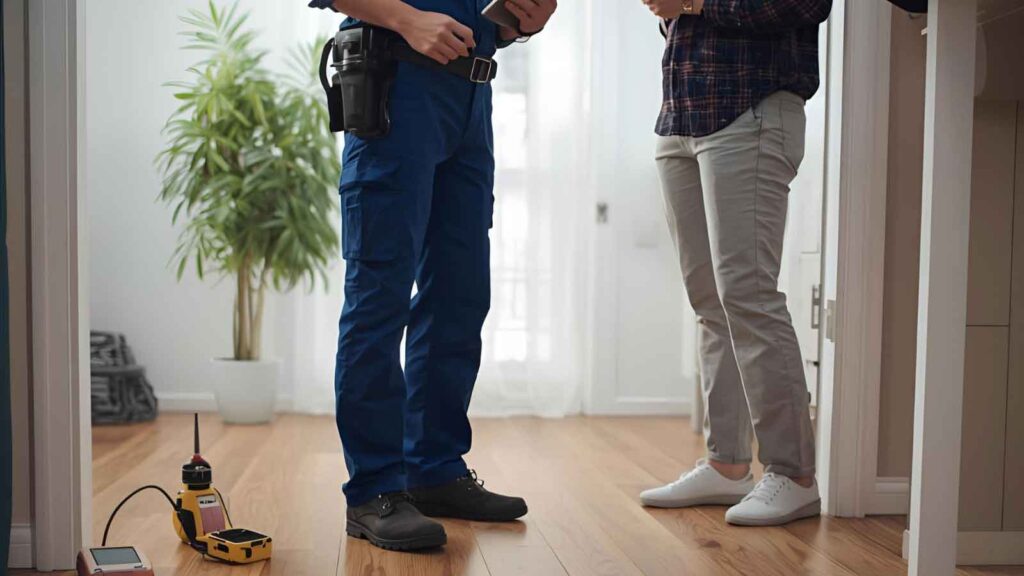
During our assessment, we use moisture-detection equipment to identify hidden sources of water intrusion that may be affecting your floors and subfloor structure.
Practical prevention measures include:
- Protective mats near sinks, dishwashers, and refrigerators with water lines
- Entry mats at all exterior doors to capture tracked-in moisture
- Regular HVAC maintenance to prevent condensation issues
- Prompt attention to any signs of plumbing problems
- Immediate cleanup of spills, especially near seams and edges
Get Your Floors Assessed By Water Damage Restoration Experts
When water reaches your hardwood floors, quick action makes the difference between restoration and replacement. Every hour of delay allows moisture to penetrate deeper, increasing damage severity and restoration costs.
Consulting with flooring professionals can help you understand:
- The extent of damage to your floors and subfloor
- Realistic restoration possibilities for your situation
- What the restoration process will involve
- Timeline and cost expectations
Absolute Maintenance & Consulting serves Los Angeles and surrounding communities with professional water damage restoration, mold remediation, and waterproofing services. Contact us for a professional assessment. We’ll take moisture readings, evaluate visible damage, inspect beneath affected areas when necessary, and give you an honest evaluation of your options.
About the Author
 Cameron Figgins
Cameron Figgins is the founder of Absolute Maintenance & Consulting. With over 30 years of hands-on industry experience, he specializes in identifying complex water intrusion issues in Southern California homes and is dedicated to helping homeowners protect their property with the latest in detection technology.”