
What Are the Symptoms of Mold Exposure in Los Angeles Homes?
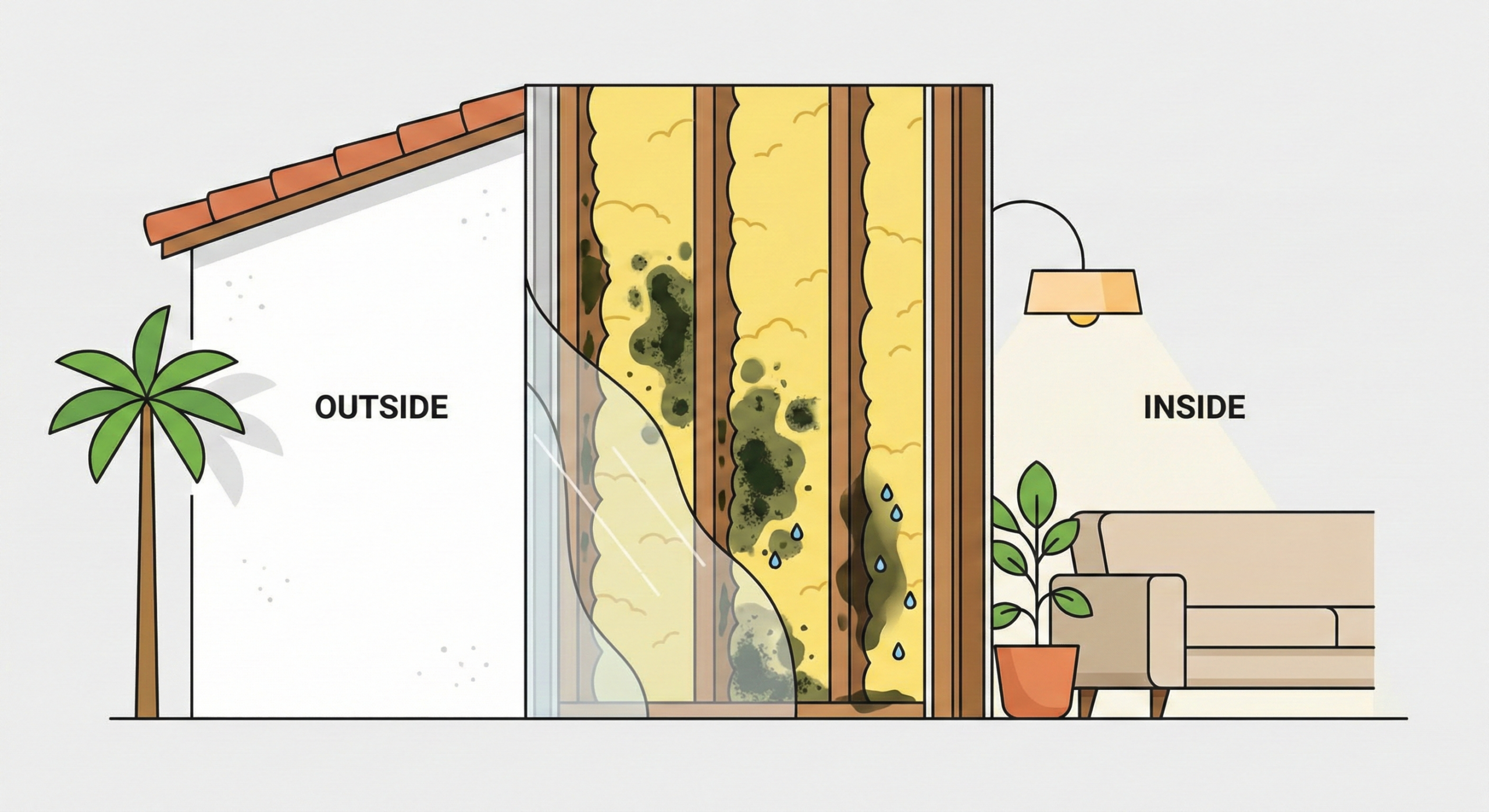

Table of Contents
Mold exposure in Los Angeles homes most commonly causes respiratory symptoms, persistent coughing, nasal congestion, wheezing, and throat irritation, along with skin rashes and eye irritation in sensitive individuals. These symptoms often look like seasonal allergies, which makes them easy to dismiss, especially in a city where pollen counts run high for much of the year. The key difference: mold-related symptoms get worse indoors and improve when you leave the house. If that pattern sounds familiar, mold may be the cause, not allergies.
The LA County Department of Public Health recommends that residents can handle mold cleanup themselves when the affected area is under 10 square feet (roughly a 3 ft. × 3 ft. patch). Anything larger, or mold that keeps coming back after cleaning, calls for professional mold inspection and remediation.
This article covers the medical consensus on mold health effects, the difference between mold symptoms and allergies, which populations face the highest risk, what the science says about long-term exposure, and what California law requires when mold shows up in your home.
How Do You Tell the Difference Between Mold Symptoms and Seasonal Allergies?
Mold symptoms and seasonal allergies (allergic rhinitis) produce nearly identical reactions, sneezing, runny nose, itchy eyes, congestion, because your immune system is responding to airborne particles in both cases. The difference is where and when symptoms get worse.
Seasonal allergies are triggered by outdoor pollen from grasses, trees, and weeds. Symptoms spike outdoors or on high-pollen days and improve when you go inside and close the windows. Mold allergies work in the opposite direction: airborne spores from indoor mold colonies trigger reactions that worsen inside the home and ease up when you leave for work, run errands, or spend time outdoors.
| Feature | Seasonal Allergies | Indoor Mold Exposure |
|---|---|---|
| Worst location | Outdoors, especially on windy days | Indoors, especially in rooms with moisture |
| Timing pattern | Peaks in spring (tree pollen) and fall (ragweed) | Year-round, may worsen during rainy season or after water leaks |
| Improves when | You go indoors and close windows | You leave the house for several hours |
| Common triggers | Pollen, grass, ragweed | Airborne mold spores (Aspergillus, Penicillium, Cladosporium, Stachybotrys) |
| Asthma connection | Can trigger asthma attacks outdoors | Can trigger asthma attacks at home, especially at night |
| Additional clue | Eyes and nose are primary complaints | May include skin rashes, musty smell in certain rooms |
If your symptoms follow the “worse at home, better away from home” pattern, pay attention to where in the house they’re strongest. Bathrooms, kitchens, laundry rooms, and any room that’s had water damage are the most likely sources. A musty or earthy smell in a specific area is another strong indicator.
One important note: you can have both. LA residents deal with high outdoor pollen counts from roughly February through June and again in the fall. If your symptoms never fully resolve, not outdoors during low-pollen periods, not indoors with windows closed, mold exposure layered on top of seasonal allergies could explain the overlap.
What Are the Health Risks of Black Mold (Stachybotrys) vs. Other Molds?
Stachybotrys chartarum, commonly called “black mold” or “toxic black mold”, produces mycotoxins, chemicals that can cause health effects beyond standard allergic reactions. That said, the medical consensus is more measured than the headlines suggest. The health risks from Stachybotrys overlap significantly with risks from other common indoor molds like Aspergillus, Penicillium, and Cladosporium.
The 2004 Institute of Medicine (IOM) report, the most cited review on this topic, found sufficient evidence linking indoor dampness and mold exposure to four specific outcomes: upper respiratory tract symptoms, cough, wheezing, and worsened asthma in people who already have the condition. The IOM report also linked dampness-related exposure to hypersensitivity pneumonitis in susceptible individuals. The World Health Organization expanded on these findings in 2009, adding associations with new-onset asthma development (not just worsening of existing asthma), respiratory infections, and bronchitis.
What the IOM did not find: sufficient evidence that Stachybotrys specifically causes worse outcomes than other mold species at typical household exposure levels. The mycotoxins Stachybotrys produces are potent in laboratory and animal studies, but it remains unclear whether indoor air concentrations from normal residential mold growth reach levels high enough to cause those effects in humans.
This matters because panic about “black mold” specifically can distract from the real issue. Any mold growing indoors, black, white, green, or gray, can trigger the same respiratory symptoms, allergic reactions, and asthma complications. The color of mold doesn’t reliably indicate the species, and the species doesn’t reliably predict your health risk. What matters more is the extent of the growth, how long you’ve been exposed, and your individual susceptibility.
If you see mold of any color in your home, the response should be the same: identify and fix the moisture source, clean or remediate the mold, and see a doctor if you’re experiencing symptoms.
Who Is Most Vulnerable to Severe Indoor Mold Reactions?
Children under 5, adults over 65, people with asthma or chronic lung disease, and immunocompromised individuals face the highest risk of severe reactions to indoor mold. For these groups, what starts as allergy-like symptoms can progress to serious respiratory illness.
Children under 5 are at particular risk because prolonged exposure to indoor mold is associated with the development of asthma in previously healthy children, not just triggering existing asthma, but causing new-onset asthma. Young children breathe more air relative to their body weight than adults, which increases their effective exposure at the same mold concentration.
People with asthma are vulnerable because mold is one of the most common indoor asthma triggers. Exposure can cause acute asthma attacks, and chronic exposure is linked to worsening symptom control over time. The CDC notes that mold-related asthma exacerbation is one of the best-documented health effects of indoor dampness.
Adults with COPD or chronic lung disease may experience COPD exacerbations, increased frequency of respiratory infections, and accelerated decline in lung function from ongoing mold exposure.
Immunocompromised individuals, including organ transplant recipients, people undergoing chemotherapy, and those with HIV/AIDS, can develop invasive fungal infections, most commonly from Aspergillus species, where mold actually colonizes lung tissue. This is a medical emergency requiring hospitalization.
Adults over 65 face increased susceptibility to both allergic reactions and respiratory infections from mold exposure as age-related immune function declines.
People with existing mold allergies can develop hypersensitivity pneumonitis, a serious inflammatory lung condition that mimics pneumonia. This condition can result from either brief high-concentration exposure or prolonged lower-level exposure, and symptoms include fever, chills, shortness of breath, and body aches.
If anyone in these risk groups is living in a home with visible mold or persistent dampness, treating the situation as urgent, not as a maintenance task to get to eventually, is the appropriate response.
Can Mold Exposure Cause Long-Term Health Problems?
Prolonged exposure to indoor mold is associated with chronic respiratory issues, and there is evidence linking it to the development of asthma in people who were previously healthy. For most people, symptoms resolve once the mold source is removed and exposure stops. But that timeline depends on how long the exposure lasted, how severe it was, and individual health factors.
Here’s what the science supports and where it gets less clear.
The CDC acknowledges that living in damp, moldy environments is consistently associated with respiratory symptoms, worsened asthma, respiratory infections, and allergic rhinitis. Multiple large-scale reviews, including the 2004 IOM report and the 2009 WHO guidelines, found these associations held across different study designs, populations, and age groups. Dose-response relationships were frequently reported, meaning more exposure correlated with worse outcomes.
Where the evidence is less definitive: claims that mold exposure causes neurological symptoms like memory loss, chronic fatigue, or cognitive impairment. You’ll find these claims online, and some patients report them, but the CDC’s position is that links between indoor mold and neurological effects are not well-established by current research. That doesn’t mean they don’t happen in individual cases, it means the scientific evidence isn’t strong enough yet to draw firm conclusions.
What is clear: the longer mold exposure continues, the harder symptoms can be to reverse, particularly for people in high-risk groups. Children who develop asthma from prolonged mold exposure may continue to have asthma after the mold is gone. Adults with hypersensitivity pneumonitis may sustain lasting lung damage if the condition goes undiagnosed. The practical takeaway is that addressing mold quickly, not waiting months to “see if it gets worse”, produces better health outcomes.
Why Do LA Residents Experience Mold Symptoms More Than They Expect?
Los Angeles has a reputation as a dry city, which leads many residents to assume mold isn’t a local problem. In reality, several LA-specific conditions create ideal environments for hidden mold growth, and those hidden colonies are often the reason someone develops symptoms without ever seeing visible mold.
- Coastal marine layers push humidity levels well above what most people associate with Southern California. Neighborhoods close to the coast, Santa Monica, Pacific Palisades, Venice, Marina del Rey, regularly see indoor humidity spike during morning and evening marine layer events, especially from May through September. That moisture settles into poorly ventilated spaces and provides exactly what mold needs to grow.
- Stucco construction, the dominant building material across LA, creates a specific problem. Stucco is porous and can trap moisture behind walls when flashing or weep screeds fail. Because the moisture is behind the wall surface, residents don’t see water damage, but mold colonies can develop for months or years before anyone notices a musty smell or starts experiencing symptoms. Older homes built before modern moisture barriers were standard are particularly prone to this.
- Winter rainstorms exploit these existing vulnerabilities. A roof leak that only activates during heavy rain might seem minor because the visible water dries quickly once the storm passes. But water that reaches wall cavities, subfloor material, or ceiling insulation can sustain mold growth long after the rain stops. Mold can begin colonizing within 24–48 hours of water exposure.
- LA’s microclimates compound the issue. A home in the Hollywood Hills faces different moisture risks than one in the San Fernando Valley. Hillside properties deal with water intrusion from upslope drainage. Valley homes bake in summer heat, which drives residents to run air conditioning that creates temperature differentials and condensation on cool surfaces. Both scenarios create moisture, just through different mechanisms.
The result: many LA residents attribute their respiratory symptoms to smog, traffic pollution, or seasonal allergies when the actual cause is growing inside their walls, under their floors, or in their attic spaces.
What Should You Do If You’re Experiencing Mold Symptoms at Home?
If your symptoms match the patterns described above, respiratory issues, skin irritation, or allergic reactions that worsen at home and improve elsewhere, take these steps in order.
- See a doctor and mention suspected mold exposure. Tell your physician you believe your symptoms may be connected to indoor mold. This changes how they evaluate you. Allergy testing can identify mold-specific IgE antibodies, and pulmonary function tests can assess whether your lung function has been affected. A documented medical connection between your symptoms and mold exposure is also relevant if you need to file insurance claims or pursue tenant remedies later.
- Try to identify the moisture source. Check the most common areas: under sinks, around windows, in bathrooms without exhaust fans, near water heaters, in attic spaces, and along any walls that back up to plumbing. Look for visible mold, water staining, peeling paint, warped baseboards, or musty odors concentrated in specific rooms.
- Assess the affected area size. The EPA and LA County Department of Public Health both use 10 square feet as the threshold. If the visible mold covers an area smaller than roughly 3 ft. × 3 ft., and you can identify and fix the moisture source, DIY cleanup with soap and water or a diluted bleach solution (no more than 1 cup bleach per gallon of water) may be sufficient. Wear an N-95 respirator during cleanup and ventilate the area.
- Call a professional if the area exceeds 10 square feet, the source is unclear, or mold keeps returning. Recurring mold after cleaning usually means the moisture source hasn’t been fixed, it’s behind walls, under flooring, or in HVAC ductwork where surface cleaning can’t reach it. Professional remediation uses containment, HEPA filtration, and moisture detection tools like thermal imaging to find and address what DIY cleanup misses.
- Document everything with photos and dates. If you’re a renter, this documentation supports your legal remedies under California law. If you’re a homeowner, it supports insurance claims. Either way, dated photos of visible mold, water damage, and any associated symptoms create a record you may need later.
What Are Your Rights as a Tenant Dealing with Mold in California?
California Health & Safety Code §17920.3 classifies visible mold growth as a substandard housing condition, making it a legal habitability issue, not just a maintenance request. If mold in your rental is beyond minor growth on surfaces that normally accumulate moisture (like shower grout), your landlord has a legal obligation to fix it.
Here’s the process for LA renters:
- Notify your landlord in writing. A text or email creates a timestamp, but a formal written letter (or email with read receipt) is stronger for legal purposes. Describe the mold you’ve seen, where it is, any moisture or water damage, and any symptoms you’re experiencing. Keep a copy of everything you send.
- Know what the law requires. Under §17920.3 and the implied warranty of habitability (Civil Code §1941.1), your landlord must remediate mold that affects your health or renders the unit substandard. Since January 1, 2022, California landlords are also required to provide tenants with the California Department of Public Health booklet “Information on Dampness and Mold for Renters in California” before signing a lease. Under Health & Safety Code §26147, landlords who know, or have reason to believe, mold is present must disclose it in writing.
- Allow reasonable time for response, then escalate. California law doesn’t specify an exact deadline for mold remediation, but courts generally expect landlords to act promptly once notified. If your landlord ignores the problem or delays unreasonably, you have options:
- File a complaint with the LA Housing Department (LAHD) or LA County Department of Environmental Health. Either agency can send an inspector to evaluate the unit and issue a notice of violation.
- Use California’s “repair and deduct” remedy (Civil Code §1942). If the landlord doesn’t act after reasonable notice, you can hire a professional to remediate the mold and deduct the cost from rent, up to one month’s rent, twice per 12-month period.
- Consult an attorney about rent withholding or constructive eviction claims if the mold makes the unit uninhabitable and the landlord refuses to act.
- Do not attempt large-scale cleanup yourself in a rental. If the mold exceeds 10 square feet or is caused by a structural issue (leaky roof, broken pipe, failed waterproofing), the landlord is responsible for professional remediation, not you. DIY cleanup of a landlord’s structural problem can actually weaken your legal position.
When Should You Get Professional Mold Testing vs. DIY Assessment?
Small patches of visible mold on bathroom tile or under a kitchen sink, where you can see the mold, identify the moisture source, and the affected area is under 10 square feet, typically don’t require professional testing. Fix the leak, clean the mold with soap and water or diluted bleach, and monitor for recurrence.
Professional mold inspection makes sense when:
- Visible mold exceeds 10 square feet. At this scale, the moisture source may be systemic (plumbing failure, roof leak, waterproofing failure) rather than a one-time event.
- You have symptoms but no visible mold. Hidden mold inside walls, under flooring, or in HVAC systems can release spores into your living space without any visible growth. Air quality testing can detect elevated spore counts and identify mold species even when nothing is visible.
- Mold keeps coming back after cleaning. Recurrence means the moisture source hasn’t been resolved. Professional inspection with thermal imaging and moisture meters can locate hidden water intrusion that surface-level inspection misses.
- Your home has had recent water damage. Whether from a pipe burst, roof leak, or storm flooding, water that reaches wall cavities or subfloor material can fuel mold growth within 24–48 hours. Post-damage inspection catches mold before it spreads.
- You’re buying or selling a home. Mold inspection as part of the transaction protects both parties and can identify issues that a general home inspection might miss.
- Someone in your home is in a high-risk group. If children, elderly family members, or immunocompromised individuals are experiencing unexplained respiratory symptoms, professional testing provides the data needed to make informed decisions quickly.
Absolute Maintenance & Consulting handles both mold inspection and mold remediation, but outsources mold testing to independent third-party labs to prevent any conflict of interest. The company that tells you whether you have a mold problem should never be the same company that profits from the remediation work. By separating testing from remediation, Absolute Maintenance removes that bias: you get unbiased lab results from an independent tester, and a MICRO-certified and IICRC-certified remediation team that acts on those results. For properties across Beverly Hills, Brentwood, Santa Monica, West Hollywood, Bel Air, Pacific Palisades, Sherman Oaks, Pasadena, Studio City, and Downtown LA, Absolute Maintenance has been solving these problems since 1999 using forensic investigation tools like thermal imaging and moisture detection to pinpoint problems before they spread.
Call (310) 678-4345 for a professional assessment, or request a free quote
Frequently Asked Questions
Can I Clean Mold Myself, or Do I Need a Professional?
If the moldy area is under 10 square feet (about 3 ft. × 3 ft.) and you can identify and fix the moisture source, DIY cleanup is reasonable. The LA County Department of Public Health recommends scrubbing hard surfaces with soap and water or a bleach solution of no more than 1 cup per gallon of water. Wear an N-95 respirator, ventilate the area, and replace any absorbent materials (carpet, ceiling tiles) that can’t be fully cleaned. If the area is larger than 10 square feet, the source is hidden, or the mold returns after cleaning, call a professional.
Can Mold in My Home Trigger an Asthma Attack?
Yes. The CDC and the 2004 Institute of Medicine report both confirm that indoor mold exposure is strongly associated with asthma exacerbation. For people with existing asthma, mold spores act as an airborne trigger, similar to dust mites or pet dander, but often harder to identify because the mold may be hidden. If you’re experiencing increased asthma symptoms at home, especially at night or in specific rooms, mold exposure should be considered as a possible cause.
Does Mold Cause Headaches or Brain Fog?
Some people exposed to indoor mold report headaches, difficulty concentrating, and fatigue. These symptoms appear in patient reports and some clinical literature, but the CDC notes that the link between mold exposure and neurological symptoms is not well-established by current research. If you’re experiencing these symptoms along with respiratory issues that follow the “worse at home” pattern, mention both to your doctor, the respiratory symptoms are the stronger diagnostic clue.
When Should I Go to the ER for Mold Exposure Symptoms?
Seek emergency medical care if you experience severe difficulty breathing, chest tightness that doesn’t resolve with your inhaler, high fever with chills and shortness of breath (possible hypersensitivity pneumonitis), or any signs of anaphylaxis (swelling, rapid pulse, dizziness). These reactions are rare but can occur in highly sensitized individuals or those with compromised immune systems. For immunocompromised individuals, any new respiratory symptoms in a home with known mold should be evaluated urgently, invasive Aspergillus infections require prompt medical treatment.
How Long Does It Take for Mold Symptoms to Appear?
Mold allergy symptoms typically develop within hours of exposure to elevated spore counts, similar to other airborne allergens. But recognizing the pattern, that symptoms worsen at home specifically, can take weeks or months, especially if you assume you have a cold, seasonal allergies, or general congestion. People who move into a home with existing hidden mold may not connect their new symptoms to the environment for a long time, particularly if the mold isn’t visible.
Does Homeowner’s Insurance Cover Mold Removal?
Most standard homeowner’s policies in California cover mold remediation if the mold resulted from a covered peril, like a sudden pipe burst or storm damage. Mold from long-term neglect, deferred maintenance, or ongoing humidity issues is typically excluded. Many policies also cap mold coverage at $5,000-$10,000 unless you’ve purchased additional coverage. Check your policy’s specific language and document the cause of the mold (photos, dates, plumber’s reports) before filing a claim.
What Does a Professional Mold Inspection Include?
A thorough mold inspection includes a visual assessment of the entire property, moisture readings with specialized meters, thermal imaging to detect hidden moisture behind walls and ceilings, and air quality sampling to identify mold species and spore concentrations. The IICRC S520 Standard for Professional Mold Remediation provides the framework that certified inspectors follow. Results typically take 2–5 business days for lab analysis of air and surface samples. Absolute Maintenance & Consulting’s MICRO-certified inspectors use all of these methods and can move directly from inspection to remediation without bringing in a separate contractor.
Is There a Legal Mold Limit in California?
No. California has not established permissible exposure limits (PELs) for indoor mold. The California Department of Public Health concluded in 2005 that the scientific evidence didn’t support setting specific numerical thresholds, and that position has not changed. The practical standard under California law is that visible mold growth that affects occupant health makes a dwelling substandard under Health & Safety Code §17920.3. The absence of a specific number means enforcement relies on the professional judgment of health officers and code enforcement officials.
About the Author
 Cameron Figgins
Cameron Figgins is the founder of Absolute Maintenance & Consulting. With over 30 years of hands-on industry experience, he specializes in identifying complex water intrusion issues in Southern California homes and is dedicated to helping homeowners protect their property with the latest in detection technology.”