
HOA and Multi-Unit Water Damage and Leak Detection in West Los Angeles
One investigation, one source, one report your board and insurer can use.
Everything handled in-house, one contractor from investigation to repair.
Signs of a building leak in a condo, HOA or apartment building
Water in two or more units, the same unit repaired twice, or leaks that show up only in long rain point to the building, not one unit. We work with buildings in West Los Angeles, Culver City and the Westside.
Signs the water is coming from the building
- Stains or damp materials in two or more units, sometimes in a vertical stack
- The same unit repaired twice, and the damage came back
- Leaks that show up only in wind-driven or long rain
- A board or manager told it is the other unit’s problem
- Water reaching a common hallway or a garage ceiling
Who we work with
- HOA boards
- Property managers
- Building owners
- Apartment owners
- Condo owners speaking for a stack of units
- Adjusters who need a documented cause
A leaking pipe inside one unit is a plumber’s job. We start at the outside of the building and work in.
Water in more than one unit? We inspect the whole building, test where needed, and give you written findings.
HOA and multi-unit water damage services
HOA and multi-unit water damage service is finding where water enters your building, closing that entry point, drying the units it reached and dealing with any mold.
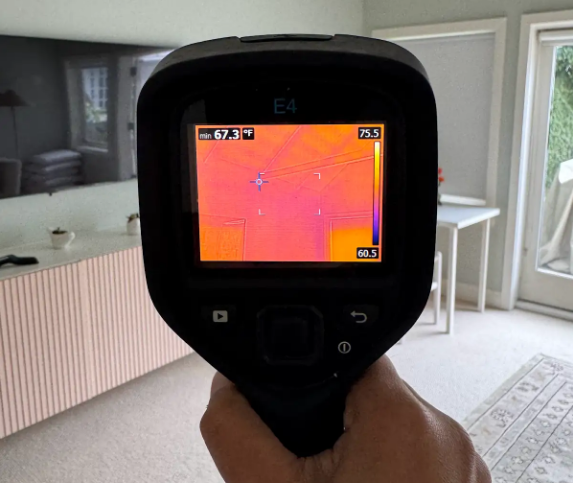
Multi-unit leak detection and source tracing
We trace water that enters through the roof, deck, window, wall or stucco and travels across units. Thermal imaging, a camera that shows wet material behind the surface, and moisture meters show where it went.
Learn more about commercial leak detection.
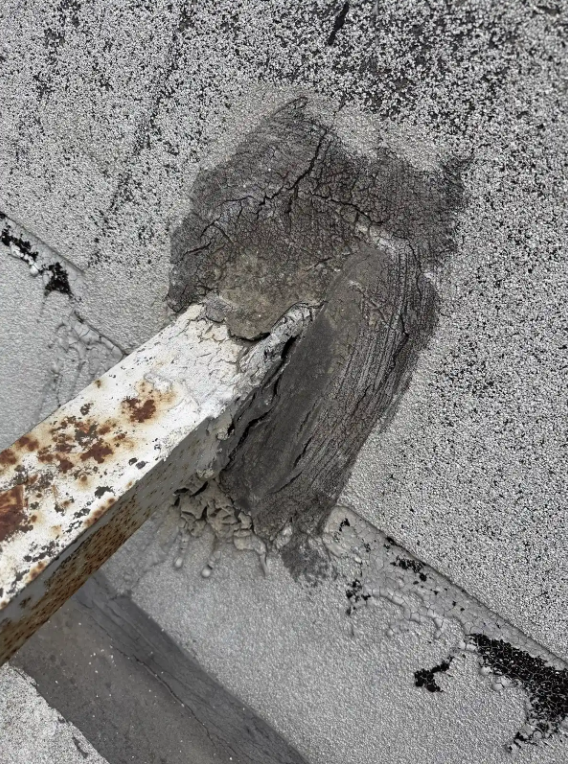
Exterior leak repair and commercial waterproofing
We close the entry point with stucco repair, flashing, sealant at openings and exterior waterproofing. A failed balcony membrane is the kind of finding that ends in waterproofing, so the leak does not return to the unit below.
Learn more about commercial waterproofing.
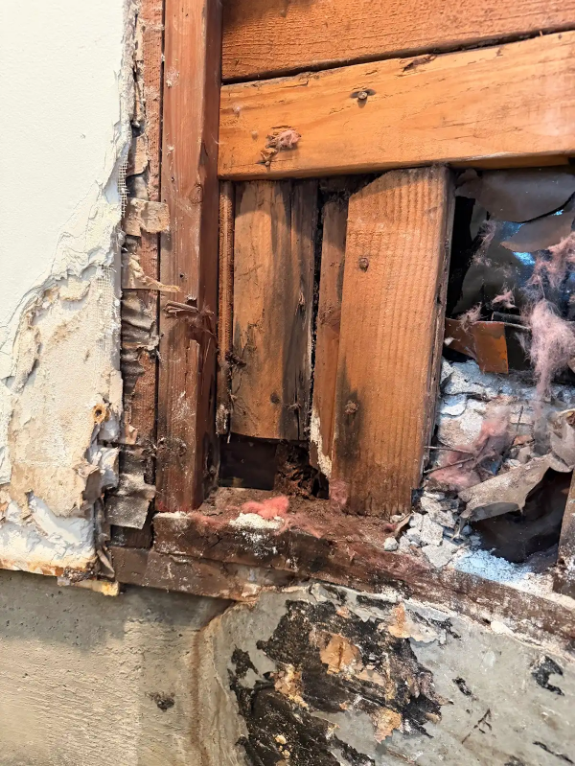
Water damage restoration for affected units
Once the entry point is known, we dry the structure with commercial dehumidifiers and air movers and take moisture readings every day. We remove materials that cannot be saved, then rebuild.
Learn more about how mold in an apartment building spreads between units.
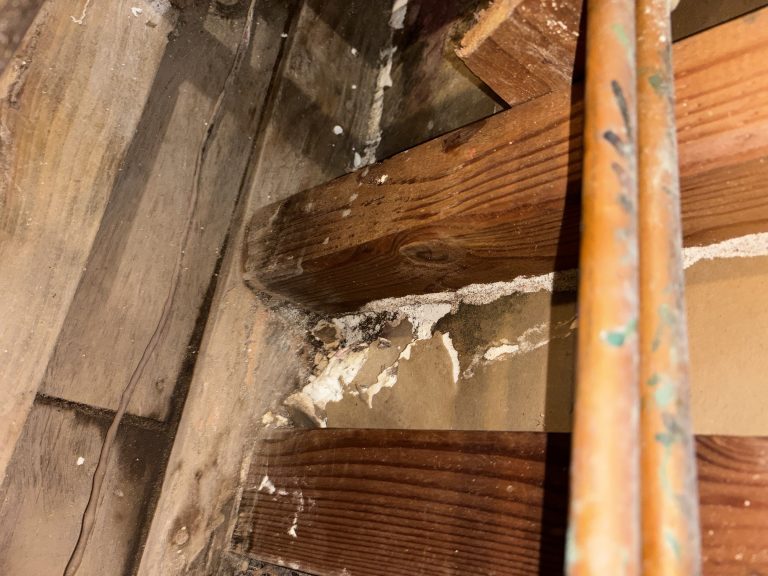
Mold inspection and remediation across units
We inspect for mold, and lab sampling goes to an independent environmental professional. If the units stayed wet and mold started, remediation follows the drying under IICRC S520 mold remediation procedures.
Learn more about commercial mold remediation.
How we trace a leak across multiple units
We work from the outside in until one entry point is proven.
Step 1
Map the wet units and common areas by floor and elevation with thermal imaging and moisture meters.
Step 2
Read the pattern: a vertical stack points to what sits above it, one elevation points to that wall, and top-floor-only damage points to the roof edge.
Step 3
Inspect interior and exterior, including the building envelope and the drainage around the wet units.
Step 4
Test one suspected entry point at a time; windows, doors, skylights and curtain walls get ASTM E1105 water testing, the ASTM field test for installed windows and doors.
Step 5
Write the findings by building component.
Step 6
Repair the entry point, then dry, mold-check and rebuild the units it reached.
What the multi-unit water intrusion report includes
The multi-unit water intrusion report is a written record of what failed and where, kept unit by unit.
- Photos and thermal images
- Moisture readings
- Any water test results
- Findings by building component
If a claim follows, read what an adjuster asks for after a loss in water damage insurance claims.
Get one answer for the whole building. We inspect, test where needed, and write up what failed and where.
How multi-unit leak investigation and repair is priced
Multi-unit work is priced in three parts: an inspection sized to your property, water testing where a source must be proven, and repair priced by project size.
The number of units reached, the number of entry points, access, the size of the exterior area and whether mold is present move the final figure. To get a firm number, book the inspection and tell us how many units show water.
Basic Inspection
$375 to $575
Depending on size and time. About 15 to 20 minutes with an infrared camera.
Detailed Inspection
$575 to $775
A more in-depth investigation of up to about an hour, for one household or unit up to 3,000 sq. ft.
Multi-Unit / Larger Property Inspection
$975 to $1,500
For up to 5 units or properties, 3,500 to 10,000 sq. ft.
Why HOA boards and property managers choose Absolute
HOA boards and property managers choose Absolute for one contractor who starts at the outside and stays through the finish.
- We determine exactly how water entered the building before restoration starts.
- Everything is handled in-house, with no subcontracting: one contractor from investigation through repair and restoration, and one record covering every unit.
- We use non-invasive thermal imaging and moisture meters before anything is opened.
- Insurance adjusters and attorneys use our reports.
What Our Clients Say
Aalok S. ★★★★★
“This father and son generational family business with over thirty years of experience are the experts in the field and really provided our small business with expert and immediate advice even on the weekend. We are so grateful for their service. Thank you Cameron and Aaron.”
Claire H. ★★★★★
“We have just begun the process of remediating a mold issue found in our apartment. We got a few inspections before choosing AMC. They are top of the line professionals…night and day compared to the other inspections. John went above and beyond to analyze the situation and moved into action immediately…a relief to find someone with his extensive knowledge and understanding of water/mold issues.
The entire team has updated us daily, taking time to explain the scope of project, step by step. Cannot say enough about this experience so far…Grateful for their expertise.”
HOA and multi-unit water damage FAQs
Who pays for what in a condo or HOA?
In California condo and HOA buildings, Civil Code section 4775 has the association repair common areas and the owner repair their own unit’s interior, unless your declaration says otherwise. For a balcony or deck serving one unit, the owner maintains it and the association repairs and replaces it. Your declaration and insurance policies decide who pays for the resulting damage. Our part is finding which component failed and where the water entered, shown by photos, moisture readings and any water test results.
Do you have to open walls to find the leak?
Not at the start. The first investigation is non-invasive, using thermal imaging and moisture meters. Opening a wall is a repair decision after the source is found.
Do you take mold samples for a lab?
No. We inspect for mold and refer lab sampling to an independent environmental professional. The EPA notes sampling is usually unnecessary when visible mold is present.
Do you work with our property manager, board and insurance adjuster?
Yes. You get one contractor and one written record across units, and insurance adjusters and attorneys use our reports.
What if the units have been wet for days?
The EPA advises drying water-damaged areas within 24 to 48 hours to prevent mold growth, so call 310-678-4345 to start drying now. If mold has started, we inspect for it once the units are dry.
We inspect, test where needed, and give you written findings.